


Hear This: How Audiology Clinics Use Patient Welcome Kits and Referral Items to Build Practice Revenue
How clinical audiology practices use structured physical welcome kits, high-contrast maintenance tools, and professional physician referral items to improve patient compliance and secure consistent local medical partnerships.
10 min read
Audiology clinics can build lasting patient loyalty and secure vital physician referrals by distributing high-utility, tactile tools sourced from Myron. Strong choices include tactile healthcare accessories, premium metal writing instruments, and high-contrast magnetic office supplies. Order quarterly to align with seasonal health campaigns, such as Better Hearing Month in May, or ahead of annual physician outreach cycles. Avoid small, low-contrast items that frustrate senior patients, and steer clear of cheap novelty items that undermine clinical professionalism.
The Handoff: Bridging Clinical Care and Daily Patient Compliance
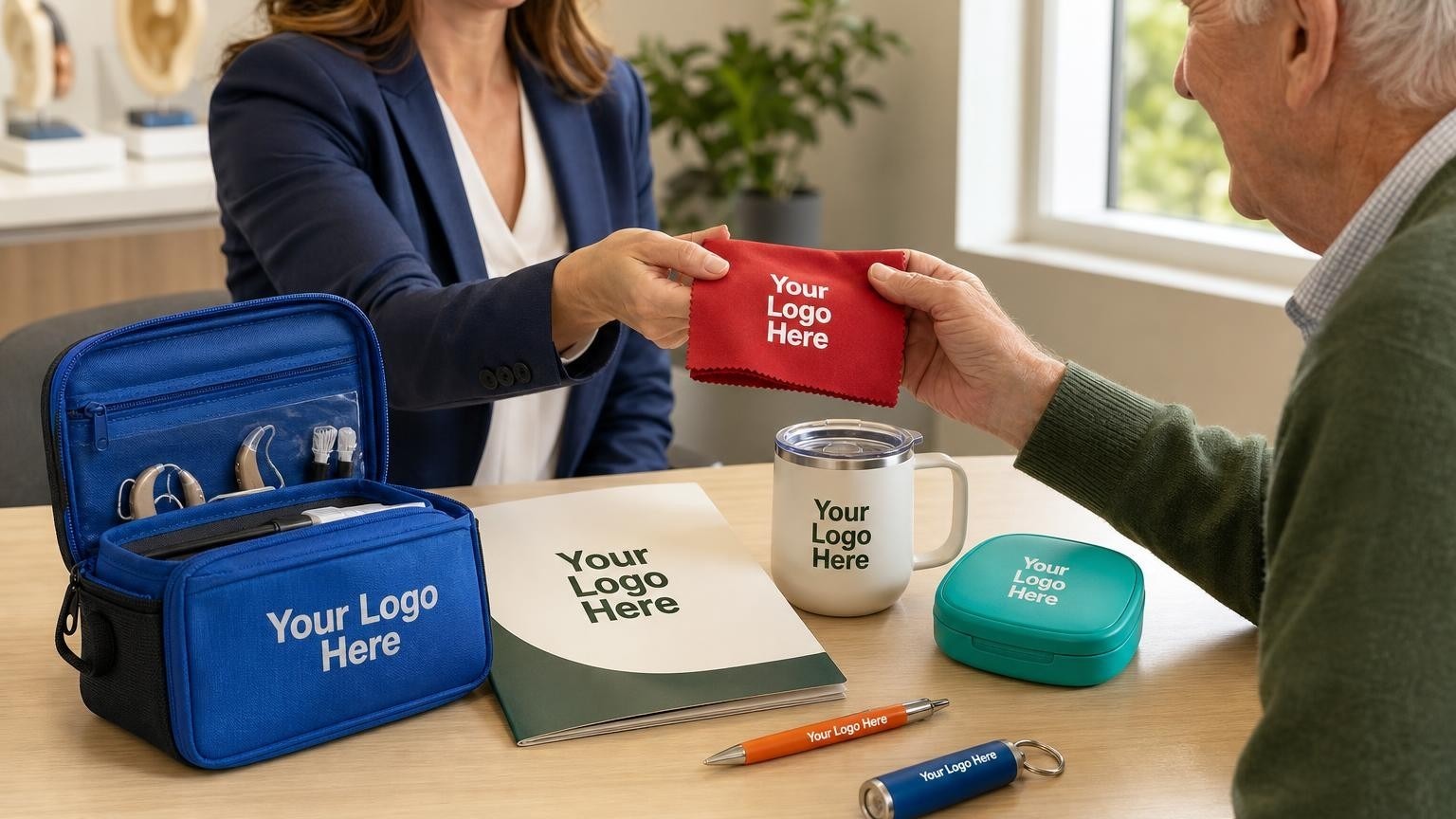
The quiet of the diagnostic booth fades as the heavy door swings open. An elderly patient sits in the consultation chair, looking down at a small, high-technology hearing instrument resting in a velvet-lined tray. The device represents a major financial investment and a profound shift in their daily life, yet its physical reality is intimidating. It is tiny, slippery, and accompanied by microscopic wax guards and battery doors that require precise finger coordination. Sensing the patient's quiet hesitation, the audiologist reaches into the drawer and pulls out a structured, high-contrast storage kit. Instead of handing over a loose pile of medical brochures, the clinician presents a sturdy, bright blue zippered case. Inside, every tool has its designated slot: a large-print maintenance card, a high-contrast cleaning cloth, and a tactile battery tester. This physical handoff bridges the gap between clinical recommendation and daily compliance. It transforms a complex medical adjustment into a manageable, organized daily routine, ensuring the patient leaves the clinic feeling supported rather than overwhelmed.
The Audiology Clinical Branding Strategy
Audiology clinics can build lasting patient loyalty and secure vital physician referrals by distributing high-utility, tactile tools sourced from Myron. To reduce device return rates during the critical 30-day trial period, clinics should provide patients with high-contrast, easy-to-grip maintenance kits. To stabilize long-term revenue between multi-year hearing aid purchases, practices can deploy physical household reminders like magnetic calendars for tracking battery replacements. Finally, clinics can secure consistent patient pipelines by placing professional desk accessories and writing instruments directly into the hands of local primary care physicians. These practical, physical touchpoints reinforce clinical authority and keep the practice top-of-mind.
- Tactile healthcare accessories
- Premium metal writing instruments
- High-contrast magnetic office supplies
Avoid: Avoid small, low-contrast items that frustrate senior patients, and steer clear of cheap novelty items that undermine clinical professionalism.
Designing the Patient Welcome Kit: Easing the Transition to Hearing Assistive Technology
The first 30 days of hearing aid adoption represent a critical window for patient retention. During this trial period, patients frequently experience frustration, not from the sound quality itself, but from the physical mechanics of device maintenance. Managing tiny zinc-air batteries (sizes 10, 312, 13, or 675) and replacing microscopic wax guards require a level of fine motor skill that many senior patients struggle to maintain, particularly those managing arthritis.
When a patient sits at the fitting desk, the physical handoff of a structured welcome kit changes the dynamic. A successful kit uses high-contrast colors—such as bright yellow or deep blue—to ensure tools are visible on dark countertops. Sourcing specialized items from Myron's health care products line ensures your clinic provides tools that support daily device hygiene. For example, a large-format microfiber cleaning cloth printed with bold, step-by-step cleaning instructions serves as a daily reference guide. Placing these items in a durable, zippered pouch ensures that small tools are never lost in household drawers, directly reducing unbillable clinic walk-ins for minor maintenance issues.
Patient Welcome Kit Essentials
Handed to patients immediately following their hearing aid fitting to support daily device maintenance and hygiene.
Tactile Tools for Senior Patients: Prioritizing Accessibility
To support senior patients effectively, product selection must prioritize physical accessibility over generic appeal. Standard promotional items often fail because they ignore the visual and physical limitations of an older demographic. Instead, clinics should focus on items that offer physical assistance in the home while keeping the clinic's contact details visible.
A practical option here is the integration of custom promotional magnets that can be placed on the refrigerator. These are not merely decorative; they can feature large-print troubleshooting steps for common issues like 'no sound' or 'feedback.' Another excellent tool is a tactile jar opener with a textured grip. For a patient with limited hand strength, this simple household tool provides daily utility while keeping the clinic's phone number in the kitchen—the heart of the home. Additionally, custom pill boxes with large, easy-to-open compartments can help patients organize their daily schedules, reinforcing the clinic's role as a partner in overall wellness.
The Physician Referral Pipeline: Staying Top-of-Mind with General Practitioners
Primary care physicians and local medical clinics are the primary gatekeepers for hearing health diagnostics. However, busy general practitioners manage hundreds of patients a week and rarely have time to search for a specialist's business card. To secure a steady stream of patient referrals, an audiology practice must remain visible at the exact moment a doctor identifies a patient with hearing difficulties.
This referral pipeline relies on professional, high-utility office items that stay on the physician's desk or at the nurse's intake station. Cheap plastic giveaways degrade clinical authority and are quickly discarded. Instead, clinic managers should hand-deliver high-quality writing instruments or heavy-duty clinical clipboards during quarterly outreach visits. Placing a high-quality pen from Myron's economy plastic pens collection at the reception desk ensures that staff use your branded tools daily. For a more formal gesture, presenting a weighted desktop notepad holder printed with a direct referral hotline number to the clinic administrator ensures your contact details are always within arm's reach when referral paperwork is being processed.
Physician Referral Outreach
Distributed to local primary care clinics to keep your audiology practice top-of-mind for patient referrals.
Comparing Clinical Touchpoints: Matching Tools to Workflows
To help practice managers select the right physical tools for each clinical workflow, the following table compares key touchpoints based on recipient, operational purpose, and recommended product types.
| Clinical Workflow | Target Recipient | Operational Purpose | Recommended Product Types |
|---|---|---|---|
| New Patient Fitting | Senior Hearing Aid Users | Reduce device return rates & support daily maintenance | High-contrast microfiber cloths, zippered pouches, battery testers |
| Physician Outreach | Primary Care Doctors & Clinic Staff | Secure consistent patient referral pipelines | Engraved metal pens, heavy-duty clipboards, desktop notepad holders |
| Annual Recall Campaign | Existing Patients (Post-Warranty) | Drive annual diagnostic exams & battery reorders | stick-up and magnetic calendars, textured jar openers, magnifying cards |
| Community Health Fairs | Local Seniors & Caregivers | Build local brand awareness & schedule screenings | Large-print wellness guides, custom pill boxes, hand sanitizers |
Audiology Practice Investment Tiers: Scaling Your Outreach
Audiology practices must balance marketing budgets with clinical standards. Organizing physical branding strategies into clear investment tiers allows clinics to scale their outreach based on patient volume and growth targets.
- Good (Entry-Level Utility): Focuses on high-volume, functional items for community health fairs and general clinic walk-ins. This tier includes items like custom promotional magnets with large-print troubleshooting tips, basic microfiber cleaning cloths, and simple slide-out wallet magnifying cards.
- Better (Clinical Standard): Designed for standard patient welcome kits and daily clinic operations. This tier features zippered utility pouches for device accessories, custom-printed stick-up and magnetic calendars for tracking battery replacement schedules, and comfortable wide-grip pens for the patient check-in desk.
- Best (Premium Professional): Reserved for physician referral appreciation and high-value patient milestones. This tier includes engraved metal pens presented in sleek gift boxes, heavy-duty clinical clipboards for local medical intake staff, and weighted desktop organizers printed with direct referral hotline numbers.
Clinical Branding Insights: Practical Observations from the Field
Based on Myron's experience helping organizations plan custom event merchandiseBased on experience helping healthcare organizations plan custom branding campaigns, Myron's team has gathered practical operational insights specific to the audiology sector:
- Prioritize High-Contrast Layouts: Senior patients often experience co-occurring visual changes. Avoid printing white text on light gray or yellow backgrounds; instead, use deep navy, black, or dark green backgrounds with bold white lettering to ensure phone numbers are readable.
- Avoid Microscopic Accessories: Small keychains or tiny promotional items are easily dropped by patients with limited dexterity. If an item cannot be easily gripped with a full hand, it is likely to be misplaced or discarded.
- Keep Referral Details Simple: When distributing items to local medical clinics, limit the printed information to the clinic name, direct referral phone number, and a simple call-to-action like 'Refer a Patient.' Cluttered layouts reduce readability on busy desks.
- Incorporate Functional Checklists: Magnetic items work best when they serve a daily purpose. A magnetic calendar that includes a small checkbox for 'Weekly Clean' or 'Battery Change' is far more likely to remain on a patient's refrigerator than a plain branded magnet.
- Train Staff on the Handoff: Physical items are most effective when integrated directly into the clinical workflow. Instruct audiologists to physically demonstrate how to use the cleaning cloth and battery tester during the final fitting consultation, cementing the value of the welcome kit.
Annual Recall & Retention Tools
Mailed or handed out to keep the clinic's contact details visible in patients' homes for annual testing reminders.
How to Choose the Right Item
- Patient Dexterity & VisionAsk: Can a 75-year-old patient with mild arthritis easily grip and read this item? Choose wide-barrel pens, large zippered pouches, and high-contrast magnetic checklists over tiny keychains or flimsy paper cards.
- Clinical ProfessionalismAsk: Does this item reinforce our position as a trusted medical diagnostic facility? Choose metal writing instruments, heavy-duty clinical clipboards, and structured device care kits over cheap novelty toys.
- Household UtilityAsk: Will this item remain visible in the patient's home on a daily basis? Choose large-format magnetic calendars, textured jar openers, and wallet-sized magnifying cards over disposable paper brochures.
Common Mistakes to Avoid
- Distributing low-contrast or microscopic promotional items to senior patients.Clinics often purchase generic promotional items in bulk without considering the visual and physical limitations of their primary demographic.Better approach: Select high-contrast, bold-print items with textured surfaces that are easy for older adults to see and handle.
- Gifting cheap, non-clinical novelty items to medical referral partners.Practice managers try to save money by purchasing generic plastic pens or stress balls for local doctor offices, which degrades clinical authority.Better approach: Invest in high-quality, professional office tools that reflect the high clinical standards of your audiology practice.
- Failing to integrate physical items into the clinical workflow.Branded items are left in boxes in the storage room because staff are not trained on when and how to hand them to patients.Better approach: Establish a strict protocol where every new hearing aid fitting automatically includes the physical handoff of a structured care kit.
Frequently Asked Questions
What promotional items are best suited for audiology patients with limited hand dexterity?
Focus on large, tactile items with textured grips, such as oversized silicone jar openers, thick-barrel metal pens, and zippered cases with large pull tabs. These physical attributes ensure that patients with arthritis or limited fine motor skills can easily handle and use the items daily without frustration.
How can we use branded items to improve patient compliance with hearing aid maintenance?
Include custom-printed microfiber cloths and magnetic care checklists in every patient welcome kit to establish a clear daily cleaning routine. By physically demonstrating these tools during the final fitting consultation, clinic staff can reinforce proper hygiene habits and reduce unbillable repair visits.
What are the best referral appreciation gifts to send to local primary care physicians?
High-quality, professional office tools like premium metal pens or weighted desktop organizers from Myron keep your clinic's contact details visible on the doctor's desk. These items respect professional medical boundaries while ensuring your direct referral hotline is always within arm's reach.
Cementing Your Clinic's Reputation
An audiology clinic's reputation is built on the daily, tangible experiences of its patients and partners. By replacing generic giveaways with thoughtful, high-contrast, and easy-to-grip clinical tools, practices can directly support patient compliance while securing vital physician referral pipelines. Sourcing these professional, high-utility patient and office accessories from Myron helps cement your clinic's authority long after the patient leaves the office. As you prepare for your next quarterly physician outreach cycle or upcoming community health fair, consider how a structured physical branding strategy can lift your patient care standards and stabilize your practice revenue.