


Promotional Items for Community Mental Health Clinics: A Practical Guide
A comprehensive, trauma-informed guide for clinical directors and practice administrators on selecting and distributing discreet, sensory-focused promotional assets.
10 min read
Community mental health clinics use high-quality, tactile promotional items from Myron to reduce local stigma, comfort patients during intake, and maintain professional referral networks. Strong choices include tactile stress relievers & wellness tools, discreet promotional magnets, and custom hand sanitizers. Three to four months prior to major community health campaigns or Mental Health Awareness Month in May. Avoid cheap, loud, or gimmicky novelty items that trivialize mental health care or compromise patient privacy.
A Quiet Connection: Breaking the Ice at the Neighborhood Wellness Fair
A community health fair is crowded, filled with noise, music, and brightly colored banners. Amid the bustle, a local resident slows down near your clinic's outreach booth. They look at the brochures on anxiety and depression, but they hesitate to step closer. Seeking support carries a heavy weight of social stigma, and walking up to a mental health table in a public park feels like a vulnerable disclosure. Instead of waiting for them to walk away, an outreach worker steps forward and offers a soft, comforting stress shape. It is a simple, non-threatening gesture that requires no explanation. The resident takes the item, feels its smooth texture, and squeezes it. The physical sensation provides an immediate grounding effect, breaking the tension of the moment. This small interaction opens the door to a quiet conversation about available services, transforming a moment of hesitation into a meaningful connection. By focusing on tactile comfort rather than clinical assessments, your clinic establishes an immediate sense of safety and trust.
Selecting the Right Outreach Tools for Mental Health Clinics
Community mental health clinics use high-quality, tactile items from Myron to reduce local stigma, comfort patients during intake, and maintain professional referral networks. The most effective choices include soft-textured stress shapes, discreet magnets featuring crisis helplines, and practical hand sanitizers for mobile outreach. These items serve as functional grounding tools that support patient regulation while keeping clinic contact information accessible. To protect patient confidentiality, clinics should prioritize clean, minimal branding on everyday items that can be carried privately. Ordering these materials three to four months before major outreach campaigns ensures ample time for compliance reviews and custom layout design.
- Tactile Stress Relievers & Wellness Tools
- Discreet Promotional Magnets
- Custom Hand Sanitizers
Avoid: Avoid cheap, loud, or gimmicky novelty items that trivialize mental health care or compromise patient privacy.
De-Stigmatizing the First Step: Tactile Grounding Tools for Community Outreach
Community outreach is a core responsibility for local clinics, but reaching individuals who need support requires a careful, trauma-informed approach. Whether your organization operates a county-funded crisis stabilization unit, a private outpatient family counseling center, or a school-linked youth clinic, the initial contact is often the most challenging. During local wellness block parties or school district health campaigns, standard high-pressure marketing tactics fail. Instead, clinics must focus on lowering the barrier to entry by offering items that serve a therapeutic purpose.
Tactile items like those found in the Myron Stress Management collection act as physical metaphors for stress reduction. When a resident receives a soft, squeezable item, they are not just receiving a promotional giveaway; they are receiving a sensory tool that helps regulate the nervous system during moments of acute anxiety. By distributing Health Theme Stress Balls at community events, outreach coordinators can engage visitors without forcing uncomfortable disclosures. Clinicians often observe that having a physical object to hold makes it easier for individuals to discuss sensitive topics. The branding on these items should remain clean and minimal, focusing on a supportive message and a single, clear helpline rather than dense clinical descriptions. This approach ensures that the item remains a comforting resource that individuals feel safe carrying in their pockets or displaying on their desks at home.
Tactile Grounding & Wellness Tools
Distributed at community health fairs and kept in waiting rooms to help regulate patient anxiety.
Discreet Home Resources: Transitioning from Outreach to Long-Term Support
Once the initial connection is made at an outreach event, the next challenge is ensuring that individuals know how to reach your clinic when they are ready to seek care. Because mental health needs can arise unexpectedly, keeping your contact information accessible in a private, non-intrusive way is essential.
To find practical tools that support your clinical mission, consider items that fit naturally into a household environment. For example, promotional magnets placed on a refrigerator provide a constant, quiet reminder of support. A simple magnet featuring your clinic's logo and a 24/7 crisis line offers a lifeline that is easily accessible during a difficult moment, without drawing unwanted attention from visitors. These flat, durable items often remain in place for years, serving as a reliable safety net for families.
Similarly, Stick-Up & Magnetic Calendars are highly valued by families for tracking daily schedules and medical appointments. When customized with your clinic's appointment line, these calendars keep your services top-of-mind in a practical, helpful format. By choosing items that offer daily utility, you ensure that your outreach efforts continue to support the community long after the initial event has ended.
The Intake Transition: Designing Comforting New Patient Welcome Kits
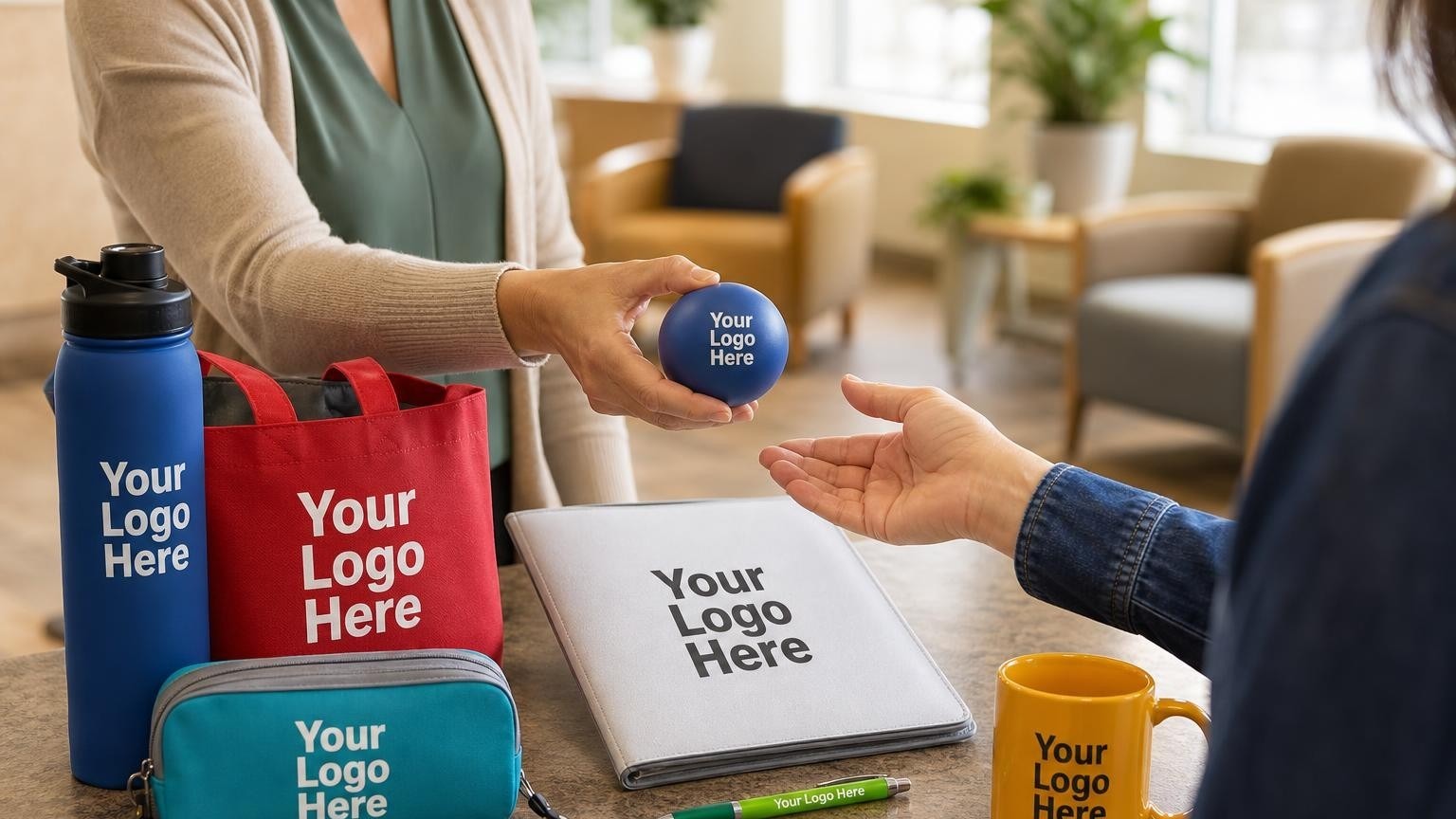
The first appointment at a mental health clinic is often met with high levels of patient anxiety and vulnerability. As patients sit in the waiting room preparing for their initial intake assessment, the physical environment plays a critical role in setting a calm, welcoming tone. Clinic administrators can ease this transition by providing a structured welcome kit at the front check-in desk.
Including practical, sensory-focused items in these kits shows respect for the patient's experience and helps reduce pre-appointment tension. For instance, offering custom hand sanitizers at the intake desk provides a clean, reassuring touchpoint that patients can use immediately. Paired with Shape Stress Balls, these kits give patients a physical outlet for nervous energy while they complete necessary paperwork.
This workflow not only helps regulate the patient's nervous system but also establishes your clinic as a stable, caring environment. The physical items act as tangible representations of the structured support they will receive throughout their therapeutic process, helping to build a strong therapeutic alliance from day one. By investing in durable, high-quality items rather than cheap, disposable novelties, you signal to patients that their well-being is valued from the very first moment they step through your doors.
Discreet & Professional Intake Essentials
Provided to new patients during their first appointment to facilitate therapy homework and administrative tasks.
Matching Clinical Workflows with Tactile Resources
Selecting the right promotional item depends on the specific clinical or outreach scenario. The table below outlines how different items align with specific clinic workflows, recipient groups, and operational goals.
| Clinical Scenario | Primary Recipient Group | Recommended Tactile Item | Operational Goal |
|---|---|---|---|
| Mobile Outreach & Health Fairs | General Public & Underserved Populations | Health Theme Stress Balls | Lower barriers to entry and reduce public stigma |
| New Patient Intake | Admitted Outpatients | Custom Hand Sanitizers | Ease waiting room anxiety and provide immediate comfort |
| Crisis Hotline Promotion | High-Risk Individuals & Families | Promotional Magnets | Keep emergency contact numbers visible in the home |
| School-Linked Workshops | Youth & School Counselors | Shape Stress Balls | Provide sensory grounding tools for classroom use |
Resource Allocation: Selecting Items for Every Operational Scale
Managing a community clinic requires careful budget efficiency, especially when operating under strict local government budgets or healthcare grants. To help administrators make practical decisions, we have organized our recommendations into three distinct operational tiers based on outreach scale and recipient groups.
- Good (High-Volume Outreach): Focus on cost-effective, flat items that are easy to store and distribute in large quantities. Practical options include flat promotional magnets with helpline numbers, basic pocket-sized custom hand sanitizers, and standard round stress relievers. These work well for broad community wellness block parties and county-wide health campaigns.
- Better (Targeted Clinical Programs): Invest in mid-range, highly tactile items that support specific therapeutic goals. Excellent choices include shape stress balls in comforting, non-clinical designs, magnetic calendars for appointment tracking, and customized wellness brochures. These are ideal for new patient welcome kits and youth counseling programs.
- Best (Staff Appreciation & Referral Partners): Choose premium, durable items that express deep appreciation and build professional relationships. Consider high-quality Employee Appreciation gifts for clinical staff, custom greeting cards for referring physicians, and premium insulated drinkware for local school counselors. These items strengthen your referral network and support staff retention in high-stress care environments.
Operational Wisdom: Practical Insights for Clinical Administrators
Based on Myron's experience helping organizations plan custom event merchandiseBased on experience helping organizations plan custom event merchandise, Myron's team has gathered practical operational insights specifically for community mental health providers:
- Prioritize Flat, Stackable Items for Mobile Vans: Mobile outreach teams often operate out of compact vans or temporary tents. Flat items like magnets and magnetic calendars stack easily in plastic storage bins, reducing setup stress and saving valuable space during transport.
- Avoid Loud or Clicking Novelties: Items that make noise, such as clicking pens or plastic toys, can be highly disruptive in a quiet clinical waiting room or therapy office. Stick to silent, soft-touch tactile items that support sensory regulation without creating auditory distractions.
- Keep Helpline Text Large and Legible: If you are printing a crisis line or appointment number on a magnet or stress ball, ensure the font is clean and high-contrast. During a crisis, individuals need to read the contact information instantly without straining.
- Distribute Sanitizers at Intake Desks: Placing hand sanitizers directly on the customer counter at check-in serves a dual purpose. It maintains clinical hygiene standards while offering a natural, low-pressure way for patients to take a branded item home.
- Use Subtle, Non-Clinical Branding: To protect patient privacy, avoid using loud, clinical terms like "Psychiatric Services" or "Crisis Center" in large print. A clean, comforting logo paired with a simple phone number allows patients to use the item in public without feeling self-conscious.
- Store Items in Temperature-Controlled Spaces: Many wellness items, particularly hand sanitizers and certain soft-squeeze stress balls, can degrade if stored in hot clinic supply closets or vehicle trunks for extended periods. Keep your inventory in a cool, dry space to preserve its quality.
Community Outreach & Partner Appreciation
Gifted to referring physicians, school counselors, and local community leaders to strengthen care networks.
Common Mistakes to Avoid
- Distributing loud, brightly colored toys that feel childish rather than therapeutic.Administrators often buy generic bulk novelty items to save money without considering the clinical impact, which can trivialize care.Better approach: Select muted, professional, and tactilely soothing items that respect the maturity of the patient.
- Choosing low-quality items that break easily, signaling a lack of care and stability.Budget constraints lead to purchasing the cheapest available items, which can make the clinic feel unstable or unsupportive.Better approach: Invest in durable, high-quality items that reflect the stable, reliable nature of your clinical services.
- Overcomplicating the branding with dense text instead of a clean, comforting logo and helpline.Trying to squeeze all services, hours, and addresses onto a single small item makes it illegible and overwhelming.Better approach: Keep branding minimal, focusing on a clean logo and a single, clear crisis or appointment helpline.
Frequently Asked Questions About Clinical Promotional Items
How can we distribute promotional items without compromising patient confidentiality?
Focus on distributing items at broad community events or using neutral, high-quality packaging like solid-colored tote bags during clinic check-outs. This ensures that receiving an item does not publicly identify someone as a patient of the clinic.
What types of promotional items are best suited for trauma-informed care environments?
Choose tactile, grounding items like soft-touch pens, smooth-textured journals, and weighted or soft stress relievers that help regulate the nervous system. Avoid loud, clicking, or bright novelty items that could cause sensory overload or feel childish.
How do we select items that appeal to both adult patients and youth outreach programs?
Opt for highly functional, universal items like premium writing instruments and durable water bottles that carry broad appeal across all age demographics. Neutral colors and clean, supportive messaging ensure the items feel appropriate for everyone.
Building a Trusted Pillar of Community Care
Community mental health clinics play a vital role in building healthier, more resilient neighborhoods. Establishing trust requires consistent, thoughtful effort at every touchpoint—from the first encounter at a local health fair to the quiet moments in the waiting room. By selecting high-quality, tactile resources that prioritize patient comfort and privacy, your clinic demonstrates a deep commitment to compassionate care. As you prepare for your next seasonal outreach campaign or update your intake workflows, invest in professional assets that build long-term community trust. We invite you to explore Myron's curated selection of professional healthcare and wellness promotional items to find the perfect tools to support your clinical mission.