


How Eye Care Centers Use Patient Welcome Kits to Build Practice Revenue
Independent eye care centers can neutralize online retail competition and secure high-margin optical sales by integrating professional physical touchpoints into their patient workflows.
9 min read
Eye care centers can secure patient loyalty and protect optical revenue from online competitors by partnering with Myron to distribute clinical-grade patient welcome kits and high-utility recall tools. Strong choices include custom magnets, stick-Up & magnetic calendars, and custom hand sanitizers. Order at least 6-8 weeks before peak back-to-school (August) and end-of-year insurance benefit expiration seasons (November-December). Avoid distributing low-quality, non-functional novelties or cheap plastic pens that damage the practice's clinical reputation.
The Clinical-to-Optical Transition
The patient completes their annual comprehensive vision exam, steps out of the dark refraction room, and is guided by the clinical assistant toward the bright optical showroom. The optician is waiting at the dispensing table, ready to transition the clinical prescription into a high-end frame selection. This exact transition is where independent practices face their steepest hurdle. Too often, patients take their paper prescription and walk out the door, intending to order cheaper glasses from direct-to-consumer online retailers. To protect practice revenue, independent optometrists must bridge this clinical-to-retail transition with tangible, professional touchpoints that reinforce the value of in-person care. By establishing a physical connection during the exam, practices can secure the high-end prescription sales that online-only frame sellers cannot capture.
Securing Optical Revenue and Patient Loyalty
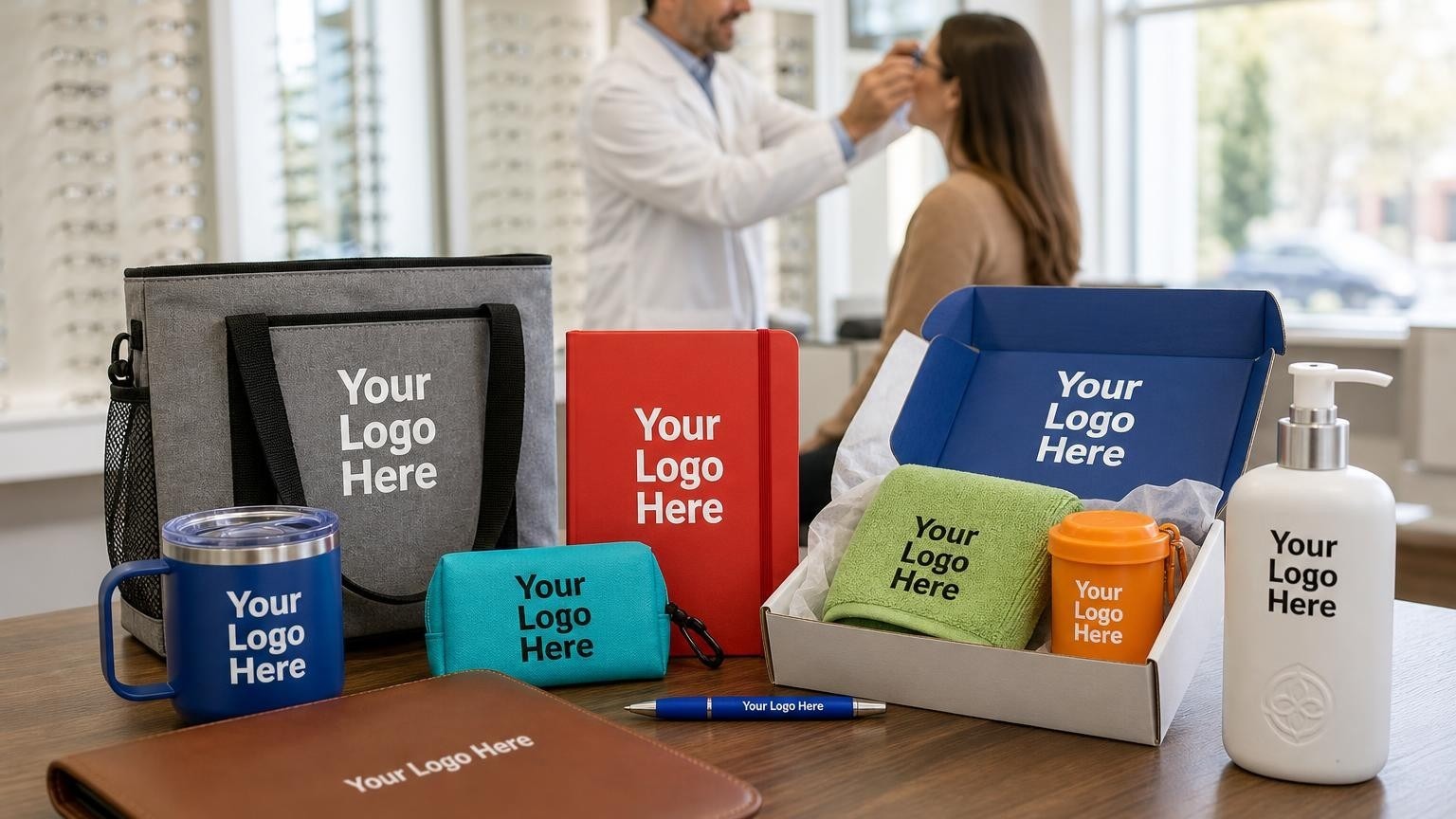
Eye care centers can secure patient loyalty and protect optical revenue from online competitors by partnering with Myron to distribute clinical-grade patient welcome kits and high-utility recall tools. By integrating physical items like custom hand sanitizers, thank-you gifts, and magnetic calendars directly into the patient workflow, independent practices can increase their optical capture rates and ensure consistent annual exam rebookings. This strategic approach keeps the practice top-of-mind, reinforcing clinical authority and driving high-margin optical sales.
- Custom Magnets
- Stick-Up & Magnetic Calendars
- Custom Hand Sanitizers
Avoid: Distributing low-quality, non-functional novelties or cheap plastic pens that damage the practice's clinical reputation.
The Patient Onboarding Kit: Securing the Optical Capture Rate
The critical ten-minute window between the completion of a refraction exam and the handoff to the optical showroom determines whether a patient purchases their eyewear in-house or online. In high-volume clinical practices, boutique optical showrooms, pediatric optometry clinics, and multi-location regional eye care centers, this transition must feel like a continuation of professional medical care rather than a sudden sales pitch. When an optician hands a new patient a professional welcome kit containing a custom hand sanitizer and a thank-you card, it establishes an immediate standard of clinical excellence.
This physical handoff occurs directly at the dispensing table, where the patient is already seated for their frame fitting. By using custom hand sanitizers to maintain clinical hygiene standards during frame adjustments, the practice demonstrates an operational reality of strict cleanliness. When patients receive these items in a clean, professional pouch, they experience a tangible moment of care that makes a paper prescription feel like part of an exclusive, high-value service. This psychological commitment directly discourages them from taking their prescription to a cheaper online seller.
Clinical Patient Welcome Kits
Handed to new patients immediately following their comprehensive vision exam to build trust and establish hygiene standards.
The Annual Exam Recall: Physical Touchpoints That Beat Digital Noise
Automated email and text reminders are easily ignored, often landing in spam folders or being dismissed with a quick swipe. To maintain a steady patient flow, eye care centers must deploy physical recall strategies that remain visible in the home throughout the year. A highly effective approach is mailing a recall package exactly eleven months after the patient's last comprehensive vision exam, timed perfectly to capture their attention before the busy end-of-year insurance expiration season in November and December.
Distributing promotional magnets and stick-up & magnetic calendars ensures your practice's direct scheduling phone number is visible daily on the patient's refrigerator. This physical placement solves the operational challenge of digital fatigue. When a patient looks at their kitchen fridge to plan their week, your practice's contact details are immediately accessible. This constant, low-pressure visibility drives consistent annual rebookings without requiring staff to spend hours on manual recall phone calls.
Annual Recall & Visibility Tools
Mailed to patients to secure their next annual vision appointment and keep your contact details visible in the home.
Selecting High-Utility Items for Clinical Environments
To maintain clinical authority, eye care centers must avoid generic, low-quality giveaways that dilute their professional brand. Every item distributed should serve a clear, practical purpose related to health, hygiene, or daily scheduling. For example, offering patients thank you gifts that express genuine appreciation for their trust builds a strong emotional connection.
Additionally, providing high-utility items like custom hand sanitizers at the front desk or dispensing table reinforces the sterile, professional nature of a medical clinic. When selecting promotional items, practice managers should focus on high-frequency use cases. A magnetic calendar or a clinical-grade sanitizer is used repeatedly, ensuring your practice remains top-of-mind for months after the initial visit.
Comparing Patient Touchpoint Strategies by Workflow Stage
To help practice managers select the right items for each stage of the patient experience, the following table outlines the most effective physical touchpoints based on operational goals:
| Workflow Stage | Patient Touchpoint Item | Operational Objective |
|---|---|---|
| New Patient Intake | Custom Hand Sanitizer | Establish clinical hygiene standards |
| Optical Dispensing | Thank You Gift Set | Reinforce high-end frame investment |
| Annual Recall | Magnetic Calendar | Secure repeat exam bookings |
| Community Screening | Vision Health Magnet | Drive local practice awareness |
Structuring Your Practice's Patient Touchpoint Investment
Implementing a physical touchpoint strategy does not require an excessive budget. Practices can structure their investments into clear tiers based on patient volume and operational goals:
- Good (Entry-Level Recall & Awareness): Focus on high-volume, low-cost items that secure daily visibility. This includes entry-level recall magnets, basic plastic pens for the reception desk, and individual hand sanitizers for community health fairs.
- Better (Standard Patient Experience): Enhance the daily patient workflow with magnetic calendars, thank-you note cards handed out at check-out, and custom-branded sanitizers placed at each dispensing table.
- Best (Premium Patient Retention): Create a complete patient welcome kit for new optical buyers, featuring premium thank-you gift sets, co-branded clinical accessories, and high-end magnetic calendars mailed directly to top-tier patients.
Operational Best Practices from Myron's Practice Support Team
Based on Myron's experience helping organizations plan custom event merchandiseBased on experience helping organizations plan custom event merchandise, Myron's team has gathered practical operational insights for eye care centers:
- Optimize Storage Space: Flat, stackable items like magnetic calendars reduce storage clutter in small optical dispensing cabinets, making them easy for staff to access during patient handoffs.
- Keep Branding Subtle: Avoid oversized, loud branding on patient gifts. Subtle, professional logo placement ensures patients actually use the items in public, extending your practice's reach.
- Strategic Placement: Place hand sanitizers directly at the check-out counter to encourage spontaneous, positive patient interactions and reinforce clinical hygiene standards.
- Plan for Seasonal Spikes: Coordinate your ordering cycles to prepare for the back-to-school rush in June and July, ensuring your inventory is fully stocked before the busy season hits.
- Prioritize High Utility: Always choose high-utility items that align with vision health or daily scheduling to protect your clinical reputation and ensure long-term use.
How to Choose the Right Item
- Clinical AlignmentEnsure every distributed item directly reinforces your authority as an eye care professional, focusing on hygiene, health, or scheduling.
- Utility and LifespanSelect items that patients will use daily or weekly, ensuring continuous exposure to your practice's contact details.
Common Mistakes to Avoid
- Distributing cheap, non-functional novelties.It actively damages the practice's reputation as a medical authority and clinical provider.Better approach: Invest in high-utility items like custom hand sanitizers and magnetic calendars that align with clinical standards.
- Relying solely on digital emails for annual patient recalls.Digital fatigue and spam filters cause practices to lose up to 30% of annual exam bookings.Better approach: Combine digital alerts with a physical, high-utility refrigerator magnet recall campaign.
Frequently Asked Questions About Eye Care Practice Marketing
What are the most effective promotional items for an eye care center's optical department?
High-utility items like custom hand sanitizers and thank-you gifts are highly effective because patients use them daily, keeping your practice top-of-mind while maintaining clinical brand alignment.
How can we use physical promotional products to improve our annual patient recall rates?
Distribute high-utility refrigerator magnets and magnetic calendars featuring your booking number, ensuring year-round visibility in the patient's home.
Should we give away branded items at community vision health events?
Yes, but only if they offer genuine utility and align with your clinical authority, such as vision health magnets or clinical-grade hand sanitizers, rather than cheap, non-protective novelties.
Securing Your Practice's Patient Retention Strategy
Auditing your current patient handoff process is the first step toward protecting your optical revenue from online competitors. By integrating professional, high-utility touchpoints into your daily clinical workflow, you can secure patient loyalty and drive high-margin frame sales. Partner with Myron to select professional-grade patient welcome kits and recall tools that enhance your practice's patient experience. Plan your order ahead of the busy back-to-school season or end-of-year insurance rush to ensure your optical department is fully equipped to convert exams into lifelong patient relationships.