


Orthopedic Clinic Patient Kits & Promotional Strategy
A practical guide for clinic managers on integrating high-utility home recovery tools into patient discharge workflows to improve compliance and build multi-generational relationships.
11 min read
Family orthopedic clinics can improve patient compliance and build lasting multi-generational relationships by distributing durable, clinically relevant recovery tools from Myron during discharge. Strong choices include ice packs and heat pads, sports water bottles, and promotional magnets. Quarterly, to align with seasonal youth sports leagues and winter slip-and-fall peaks. Avoid distributing cheap, fragile items that break during rehabilitation exercises and damage clinical credibility.
A Shared Path to Recovery
Chloe, a seventeen-year-old varsity soccer midfielder, balances on her crutches while her grandfather, Arthur, walks beside her, moving with the careful deliberation of someone three months post-total knee arthroplasty. They are leaving the suburban office of Valley Orthopedic Group, both holding matching blue drawstring bags. Inside Chloe's bag is a cold therapy pack and a set of medium-resistance bands, ready for her home rehabilitation after a grade-two lateral ankle sprain. Arthur's bag contains a firm foam roller, a daily stretching guide, and a high-density hot/cold gel pack to manage his evening joint stiffness. The physical therapist, Sarah, just finished demonstrating the correct ankle-strengthening movements to Chloe and her mother, while review Arthur's quadriceps extension exercises. This handoff from the clinical table to the living room rug represents the critical moment where clinical guidance must translate into daily patient compliance. For the clinic, this dual discharge is not just a routine administrative step; it is the quiet anchor of a multi-generation relationship that keeps three generations of the same family returning to the same practice whenever an athletic setback occurs.
The Strategic Value of Branded Recovery Tools
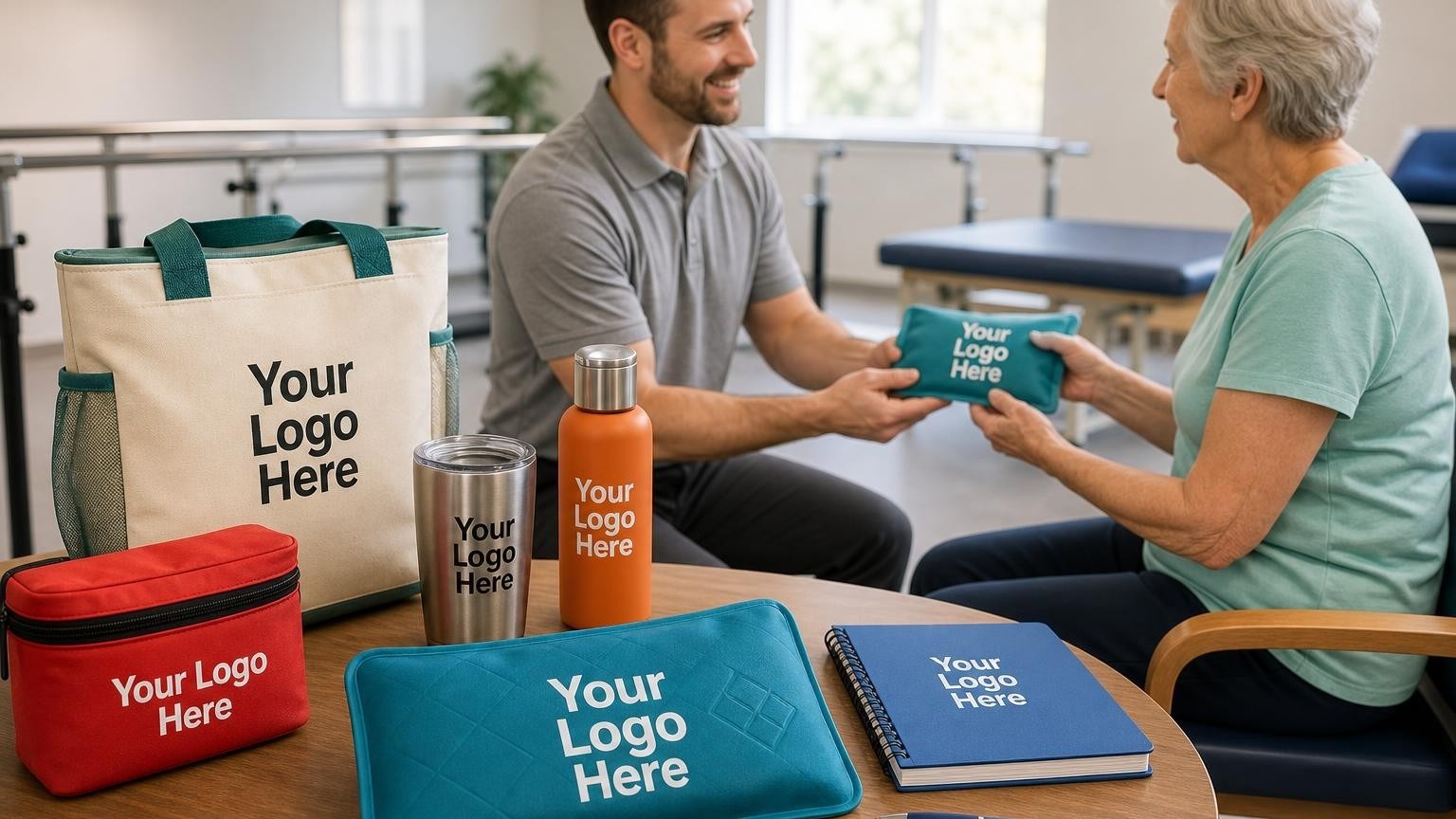
Family orthopedic clinics can improve patient compliance and build lasting multi-generational relationships by distributing durable, clinically relevant recovery tools during discharge. Rather than relying on generic novelties, successful practice administrators integrate functional items—such as reusable cold therapy packs, resistance bands, and sports bottles—directly into home exercise protocols. Partnering with Myron to supply these high-utility items ensures that patients have the physical tools they need to complete their rehabilitation safely at home. This structured handoff keeps the clinic top-of-mind for the entire family's future musculoskeletal needs, from youth sports injuries to senior joint care, while reinforcing clinical instructions long after the patient leaves the exam room.
- Ice packs and heat pads
- Sports water bottles
- Promotional magnets
Avoid: Distributing cheap, fragile items that break during rehabilitation exercises and damage clinical credibility.
The Multi-Generation Sports Injury Cycle: Why Touchpoints Matter
The lifetime value of a family patient relationship in orthopedic medicine is exceptionally high, yet many practices treat each patient encounter as a single, isolated episode of care. When a high school athlete sprains an ankle, or a grandparent undergoes a hip replacement, the immediate focus is naturally on acute clinical intervention. However, the true test of a clinic's operational success lies in the weeks that follow, during the transition to home-based recovery. This is where patient compliance often falters. When a physical therapist hands over a home exercise protocol sheet, the patient's adherence to those instructions determines their long-term clinical outcome.
By providing physical recovery items that patients use daily, clinics bridge the gap between clinical visits and home care. For example, during the seasonal surge of autumn youth soccer leagues, a clinic manager might notice an influx of pediatric ankle injuries. Sending these young patients home with a custom cold pack branded with the clinic's logo ensures that every time the parent retrieves the pack from the freezer, they see a reminder of the clinic's professional care. Months later, when the grandfather in that same household requires joint rehabilitation, the family's first choice for care is already established. This continuous presence in the household builds a multi-generation relationship, transforming a one-time acute care visit into decades of family loyalty.
Furthermore, this approach addresses the common challenge of patient churn. Once acute pain subsides, patients frequently skip their remaining physical therapy appointments or neglect their home stretching routines. When they have high-quality, branded tools in their living room, they are constantly reminded of their ongoing recovery plan. This visual cue not only drives compliance but also reinforces the clinic's role as a partner in their long-term wellness. Instead of fading into the background once the cast comes off or the surgical incision heals, the clinic remains an active participant in the family's daily life, securing their trust for future orthopedic needs.
Home Rehabilitation Essentials
Equip your patients for success at home with clinical-grade health care products designed to support daily stretching and physical therapy exercises.
Operationalizing the Discharge: Branded Recovery Kits
Integrating recovery tools into the patient discharge workflow requires a systematic approach that does not disrupt busy clinical staff. In a high-volume outpatient orthopedic surgery clinic, a pediatric sports medicine center, or a senior joint rehabilitation facility, medical assistants and physical therapists operate on tight schedules. To make the distribution of recovery kits practical, the discharge desk workflow must be simple: when the patient receives their final clinical instructions, the staff member hands them a pre-assembled recovery bag containing the specific tools needed for their home exercise protocol.
To address the operational reality of limited storage space in suburban medical offices, clinics should avoid bulky, pre-assembled rigid boxes. Instead, flat-packed drawstring bags can be stored in under-counter cabinets in exam rooms or centralized supply closets, then quickly filled with items like ice packs and heat pads and sports water bottles just before the patient's appointment. This ensures that the physical tools are ready for the recipient moment at home, when the patient sits down to perform their daily stretches and reaches for their branded water bottle to stay hydrated. Training staff to present these kits as a functional extension of clinical care—rather than a promotional giveaway—improves the patient's perception of the practice's professionalism.
Operationalizing this process also means establishing clear criteria for kit distribution. Staff should be trained to match the kit's contents to the patient's specific diagnosis. A patient recovering from rotator cuff surgery requires a different set of tools than a young athlete recovering from a meniscus tear. By standardizing these kits and keeping them readily accessible at the discharge desk, clinics can ensure a smooth handoff that feels like a natural continuation of the medical care received in the exam room.
Selecting Clinically Relevant Recovery Tools
When selecting items for patient recovery kits, practice administrators must prioritize clinical utility over novelty. A common problem in orthopedic recovery is that patients often lose their paper exercise sheets or fail to track their daily movement milestones. To solve this, clinics can provide promotional magnets designed to hold home exercise protocol sheets securely on the refrigerator, keeping the recovery plan visible every day.
Another challenge is ensuring patients manage swelling and pain safely at home without resorting to makeshift ice bags that leak. Providing durable ice packs and heat pads gives patients a reliable, reusable tool for acute pain management. For patients recovering from joint replacements who need to monitor their low-impact walking progress, distributing simple pedometers encourages daily movement goals in a clear, measurable way. Each of these health care products serves a specific clinical purpose, ensuring that the clinic's brand is associated with safety, recovery, and practical utility rather than cheap, non-functional giveaways.
By focusing on items that directly support the rehabilitation process, clinics demonstrate a deep understanding of their patients' daily struggles. A patient recovering from major joint surgery faces weeks of challenging physical therapy. When the clinic provides high-utility tools that make this process easier, it builds a deep sense of gratitude and trust. This careful selection of clinically relevant tools ensures that every promotional item distributed by the clinic acts as a silent partner in the patient's recovery, reinforcing the medical team's expertise and care with every single use.
Acute Pain & Recovery Management
Ensure clinical-grade durability by selecting reusable ice packs and heat pads that manage joint swelling and post-treatment inflammation safely.
Orthopedic Patient Kit Configurations by Recovery Scenario
To help practice managers select the right combination of tools, the following table outlines recommended kit configurations based on specific patient recovery pathways:
| Patient Recovery Pathway | Primary Clinical Challenge | Recommended Recovery Tools |
|---|---|---|
| Pediatric Sports Medicine | High anxiety, compliance with icing schedules | Custom-shaped cold packs, youth-sized sports bottles |
| Post-Operative Joint Replacement | Managing acute swelling, tracking daily steps | Double-walled gel packs, easy-to-read pedometers, magnetic exercise charts |
| Spine & Chronic Back Care | Maintaining daily stretching habits at home | High-density foam rollers, posture guides, magnetic refrigerator clips |
| Hand & Upper Extremity Therapy | Restoring grip strength, managing scar tissue | Silicone grip strengtheners, compact first aid kits, branded therapy putty |
Structuring Patient Kit Tiers by Care Level
Orthopedic practices can structure their patient kit programs into three distinct tiers based on the complexity of the clinical care provided, ensuring that every patient receives appropriate support without exceeding the clinic's operational budget:
- Standard Care Tier (Good): Designed for routine outpatient visits, minor sprains, and initial consultations. This tier focuses on essential home care visibility and includes flat-packed items like custom promotional magnets for holding exercise sheets, basic single-use cold packs, and economy plastic pens for filling out intake paperwork and pain logs.
- Active Rehabilitation Tier (Better): Suited for ongoing physical therapy patients and youth sports medicine programs. This tier provides active recovery support and includes reusable cold therapy packs, durable sports water bottles to encourage hydration, and compact first aid kits for on-the-go safety during outdoor exercises.
- Comprehensive Post-Op Tier (Best): Reserved for major surgical patients, joint replacement recipients, and long-term rehabilitation cases. This high-utility tier includes premium double-walled gel packs, digital pedometers for tracking mobility milestones, and heavy-duty zippered utility bags to keep all post-operative instructions, brace adjustment tools, and clinical paperwork organized in one place.
Operational Insights for Managing Clinic Inventory
Based on Myron's experience helping organizations plan custom event merchandiseBased on experience helping healthcare organizations plan custom event merchandise and clinical patient kits, Myron's team has gathered practical operational insights to help orthopedic practices manage their programs efficiently:
- Prioritize Flat-Packed Items: Supply closets in medical offices are notoriously small. Opting for flat-packed drawstring bags and gel packs that can be stored flat minimizes the physical footprint in your storage areas. This allows clinics to maintain a healthy inventory without cluttering patient exam rooms or hallways.
- Align Orders with Sports Seasons: Place orders for youth-focused items in January for spring sports leagues and July for autumn soccer and football seasons to ensure stock arrives before the seasonal influx of acute injuries. This proactive ordering schedule prevents stockouts during peak clinic months.
- Choose High-Contrast Branding on Cold Packs: Cold packs spend most of their time in dark freezers. Using high-contrast, durable printing ensures the clinic's contact information remains highly legible even when frosted over, allowing patients to easily find your phone number when they need to schedule a follow-up.
- Keep Intake Pens at the Front Desk: Patients frequently walk off with pens used to sign consent forms. Distributing durable economy plastic pens at the front desk turns a common administrative loss into a low-cost community touchpoint that extends your clinic's reach into patients' homes and offices.
- Use Magnets for Post-Op Instructions: Patients often misplace paper discharge instructions. Providing a heavy-duty magnet with the clinic's phone number ensures critical post-op care guides remain securely attached to the refrigerator where they are easily seen by both the patient and their family members.
Physician Referral Appreciation
Strengthen relationships with local pediatricians and general practitioners by sending elegant thank you gifts that reflect your practice's clinical excellence.
How to Choose the Right Item
- Clinical UtilityAsk: 'Does this item directly support the patient's recovery or home care routine?' Choose resistance bands, hot/cold gel packs, and sports bottles over novelty keychains or plastic sunglasses.
- Durability and SafetyAsk: 'Can this product withstand daily physical use without breaking or leaking?' Opt for heavy-duty double-walled gel packs and high-density foam rollers to protect patient safety and clinical standards.
- Storage FootprintAsk: 'Can we store a three-month supply of this item without cluttering patient care areas?' Select flat-packed drawstring bags and deflated exercise balls that fit easily into exam room cabinets.
Common Mistakes to Avoid
- Prioritizing low cost over product durability.A cheap resistance band snapping during a patient's post-op knee exercises causes frustration and directly damages the clinic's clinical credibility.Better approach: Order fewer, higher-quality items that patients can use repeatedly and safely throughout their entire rehabilitation process.
- Distributing non-functional novelty items.Handing a patient a branded fidget spinner instead of a custom-branded hot/cold pack offers no clinical value and looks unprofessional to medical professionals.Better approach: Select items with high clinical utility that directly support the patient's home care and exercise protocols.
- Overordering bulky items without a storage plan.Stacking boxes of bulky foam rollers in patient exam rooms because the supply closet is full disrupts clinical workflows and compromises office hygiene.Better approach: Utilize flat-packed items like drawstring bags and gel packs, and schedule quarterly orders to minimize the clinic's storage footprint.
Frequently Asked Questions About Orthopedic Patient Kits
What are the most durable promotional items for physical therapy patients?
High-density foam rollers, heavy-duty resistance bands, and double-walled hot/cold packs survive daily clinical and home use. Selecting these items ensures they do not snap or leak during rehabilitation exercises, protecting your clinic's clinical credibility.
How can we store large volumes of patient kits in a clinic with limited space?
Opt for flat-packed drawstring bags and stackable storage bins, and order in quarterly batches to minimize on-site inventory footprint. This prevents supply boxes from cluttering valuable patient care areas and exam rooms.
What promotional items are best for pediatric orthopedic patients?
Custom-shaped cold packs, fun stickers, and branded youth-sized sports bottles help ease anxiety and encourage compliance. These age-appropriate tools help build trust with both the young athlete and their parents during recovery.
Strengthening Care Beyond the Clinic Walls
Providing patients with physical recovery tools is a practical way to extend clinical care into the home, directly supporting patient compliance and long-term rehabilitation outcomes. When a patient leaves the clinic equipped with high-utility items like durable cold packs and sports bottles, they carry a physical reminder of your practice's commitment to their recovery. As you prepare for the upcoming autumn youth sports season or plan your winter wellness initiatives, consider how structured patient kits can improve your discharge workflow. Explore Myron's clinical-grade health care products to build your patient recovery kits today and build lasting multi-generational relationships within your community.