


Food Bank Promotional Products: Strategic Gear for Volunteers & Donors
Stop viewing promotional items as administrative overhead. Learn how experienced food bank directors use durable, high-utility gear as critical infrastructure to secure corporate partnerships and retain vital volunteer labor.
9 min read
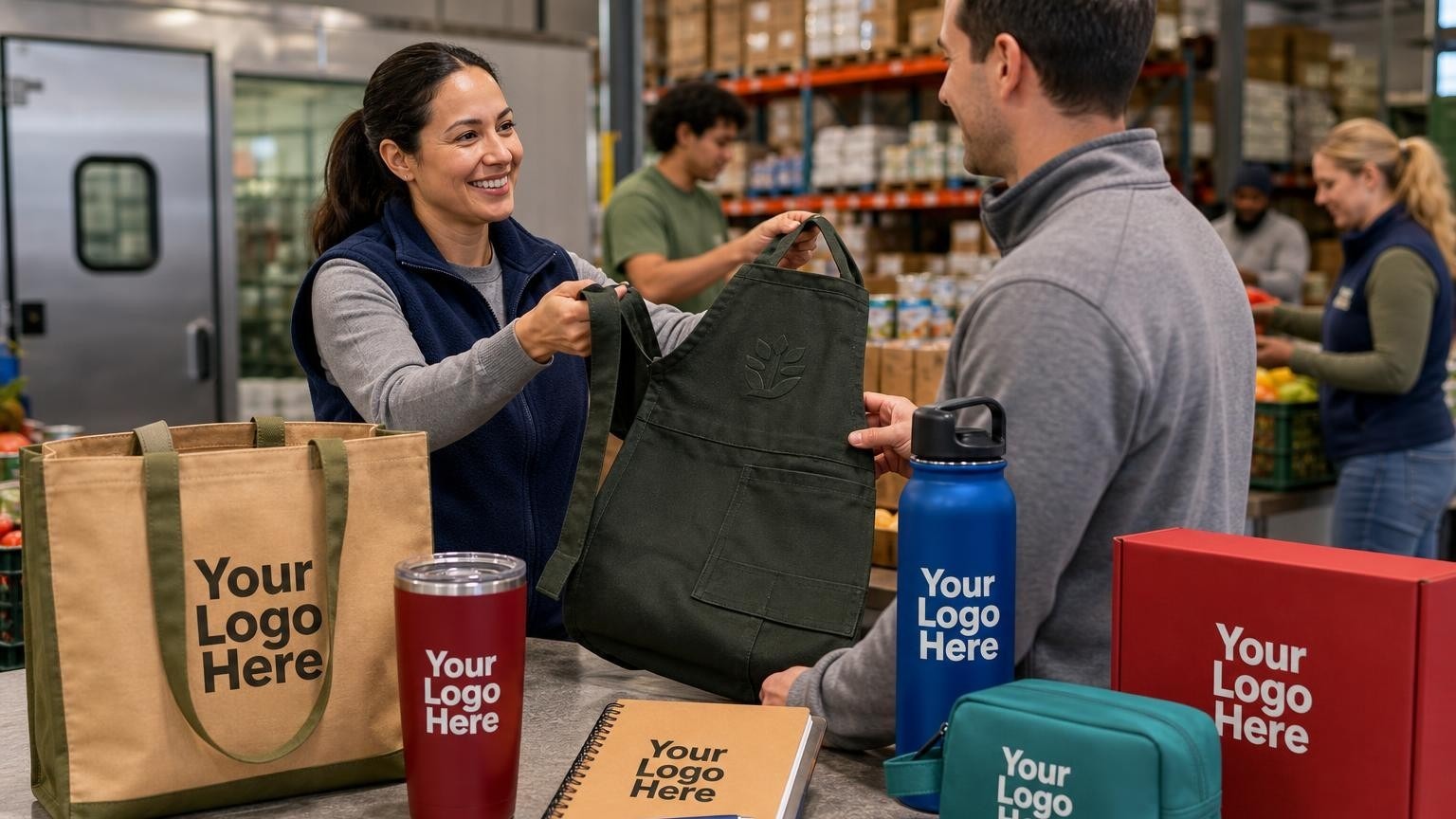
Food banks use strategic promotional products from Myron to turn casual volunteers into lifetime advocates and to secure the high-value corporate partnerships that keep warehouse shelves stocked. Strong choices include heavy-duty adjustable cotton aprons, durable canvas and insulated grocery totes, and double-wall vacuum insulated stainless steel drinkware. Three to four months prior to major seasonal events, such as holiday food drives, spring community campaigns, or annual fundraising galas. Avoid cheap, fragile plastic items that break easily in a warehouse environment and contradict the sustainability values of food recovery organizations.
The Warehouse Floor: Where Community Connections Take Root
On a busy Tuesday morning, fifty corporate volunteers stand in a chilly food bank warehouse, ready to sort tons of fresh produce but lacking a sense of permanent connection to the logistical mission. The air is thick with the scent of fresh cardboard and the hum of forklifts moving heavy pallets. These volunteers, sent by a local corporate partner, are eager to help, but they are currently outsiders in a complex logistics center. A volunteer coordinator walks up to the group, carrying a stack of heavy-duty utility aprons and durable water bottles. As each volunteer puts on the branded gear, the atmosphere shifts. They are no longer just temporary helpers; they are now part of a unified team working toward a shared goal. This physical transition is the critical moment where a one-time volunteer begins to transform into a lifelong advocate for the food bank's mission.
Strategic Gear for Food Bank Operations
Food banks can strategically use high-utility gear to turn casual volunteers into lifetime advocates and secure the corporate partnerships that keep warehouse shelves stocked. By choosing durable, practical items from Myron, such as custom volunteer apparel and reusable bags, food banks can build community trust and maintain visibility without compromising their fiduciary duty. The key is to select items that solve real operational problems—like keeping volunteers warm in cold-storage units or identifying staff at outdoor mobile pantries—rather than distributing cheap novelties.
- Heavy-duty adjustable cotton aprons
- Durable canvas and insulated grocery totes
- Double-wall vacuum insulated stainless steel drinkware
Avoid: Cheap, fragile plastic items that break easily in a warehouse environment and contradict the sustainability values of food recovery organizations.
The Volunteer Lifecycle: Turning One-Time Packers into Lifetime Advocates
The volunteer lifecycle is the lifeblood of any high-volume food bank. When corporate teams arrive for a service day, they often enter a fast-paced, industrial environment that can feel intimidating. To bridge this gap, volunteer coordinators can use functional gear to establish immediate group identity and professionalism. For instance, when volunteers are assigned to sorting USDA TEFAP commodities in a 40-degree cold-storage room, providing them with heavy-duty, branded cotton aprons protects their clothing and keeps them comfortable during their shift. Similarly, when a group is packing weekend backpack food programs for local schools, handing out custom buttons to mark their contribution builds a sense of pride. These tangible items serve a practical purpose during the shift and act as post-event reminders of their hands-on impact. By investing in high-quality volunteer appreciation gifts, food banks can significantly improve volunteer retention rates, turning a single corporate-mandated service day into a recurring commitment.
Rugged Warehouse Gear
Equip your daily volunteers and warehouse staff for active, physical shifts sorting and packing food with durable, protective gear.
Corporate Partner Recognition: Branded Tools that Solidify Food Drive Commitments
Beyond individual volunteers, food banks rely heavily on deep corporate partnerships to fund their distribution networks and secure multi-ton food donations. Recognizing these partners requires professional-grade tools that fit naturally into a corporate office environment while subtly reminding employees of their community impact. When concluding a major autumn food drive, presenting a polished, laser-engraved desk accessory or a high-grade insulated tumbler to the HR director of a regional bank partner is far more effective than a generic thank-you card. This gesture acknowledges the scale of their contribution and keeps the food bank's brand visible in corporate spaces where future sponsorship decisions are made. Using thoughtful thank you gifts shows corporate sponsors that their logistical and financial support is deeply valued, helping to secure the recurring commitments needed to sustain operations year-round.
Corporate Partner & Donor Stewardship
Thank high-value corporate sponsors and major financial donors at appreciation events with polished, professional keepsakes.
Problem-First Selection: Choosing Gear That Outlasts the Shift
Selecting the right gear requires a problem-first approach. Rather than browsing a catalog for trendy items, food bank directors should identify the specific operational challenges their teams face. For example, warehouse shifts are physically demanding, and volunteers need to stay hydrated. Providing durable, double-wall stainless steel drinkware solves this problem while offering a high-value appreciation gift that volunteers will use daily at their regular jobs. In outdoor mobile pantry distributions, clear identification is crucial for safety and trust. Equipping staff and volunteers with high-visibility safety vests and weather-resistant clipboards ensures a professional presence in public spaces like school parking lots. By focusing on utility and durability, food banks can ensure their promotional investments directly support their daily operations.
Operational Gear Comparison: Matching Recipient Roles with Functional Tools
To help you make informed purchasing decisions, the table below outlines the best promotional gear choices based on specific food bank roles and environments:
| Recipient Group | Operational Environment | Recommended Product Type |
|---|---|---|
| One-time corporate volunteers | Dry-storage packing line | Custom buttons & branded cotton shirts |
| Shift leaders & core volunteers | Cold-storage & loading docks | Heavy-duty aprons & knit beanies |
| Mobile pantry field staff | Outdoor distribution sites | High-visibility safety vests & clipboards |
| Regional bank drive coordinators | Corporate offices | Premium desk accessories & insulated tumblers |
Resource Allocation: Strategic Gear for Every Investment Level
To respect strict nonprofit budgets, promotional strategies should be organized into clear investment tiers based on recipient relationship and event scale:
- Good: For large-scale volunteer events or community food drives, low-cost yet functional items like custom buttons, promotional magnets, and silicone wristbands work well to build broad awareness.
- Better: For recurring volunteers and shift leaders, invest in mid-range, durable gear such as branded cotton t-shirts, heavy-duty utility aprons, and reusable grocery totes that withstand warehouse wear.
- Best: For major financial donors, corporate sponsors, and board members, select high-grade items like laser-engraved stainless steel drinkware, polished desk organizers, or weather-resistant outerwear that reflect the scale of their support.
Fulfillment Realities: Practical Insights from the Myron Team
Based on Myron's experience helping organizations plan custom event merchandiseBased on experience helping organizations plan custom event merchandise, Myron's team has gathered practical operational insights for food bank buyers:
- Flat, stackable items like custom magnets reduce volunteer setup stress at registration tables and are easy to store in limited warehouse office space.
- Sponsor logos should be subtle; oversized branding makes a donor gift feel like advertising rather than a professional partnership tool.
- Warehouse environments are dusty; individually wrapped items keep gear clean and ready for distribution without requiring extra prep time.
- Choose high-contrast colors for outdoor mobile pantry gear to ensure staff remain visible and easily identifiable to local traffic and clients.
- Order volunteer apparel in bulk sizes (primarily Large and XL) to accommodate diverse volunteer groups without complex inventory tracking.
How to Choose the Right Item
- Operational EnvironmentDetermine if the item will be used in a temperature-controlled office, a dusty warehouse, or an outdoor mobile pantry. Cold-storage and outdoor distributions require weather-resistant materials and higher durability.
- Recipient Relationship TierMatch the value and quality of the item to the recipient's level of commitment. Use premium engraved desk accessories for corporate sponsors, durable tote bags for recurring volunteers, and branded buttons for one-time packers.
- Sustainability AlignmentEvaluate the product's lifecycle and material composition to ensure it reflects your mission of food recovery and waste reduction. Choose RPET recycled tote bags or bamboo-accented drinkware over single-use plastics.
Common Mistakes to Avoid
- Prioritizing low cost over durability for warehouse volunteer gear.Standard promotional items often fail quickly in rugged warehouse environments, leading to wasted budget and poor brand representation.Better approach: Invest in a smaller quantity of high-quality, durable items that volunteers will actually reuse, extending your brand's reach.
- Distributing non-functional items that do not align with the food bank's operational reality.Buyers often select trendy promotional novelties without considering how they fit into a physical labor environment.Better approach: Focus strictly on items that solve a practical problem for the volunteer or staff member during their shift.
- Using non-sustainable materials that conflict with the organization's environmental mission.Food banks are deeply tied to environmental sustainability and food waste reduction; giving away cheap, non-recyclable plastic items damages credibility.Better approach: Select items made from recycled materials, organic cotton, or highly durable metals that reinforce your commitment to sustainability.
Frequently Asked Questions: Operational Gear for Food Banks
How can food banks justify spending limited operational budgets on promotional items?
Promotional items should be viewed as strategic investments in volunteer retention and donor stewardship, which directly secure the labor and funding needed to distribute food.
What are the most durable promotional items for a cold-storage or warehouse environment?
Heavy-duty canvas aprons, insulated stainless steel drinkware, and double-stitched utility bags are ideal for withstanding the physical demands of food bank operations.
How do we choose promotional items that align with our sustainability and food waste reduction missions?
Select reusable, long-lasting items made from recycled or sustainable materials, such as RPET tote bags and bamboo-accented drinkware, to reinforce your environmental values.
Sustaining the Mission: Your Next Strategic Step
Every branded item distributed by a food bank is an investment in the community's trust and the organization's long-term sustainability. By choosing durable, professional-grade gear, food bank directors can turn routine volunteer shifts and corporate food drives into powerful engines for advocacy and partnership. When planning your next seasonal campaign, partnering with Myron ensures you receive the high-quality, practical tools needed to support your vital mission. Consider reviewing your volunteer appreciation strategy three to four months ahead of the busy autumn and winter holiday season to ensure your team is fully equipped to feed the community and build your brand.