


Home Health Agency Promotional Products: A Guide to Referrals and Care
How home health administrators use high-utility physical tools to secure hospital referrals, support mobile clinicians, and improve patient care compliance in the home.
11 min read
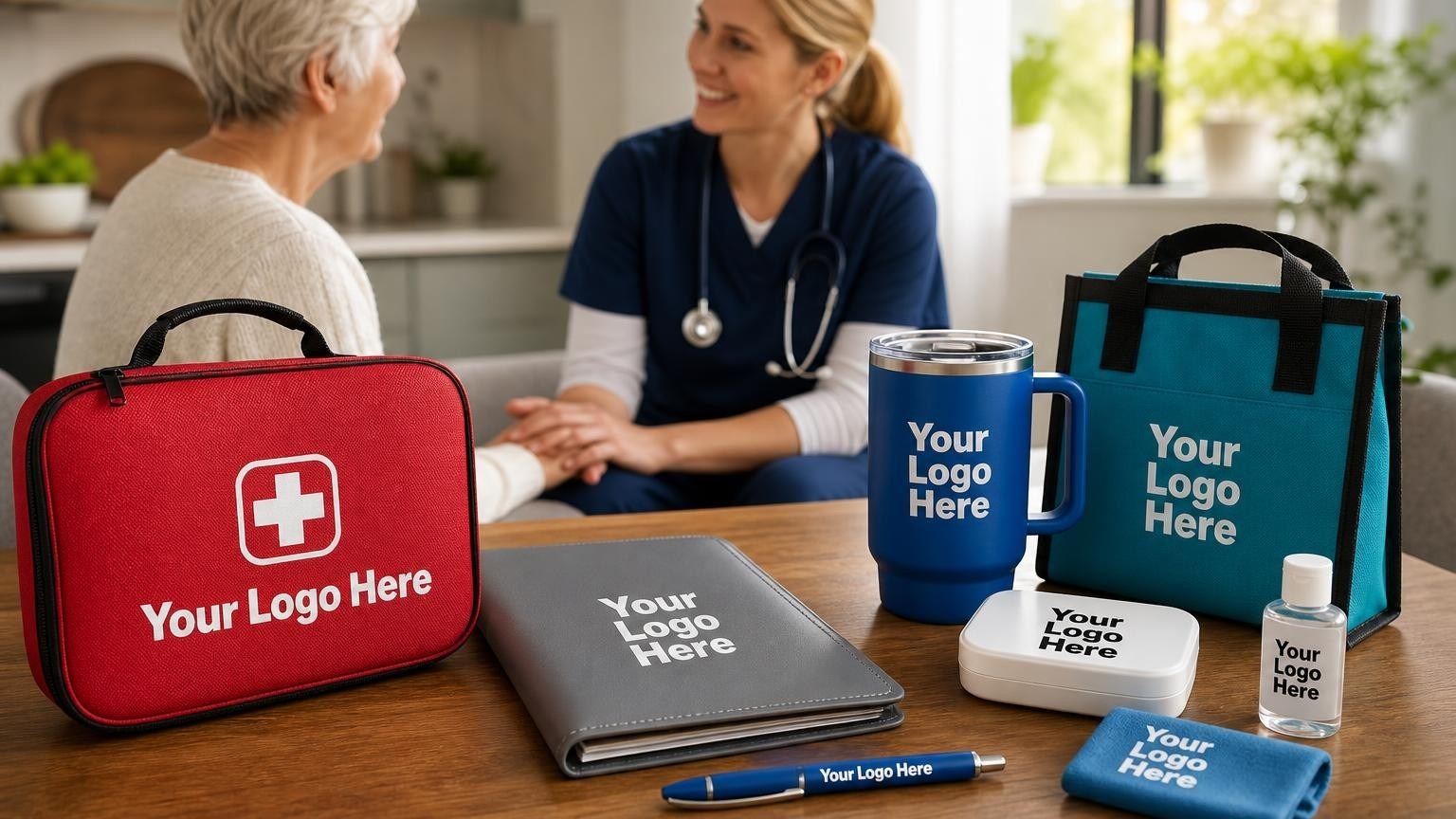
Home health agencies build trust and secure consistent referrals by equipping hospital partners, patients, and mobile staff with high-utility tools from Myron. Strong choices include first aid kits and magnetic calendars, custom apparel and home care appreciation gifts, and professional administrative thank you items. Order quarterly to align with hospital outreach schedules and seasonal caregiver hiring cycles. Avoid cheap, flimsy plastic items that break easily and project a low-quality image to clinical partners.
Securing the Referral: Building High-Trust Relationships with Hospital Discharge Planners
A busy hospital discharge lounge hums with the sound of ringing phones, fax machines, and the quiet rustle of patient charts. A case manager sits at a cluttered desk, tasked with coordinating post-acute care for three patients departing before noon. Three different home health agency brochures sit in a neat stack, each promising high-quality clinical care and compassionate staff. The planner does not look at the glossy, generic pamphlets. Instead, they reach for the contact details printed clearly on a heavy-duty clipboard holding their active transition paperwork. This clipboard, left by a local agency representative during a clinical update meeting, provides immediate utility in a high-stress environment. In this professional setting, physical items are not mere decorative novelties; they are functional tools that establish credibility and keep an agency top-of-mind when critical placement decisions are made. Building a strong hospital discharge planner relationship requires moving past cheap plastic trinkets and focusing on items that support daily administrative workflows.
Quick Reference: High-Utility Tools for Home Health Success
Home health agencies build trust and secure consistent referrals by equipping hospital partners, patients, and mobile staff with high-utility tools from Myron. Key operational assets include first aid kits and high-contrast refrigerator magnets distributed during the initial home intake visit to improve medication safety and keep emergency contact details visible. For mobile clinical staff, durable apparel and field-ready tools support daily operations during home visits. For hospital discharge planners, professional administrative gifts like magnetic calendars keep your agency's contact information accessible during critical patient transitions. Investing in durable, practical items ensures your agency remains the trusted local provider for post-acute care.
- First aid kits and magnetic calendars
- Custom apparel and home care appreciation gifts
- Professional administrative thank you items
Avoid: Avoid cheap, flimsy plastic items that break easily and project a low-quality image to clinical partners.
The Hospital Discharge Planner Relationship: Earning Professional Trust
Hospital case managers and social workers operate under immense pressure to reduce discharge delays while ensuring safe patient handoffs. When coordinating post-acute care, these professionals rely on agencies that demonstrate operational readiness and clear communication. A simple way to maintain visibility in these high-stress environments is by providing administrative tools that simplify their daily paperwork.
During quarterly educational outreach meetings or clinical lunch-and-learns, gifting high-quality office items helps keep your agency's contact details at their fingertips. For instance, a durable clipboard or a professional calendar helps planners organize complex transition documents. Choosing a professional Stick-Up & Magnetic Calendars option allows case managers to track regional post-acute availability right on their metal filing cabinets.
To show genuine appreciation for their coordination efforts, agencies can distribute practical Thank You gifts that fit naturally into a clinical office setting. Avoid cheap, flimsy plastic items that skip or break, as they project a low-budget image to clinical partners. Instead, focus on reliable, professional tools that reflect the high standard of clinical care your agency provides to every referred patient.
The First 48 Hours: The Role of Patient Welcome Kits in Reducing Readmissions
The transition from a highly monitored hospital bed to an independent home environment is a vulnerable period for patients. The first 48 hours are critical; this is when medication confusion, missed follow-up appointments, and anxiety are at their highest. Standardizing a physical welcome kit delivered during the initial home health intake assessment is a practical strategy that directly supports patient safety and compliance.
Whether managing a specialized cardiac recovery program, a post-surgical wound care regimen, or physical therapy home visits, a structured kit helps reduce confusion. When a traveling nurse sits at a patient's kitchen table during the intake visit, they can unpack a structured kit designed to reduce confusion. Placing custom Magnets with the agency's 24/7 clinical triage number on the refrigerator ensures that the patient or their adult child can quickly find help during an off-hours health scare, rather than calling emergency services or returning to the emergency room.
Additionally, including practical health resources like First Aid Kits & Dispensers in the welcome package provides immediate utility. These physical items remain in the home long after the initial visit, serving as a constant visual reminder of your agency's proactive care. When visiting neighbors or family members see these highly visible, professional tools on the kitchen counter, they associate your agency with safety and reliability, creating a passive engine for local word-of-mouth referrals.
Patient Intake & Safety Essentials
Distributed during the first home visit to establish a safe, organized care environment.
Practical In-Home Visual Aids and Safety Tools
To address the specific challenges of medication compliance and scheduling, home health agencies should focus on products that offer daily functional value. When selecting items for patient welcome kits, prioritize high-contrast designs and simple physical layouts that are easy for elderly or visually impaired individuals to use.
A highly effective tool is a large-format magnetic calendar. By using Stick-Up & Magnetic Calendars, patients can easily see which days the physical therapist, occupational therapist, or skilled nurse is scheduled to visit. This reduces patient anxiety and helps family caregivers coordinate their schedules.
Infection control is another operational reality of home-based care. Providing patients and visiting family members with branded Hand Sanitizer bottles to place near the front door or on the living room side table encourages proper hygiene protocols before any clinical contact. These small, practical additions to the home environment demonstrate a thorough, clinical-first approach to post-acute care.
Equipping the Field: Mobile Caregiver Trunk Organization and Professional Gear
Unlike hospital staff who work in controlled clinical environments, home health clinicians operate independently out of their personal vehicles. They travel between multiple patient homes daily, carrying clinical files, diagnostic equipment, personal protective gear, and wound care supplies. This isolated work environment makes mobile caregiver trunk organization a critical operational necessity.
To support these traveling clinicians and maintain high standards of infection control, agencies must provide durable storage solutions. Physical therapists and skilled nurses benefit from heavy-duty, multi-pocket car trunk organizers that keep clean clinical kits separated from dirty clinical waste. Providing professional gear also plays a significant role in staff appreciation and retention, helping to combat high caregiver burnout rates.
When entering a patient's private home, a professional appearance builds immediate trust with the patient and their family. Equipping your field staff with matching, high-quality Shirts & T-shirts ensures they are easily identifiable as authorized clinical representatives. During annual campaigns like National Home Care Month, distributing specialized Home Care Appreciation items, such as insulated lunch bags or durable outerwear, shows staff that their hard work on the road is valued by the administration.
Mobile Clinician Field Gear
Provided to traveling nurses, therapists, and aides to organize clinical supplies in their vehicles.
Comparing Home Health Operational Tools by Scenario
Selecting the right physical tools depends on the specific clinical or administrative scenario. The table below outlines how different items serve distinct roles across the home health care continuum, helping administrators allocate their marketing and operational budgets effectively.
| Scenario | Target Recipient | Recommended Product Type | Operational Goal |
|---|---|---|---|
| Hospital Discharge Lounge | Case Managers & Social Workers | Heavy-duty clinical clipboards | Streamline transition paperwork |
| Home Health Intake Assessment | Recovering Patients & Family | Large-print magnetic calendars | Reduce scheduling confusion |
| Mobile Clinical Field Visits | Traveling Nurses & Therapists | Durable zippered supply totes | Organize clinical gear in personal vehicles |
| Staff Appreciation Campaigns | Field Clinicians & Aides | Insulated lunch bags & outerwear | Improve field staff retention |
Strategic Investment Tiers for Home Health Agencies
Home health administrators must balance tight operational budgets with the need to support field staff and secure referrals. Structuring your purchases into clear tiers allows you to distribute high-utility items effectively without overspending.
- Good (Entry-Level Utility): High-contrast refrigerator magnets, individual hand sanitizer bottles, and basic stick-up calendars. These items are excellent for high-volume distribution during community health fairs or as quick additions to standard patient intake packets.
- Better (Mid-Range Care Support): First aid kits, custom t-shirts for field staff, and magnetic dry-erase schedule boards. These products offer direct clinical utility and help standardize the presentation of your agency's services in the home.
- Best (Premium Professional Gifts): Heavy-duty clinical clipboards, insulated lunch bags for traveling nurses, and premium home care appreciation gifts. These high-durability items are reserved for key referral partners and long-tenured field staff who represent your agency daily.
First-Party Insights: Operational Wisdom for Home Health Branding
Based on Myron's experience helping organizations plan custom event merchandiseBased on experience helping healthcare organizations plan custom merchandise, Myron's team has gathered practical operational insights that ensure your items perform well in real-world clinical settings:
- Prioritize wipeable materials: Home health gear is exposed to diverse home environments. Choose polyester or plastic items that can be easily sanitized with clinical-grade disinfectant wipes to meet infection control standards.
- Use high-contrast, large-print text: Elderly patients often struggle to read small fonts. Ensure emergency phone numbers and nurse visit schedules are printed in bold, high-contrast text of at least 18-point size.
- Avoid delicate or complex items: Mobile clinicians live out of their car trunks. Fragile items or complex digital gadgets will quickly break or go unused; stick to simple, durable, mechanical tools.
- Subtle branding builds professional trust: Oversized, flashy logos can make a patient welcome kit feel like a cheap sales pitch. Keep your logo clean, professional, and secondary to the functional health information.
- Standardize kit assembly: Pre-assembling patient welcome kits in your central office saves valuable clinical time for your traveling nurses during their initial intake assessments.
Common Pitfalls in Home Health Promotional Purchasing
To maximize the value of your physical touchpoints, it is critical to avoid common purchasing mistakes that can undermine your professional image or waste valuable budget.
One frequent error is distributing low-quality, generic promotional items to clinical partners. When agencies try to cut costs by purchasing cheap plastic pens that skip or leak, they risk projecting a low-budget image to hospital case managers. A busy hospital discharge planner is likely to throw away a cheap pen immediately, whereas a reliable, professional writing instrument will remain on their desk for months.
Another common pitfall is ignoring the physical storage and transport constraints of mobile field staff. Administrators sometimes buy bulky, rigid storage bins without considering that caregivers live out of their personal car trunks. Choosing collapsible, flexible storage solutions ensures that clinicians can organize their supplies without sacrificing valuable trunk space.
Finally, omitting clear, high-contrast contact information on patient-facing materials can lead to critical communication failures. Designing refrigerator magnets with small, stylish fonts makes them difficult for elderly patients to read in an emergency. Always prioritize legibility and clean design over complex graphics.
How to Choose the Right Item
- Clinical UtilityAsk if the item directly helps the patient manage their care or helps the nurse perform their daily clinical duties. Choose pill organizers, magnetic charts, and first aid kits over novelty keychains.
- Durability & CleanabilityVerify if the item can be easily sanitized with clinical-grade wipes and withstand the daily wear-and-tear of mobile field care. Prioritize wipeable polyester or plastic over delicate canvas or paper.
- Compliance & ProfessionalismEnsure the gift projects high professional trust without violating healthcare marketing compliance limits. Focus on low-cost, high-utility office supplies rather than high-end personal electronics.
Frequently Asked Questions
What are the most compliant promotional items to give to hospital discharge planners?
Focus on low-cost, high-utility office items like premium pens, clipboards, and note pads that directly assist their daily administrative tasks without violating healthcare gift limits. These items should serve a clear professional purpose in their daily workflow.
How do patient welcome kits help home health agencies secure more word-of-mouth referrals?
When family members, neighbors, and visiting doctors see highly visible, branded tools like magnetic charts and pill organizers in the patient's home, your agency is established as the trusted local provider. This consistent kitchen-counter visibility builds top-of-mind awareness among key decision-makers.
What features should we look for in bags and totes for mobile home health nurses?
Prioritize water-resistant, easy-to-wipe materials, multiple compartments for separating clean and dirty clinical supplies, and sturdy shoulder straps for hands-free mobility. These features ensure the bags survive the daily wear-and-tear of home visits while meeting infection control standards.
Conclusion: Standardizing Your Agency's Physical Touchpoints
In the highly competitive home health sector, physical touchpoints are far more than simple giveaways; they are essential tools of clinical care and professional partnership. By standardizing your patient welcome kits and equipping your mobile field staff with durable, professional gear, you build lasting trust with both families and hospital referral partners. As you plan your next quarterly outreach cycle or prepare for seasonal clinician recruitment, consider how high-utility items can support your operational goals. Explore Myron's specialized healthcare promotional products to equip your team and support your patients during their critical transition home.