


Job Fair Promotional Products: The Complete Organizer's Guide
How professional event coordinators use functional candidate tools and premium recruiter hospitality kits to eliminate registration bottlenecks and guarantee annual booth renewals.
12 min read
Job fair organizers can significantly improve sponsor retention and candidate readiness by equipping attendees with functional organization tools and recruiters with premium hospitality gifts from Myron. Strong choices include custom portfolios and padfolios, custom logo t-shirts and polo shirts, and custom promotional lanyards and badge holders. Order at least 6 to 8 weeks prior to the event date to allow for proofing, production, and assembly of welcome kits. Avoid ordering cheap, disposable plastic novelties that end up in the venue trash cans and damage the professional reputation of the event.
7:30 AM on Expo Day: The High-Stakes Reality of Career Fair Logistics
It is 7:30 AM on expo day, and the regional workforce development director is surveying a convention hall where 80 corporate employers are unboxing displays while 500 job seekers wait outside in the rain. The air inside is thick with the scent of fresh floor wax and the low hum of industrial air handlers. In less than ninety minutes, those doors will slide open, unleashing a wave of candidates seeking employment. At the same time, corporate recruiters who paid substantial booth fees expect a flawless, professional environment that justifies their investment. The success of this single-day event hinges on immediate organization. If candidates wander aimlessly with crumpled resumes, or if recruiters struggle with basic setup needs, the likelihood of securing repeat bookings for the next hiring cycle plummets. Managing this delicate balance requires more than just clear signage; it demands a tactical approach to physical tools that keep the entire venue operating smoothly.
The Operational Blueprint for Successful Career Expos
Successful career expos rely on structured physical tools to manage crowd flow, prepare candidates, and retain corporate sponsors. Organizers can eliminate registration bottlenecks and improve candidate presentation by equipping job seekers with functional items like custom portfolios and padfolios at the check-in desk. Simultaneously, delivering high-quality welcome kits directly to corporate booths during morning setup ensures recruiters feel valued, directly supporting annual booth renewals. By sourcing durable event supplies and custom gear from Myron, organizers can establish a professional standard that satisfies both anxious job seekers and demanding HR sponsors, turning a high-stress logistics challenge into a highly organized, repeatable success.
- Custom portfolios and padfolios
- Custom logo t-shirts and polo shirts
- Custom promotional lanyards and badge holders
Avoid: Avoid ordering cheap, disposable plastic novelties that end up in the venue trash cans and damage the professional reputation of the event.
First Impressions at the Registration Desk: The Job-Seeker Swag Bag
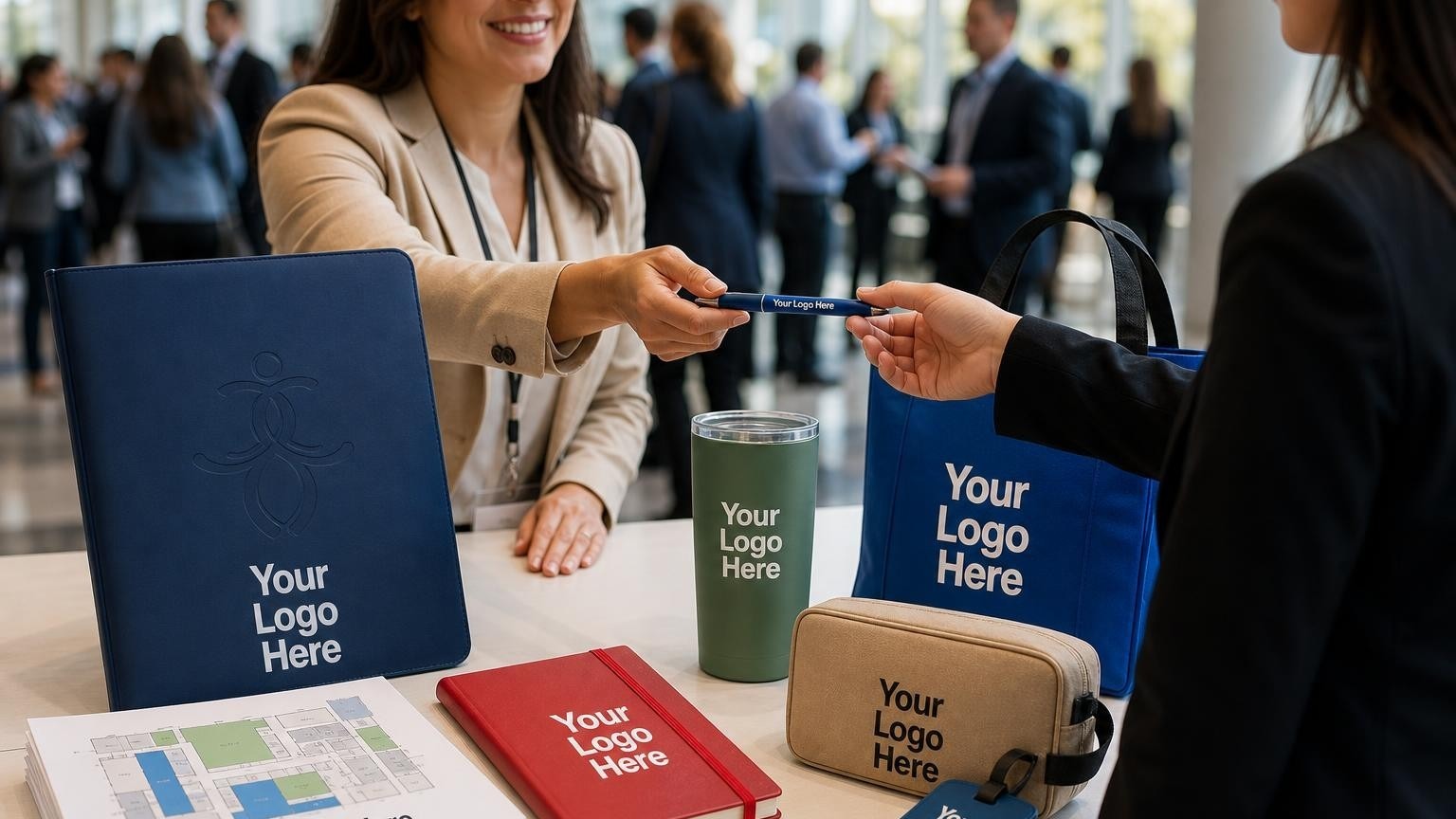
The registration desk is the primary operational bottleneck of any hiring event. When hundreds of candidates arrive simultaneously during the opening hour, the speed of check-in dictates the tone of the entire day. Equipping job seekers with practical tools at this exact moment does more than welcome them; it actively prepares them for the interactions ahead. Instead of handing out cheap plastic novelties that quickly end up in the venue trash cans, organizers should provide functional items that serve an immediate purpose on the expo floor.
Providing candidates with custom portfolios and padfolios at check-in ensures they have a firm, professional surface to write on and a secure place to store their resumes. This simple addition prevents the common sight of crumpled, folded documents being handed to recruiters. When a candidate approaches a booth, opens a clean portfolio, and presents a pristine resume, the recruiter's perception of both the candidate and the event's quality rises.
This operational strategy applies across various event formats, including regional workforce development board hiring events, university career center spring expos, specialized technical engineering fairs, healthcare recruitment drives, and community chamber of commerce networking mixers. In each scenario, the goal remains the same: transform unprepared attendees into polished, organized candidates. To complete this toolkit, organizers should include reliable writing instruments and durable bags, ensuring every job seeker can fill out physical applications on the spot without searching for a pen.
The Candidate Readiness Kit
Equip job seekers at the registration desk to ensure they present themselves professionally to recruiters.
Securing the Renewal: Premium VIP Kits for Employer Booths
Corporate sponsors and HR teams are the financial engine of any career expo. When they pay premium booth fees, they expect more than just a table and two chairs; they expect a high level of hospitality and professional support. A major trigger for sponsor dissatisfaction is the feeling of being ignored once their payment is processed. To combat this and secure early-bird registrations for the next cycle, organizers must focus on the recruiter experience during the critical morning load-in window.
Before the doors open to the public, event staff should deliver a high-quality welcome kit directly to each assigned booth. This kit should contain practical items that address the physical realities of standing and speaking for six to eight hours. Including functional booth supplies, such as high-quality writing tools and tech accessories, shows immediate appreciation. Placing specialized job fair promotional items like executive-grade notebooks or desk accessories at their tables establishes a strong B2B relationship before the first candidate even enters the hall.
When an HR director unboxes a welcome kit and finds useful, durable items waiting for them, the perceived value of their sponsorship fee increases instantly. This gesture of hospitality directly influences their post-event evaluation. By treating recruiters as VIP clients rather than just a source of revenue, organizers build the goodwill necessary to ensure they re-book their booth space year after year.
Operational Wayfinding: Branded Gear for Event Staff and Volunteers
A large-scale hiring event can quickly descend into chaos without clear wayfinding and easily identifiable support staff. Attendees and recruiters alike frequently need assistance with technical issues, power outlet failures, or simple directions to restrooms and seminar rooms. If volunteers are indistinguishable from the crowd, frustration builds rapidly, leading to negative feedback on post-event surveys.
To ensure smooth logistics and crowd control, all event staff and volunteers must be highly visible. Outfitting the team in matching custom logo t-shirts or polo shirts in distinct, bright colors allows anyone in the hall to spot help instantly. For instance, general volunteers might wear bright blue shirts, while technical support staff wear red, and security wears black.
This visual organization should be paired with high-visibility custom promotional lanyards and clear promotional badge holders to display credentials and access levels. Staff members equipped with heavy-duty clipboards and stylus pens can manage check-ins and digital registrations efficiently, even when standing in the middle of a crowded aisle. This level of visible organization reassures both candidates and employers that the event is being managed by a disciplined, professional team.
The Event Operations Uniform
Ensure staff and volunteers are easily identifiable for wayfinding and logistical support.
Selecting the Right Tools: Problem-First Product Recommendations
Choosing the right promotional items requires looking at the specific operational challenges of a career fair. Rather than selecting items based solely on unit cost, organizers should evaluate how each product solves a physical bottleneck or improves a specific interaction.
For example, the challenge of resume management is solved by structured padfolios. The challenge of candidate wayfinding is solved by clear signage and identifiable staff apparel. The challenge of recruiter fatigue is solved by thoughtful hospitality gifts.
When planning your inventory, consider how flat-packing items like custom folders and lanyards simplify transport and storage. These items can be easily stacked in cardboard boxes under registration tables or in temporary venue storage closets, minimizing the physical footprint during setup. By focusing on utility and ease of distribution, you ensure that every dollar spent on promotional gear directly supports the smooth execution of your event.
Selecting the Right Gear for Every Career Fair Scenario
| Event Type / Recipient Group | Core Operational Challenge | Recommended Product Solution |
|---|---|---|
| University Career Center Spring Expo | High volume of unprepared student candidates | Structured resume padfolios and reliable writing pens |
| Specialized Technical Engineering Fair | High-paying corporate sponsors with high expectations | Executive-grade notebooks and premium tech accessories |
| Regional Workforce Development Drive | High-traffic registration bottlenecks and crowd control | Brightly colored staff polo shirts and clear badge holders |
| Community Chamber Networking Mixer | Fast-paced business card exchange and brief interactions | Compact pocket notebooks and custom metal ballpoint pens |
Budget Allocation Tiers for Career Fair Organizers
- Good (High-Volume Candidate Utility): Focus on cost-effective, high-utility items distributed at the main registration desk. This tier includes durable non-woven tote bags, basic custom metal ballpoint pens, and simple printed wayfinding maps. These items ensure every attendee has the basic tools needed to navigate the floor and keep their materials organized.
- Better (Staff Identification & Standard Sponsors): Focus on operational efficiency and standard sponsor satisfaction. This tier includes custom embroidered polo shirts for event staff, high-visibility custom lanyards with clear badge holders, and standard welcome kits for booth holders containing insulated travel mugs and branded notebooks.
- Best (VIP Sponsors & Title Partners): Focus on maximizing retention and B2B relationship building with your highest-paying partners. This tier includes premium laser-engraved pen sets, double-wall insulated stainless steel tumblers, and executive-grade portfolios delivered in customized presentation boxes directly to their booths.
Operational Wisdom: Insights from Event Merchandise Planning
Based on Myron's experience helping organizations plan custom event merchandiseBased on experience helping organizations plan custom event merchandise, Myron's team has gathered practical operational insights that can make or break a career fair's execution:
- Flat-packing items reduce setup stress: Items like flat-packing tote bags and lanyards are much easier for volunteers to store under registration tables and distribute quickly during peak morning rushes compared to bulky, pre-assembled gift baskets.
- Sponsor branding should be balanced: When creating welcome kits for employers, ensure your event logo is clean and professional. Recruiters are far more likely to keep and use an item on their desks year-round if the branding is sophisticated rather than oversized.
- Color-coding staff is highly effective: Using distinct shirt colors for different volunteer roles (e.g., green for wayfinding, blue for technical support) dramatically reduces confusion and helps recruiters find the right assistance quickly.
- Always order a 10% buffer for writing tools: Pens are the most frequently misplaced items at any event. Having an extra box of reliable writing instruments at the registration desk prevents major delays when candidates need to fill out physical forms.
- Avoid fragile materials entirely: Large convention center floors are high-traffic zones. Ceramic mugs or glass items are highly susceptible to breakage during transport and setup; stick to durable stainless steel, plastic, or composite materials.
Common Pitfalls in Career Fair Merchandise Planning
One of the most common mistakes organizers make is prioritizing quantity over quality for candidate swag bags. In an effort to stretch tight budgets, organizers often purchase the cheapest possible plastic items to ensure every attendee gets something. However, this often backfires. For example, a candidate's cheap plastic bag tearing open mid-hall, spilling their resumes across the floor in front of a major employer, creates a highly unprofessional impression. Providing fewer, higher-quality items—like a single durable tote and a premium pen—is a far better approach.
Another frequent pitfall is neglecting the physical comfort of corporate recruiters. Organizers sometimes focus entirely on the job seekers and treat the employers merely as a source of revenue. An exhausted HR representative standing for six hours without a water bottle or a reliable pen will leave with a negative impression of the event's hospitality, reducing the likelihood of booth renewal.
Finally, using generic, hard-to-see identification for event staff can derail venue logistics. Relying on small, cheap paper name tags that get covered by jackets or bags makes it nearly impossible for employers to locate staff when they need assistance with a power outlet failure or booth layout issue. Outfitting staff in bright, custom-embroidered shirts and high-visibility lanyards solves this problem completely.
Frequently Asked Questions About Career Fair Logistics
What are the most practical items to include in a job-seeker registration bag?
Focus on utility: a durable non-woven tote bag, a structured padfolio or clipboard for resumes, and a high-quality blue or black ink pen. These items immediately help candidates organize their materials and fill out applications professionally.
How can we use promotional products to increase employer booth retention rates?
Deliver premium, functional welcome kits—such as insulated travel mugs, tech charging pads, and executive pens—directly to their booths during setup. This unexpected touch of hospitality makes recruiters feel valued and elevates their perception of your event's organization.
What should event staff wear to ensure smooth logistics and crowd control?
Staff and volunteers should wear matching, high-visibility custom polo shirts or branded lanyards with clear badge holders. Using distinct colors for different roles helps both candidates and employers quickly locate the right person for assistance.
Planning for the Next Cycle: Building Long-Term Sponsor Relationships
The success of a career fair is measured not just by the energy in the hall on expo day, but by the relationships built for the future. As the event winds down and recruiters begin packing up their displays, the focus naturally shifts to the next planning cycle. Sending a thoughtful corporate thank you gift within one week of the event—accompanied by key turnout metrics—solidifies your partnership and keeps your event top-of-mind. By choosing functional, durable tools that support both candidate readiness and recruiter comfort, you establish a professional standard that guarantees long-term success. When you are ready to plan your next seasonal reorder window, consider exploring Myron's curated event solutions to keep your tables filled and your sponsors returning year after year.