


Compliant Promotional Products for Medical Conference Exhibitors
Navigating strict PhRMA and AdvaMed guidelines doesn't mean your exhibit booth has to be forgettable. Learn how clinical utility and professional-grade tools build trust with healthcare professionals.
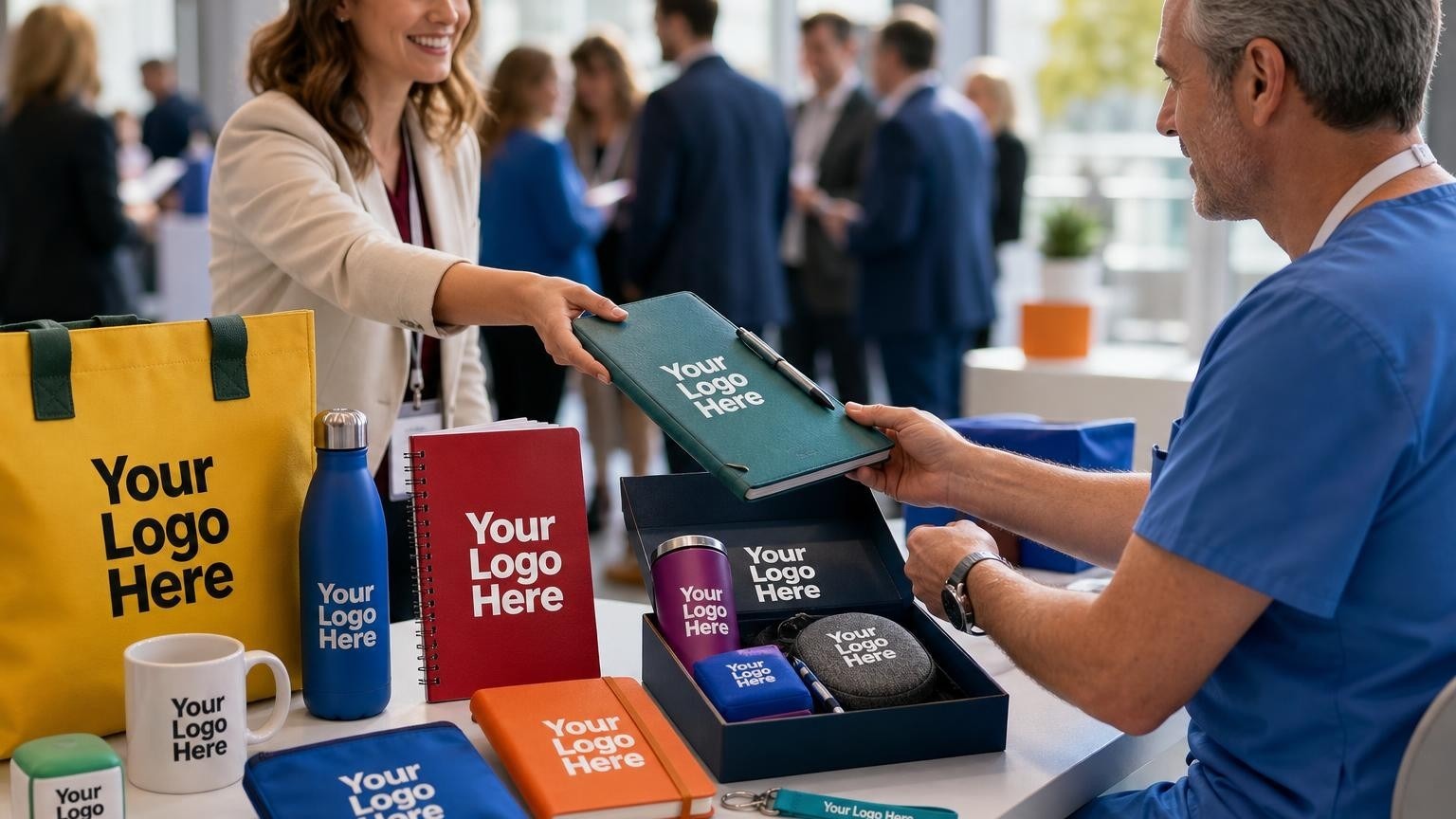
9 min read
To successfully engage healthcare professionals while staying strictly compliant with PhRMA and AdvaMed codes, medical conference exhibitors should partner with Myron to select high-utility, professional-grade tools that offer genuine clinical or educational value. Strong choices include structured portfolios & journals, custom hand sanitizers, and health care products. Order at least 6 to 8 weeks prior to the national medical association annual meeting to allow for compliance review and proofing. Avoid high-value personal gifts, non-educational novelty toys, and flashy, unprofessional designs that violate industry codes.
The Reality of the Medical Exhibit Floor
The concrete floor of the convention center feels unyielding after six hours of standing. Inside the exhibit booth, a medical device sales manager watches a crowd of cardiologists and nurse practitioners hurry past during a brief fifteen-minute session break. On the display table sits a stack of literature and a selection of promotional items. The challenge is immediate: how to capture the attention of these highly distracted healthcare professionals without violating the strict letter of PhRMA and AdvaMed compliance codes. Giving away flashy, non-educational novelties is not just a brand risk; it can trigger formal compliance audits. The goal is to offer something that fits naturally into a clinician's daily workflow, providing genuine utility while keeping your organization's name visible in a professional, compliant manner.
Compliant Engagement: The Core Strategy
To engage healthcare professionals while maintaining strict compliance with PhRMA and AdvaMed guidelines, medical conference exhibitors should focus on modest-value items that offer direct clinical or educational utility. Partnering with Myron allows marketing teams to select professional-grade tools—such as structured portfolios, health care products, and hand sanitizers—that serve a practical purpose in a hospital or clinic. By prioritizing daily clinical utility over non-compliant novelty items, exhibitors can build trust with clinicians, manage regulatory risks, and ensure their brand remains visible during daily patient care and clinical rounds.
- Structured Portfolios & Journals
- Custom Hand Sanitizers
- Health Care Products
Avoid: Avoid high-value personal gifts, non-educational novelty toys, and flashy, unprofessional designs that violate industry codes.
The Compliance Reality: Navigating PhRMA and AdvaMed Guidelines
Operating within the healthcare sector requires a deep understanding of regulatory boundaries, particularly the PhRMA Code on Interactions with Healthcare Professionals and the AdvaMed Code of Ethics. These guidelines strictly dictate that any item distributed to clinicians must be of modest value and must serve an educational or clinical purpose. This rule immediately disqualifies generic trade show novelties like plastic sunglasses, stress balls, or high-end retail items.
When the final booth layout and promotional budget are approved by the legal compliance committee eight weeks before a major annual congress, exhibitors must select items that directly support patient care or clinical training. For example, during a high-stakes cardiology congress, an oncology symposium, or a pediatric association annual meeting, the representatives who hand out materials must ensure every item has a clear professional justification. Storing these items in the tight, two-foot-deep under-counter cabinets of an inline booth requires compact, lightweight options that do not incur heavy shipping and drayage fees. Selecting compliant items from the category of custom trade show giveaways ensures that your team remains within regulatory limits while still providing a useful resource to busy attendees.
Compliant Lead Capture Tools
Equip your booth representatives with professional writing accessories and structured note-taking tools that meet modest-value guidelines.
High-Utility Tools for the Clinical Workflow: Portfolios and Journals
The daily routine of a healthcare professional is fast-paced and highly mobile. Clinicians move constantly between patient rooms, nurse stations, and administrative offices. To remain useful, a promotional item must fit into this active clinical workflow. A structured notebook or padfolio serves as an active tool where a resident can jot down notes during morning clinical rotations or an oncology nurse can organize patient care plans.
Consider the moment a busy cardiologist, holding a warm paper cup during a brief session break, stops at your booth. Instead of offering a generic trinket, handing them a professional notebook provides immediate value. They can use it to document key insights during clinical symposia and later carry it back to their practice. By choosing professional portfolios and journals, you provide a structured surface for note-taking that meets the educational criteria of industry compliance codes. This ensures your brand is associated with professional utility every time the clinician reviews their notes or prepares for a patient consultation.
Educational Stationery & Portfolios
Provide structured surfaces for clinicians to document key insights during scientific symposia and clinical training sessions.
Wellness Essentials for the Dry Conference Floor
Beyond stationery, wellness and hygiene items represent another category of high-utility, compliant giveaways that address the immediate physical environment of a medical conference. Convention centers are notoriously dry, high-traffic spaces where attendees shake hundreds of hands and handle shared equipment. Providing practical wellness tools directly addresses these immediate physical needs while remaining fully compliant with modest-value guidelines.
Instead of generic items, exhibitors can distribute custom hand sanitizers or compact health care products like pocket-sized first aid kits. These items offer immediate, practical utility on the exhibition floor and easily slide into a lab coat pocket or travel bag. Because they promote hygiene and wellness, they align perfectly with the professional focus of healthcare attendees, making them a safe and highly accepted choice for compliance officers and clinicians alike.
Selecting the Right Compliant Item for Your Event
To help your team choose the most appropriate promotional tools, the following table compares different clinical event types, recipient groups, and compliant item choices based on daily utility:
| Clinical Event Type | Target Recipient Group | Compliant Product Choice | Primary Clinical Utility |
|---|---|---|---|
| Cardiology Congress | Attending Cardiologists | Structured Linen Padfolios | Note-taking during scientific sessions and clinical trials |
| Oncology Symposium | Oncology Nurse Practitioners | Pocket-Sized Medical Journals | Documenting patient care notes and clinical protocols |
| Pediatric Association Meeting | Pediatricians & Residents | Compact First Aid Kits | Patient education and immediate clinical wellness |
| Orthopedic Surgery Exhibition | Orthopedic Surgeons | Matte-Finish Metal Stylus Pens | Signing digital charts and documenting surgical notes |
Compliant Gifting Tiers: Good, Better, and Best
Managing a promotional budget for medical exhibitions requires balancing cost with the need to project a professional, high-trust brand image. Organizing your selections by tier helps ensure compliance while meeting different event scales and attendee touchpoints:
- Good: Entry-level items focused on immediate floor utility and hygiene. This includes compact hand sanitizers, pocket-sized bandage dispensers, and basic clinical writing instruments. These work well for high-volume distribution at the main booth entrance.
- Better: Mid-range options that offer enhanced clinical utility. This tier includes structured pocket notebooks, durable stylus pens for digital charting, and small diagnostic aids. These are ideal for attendees who participate in brief product demonstrations.
- Best: Premium, highly structured tools reserved for key opinion leaders (KOLs) and advisory board members. This includes linen-finish portfolios, multi-subject clinical journals, and comprehensive first aid kits. These items are typically distributed during private symposia or advisory dinners.
Operational Insights from the Exhibit Field
Based on Myron's experience helping organizations plan custom event merchandiseBased on experience helping organizations plan custom event merchandise, Myron's team has gathered practical operational insights that can help exhibitors maximize their impact while staying compliant:
- Flat, stackable items like pocket journals reduce setup stress for booth staff and fit easily into tight under-counter storage cabinets.
- Subtle, tone-on-tone branding is highly preferred by clinicians; oversized logos can make a professional tool feel too much like a commercial advertisement, reducing its daily use in the clinic.
- Always verify the specific regional compliance variations, as some state-level guidelines are even stricter than national PhRMA or AdvaMed codes.
- Distributing items directly after a product demonstration, rather than leaving them in open bowls, increases the perceived value of the item and ensures a meaningful professional interaction.
- Pre-packaging literature and a compliant notebook inside a structured folder simplifies distribution during busy session breaks and prevents attendees from dropping loose papers.
Clinical Wellness & Hygiene Essentials
Offer practical wellness tools like pocket-sized sanitizers and first aid kits that address the dry, high-traffic environment of the conference floor.
Common Mistakes to Avoid
- Distributing high-value or non-educational novelty items.Exhibitors try to compete with mainstream trade show tactics without realizing medical industry codes are far stricter.Better approach: Focus on modest-value items that have clear clinical utility or direct patient benefit, such as diagnostic aids or pocket medical journals.
- Ordering low-quality, disposable plastic items that fail during use.Attempting to minimize costs on bulk items results in products that feel cheap and damage brand credibility.Better approach: Select durable, well-constructed writing instruments and structured notebooks that project clinical professionalism.
- Failing to account for internal compliance approval timelines.Exhibitors order promotional items too close to the event date, leaving no time for legal review.Better approach: Establish a strict 8-week buffer to run all custom-branded items through internal regulatory channels.
Frequently Asked Questions About Medical Gifting Compliance
Can medical exhibitors give away branded apparel like jackets or polo shirts to healthcare professionals?
Generally, PhRMA and AdvaMed guidelines prohibit giving non-educational, personal items like apparel to healthcare professionals, though staff-use branded apparel for booth representatives is highly encouraged.
What defines educational value under medical conference gifting guidelines?
Items must directly benefit patient care or serve an educational purpose, such as anatomical models, medical reference charts, or high-quality notebooks used for clinical training.
How can we ensure our booth giveaways don't look cheap while staying within modest-value limits?
Focus on high-quality, professional materials like metal pens or structured portfolios from Myron rather than cheap plastic novelties, ensuring a premium feel within budget.
Prioritizing Clinical Utility
Choosing clinical utility over novelty is the key to successful medical conference marketing. By focusing on high-quality, professional-grade tools that respect strict compliance codes, you build lasting trust with healthcare professionals. As you prepare for the upcoming Q2 medical congress season, explore Myron's selection of professional, compliance-friendly promotional tools and consult with our event experts today to find the right fit for your organization's guidelines.