


Chiropractic Clinic Branding: Multi-Location Standardization Guide
An operational playbook for chiropractic executives looking to scale their clinical brand consistently across multiple zip codes.
11 min read
Multi-location chiropractic clinics build brand consistency and secure corporate wellness contracts by partnering with Myron to distribute standardized clinical welcome kits and professional staff apparel across all locations. Strong choices include clinical health and wellness products (ice packs, heat pads), high-quality writing instruments (economy plastic pens), and sports water bottles and promotional magnets. Ordered quarterly to align with patient intake cycles and new location launches. Avoid cheap, non-clinical giveaways that dilute the brand's medical authority and clutter clinic storage rooms.
The Operational Reality of Multi-Location Chiropractic Care
The regional director of ten chiropractic clinics stands in the narrow supply closet of the newest suburban branch, looking at a cardboard box filled with mismatched, low-quality plastic pens and flimsy keychains. Across the region, each clinic manager has been sourcing their own patient giveaways, resulting in a fractured brand image that dilutes the group's clinical authority. During a recent meeting with a major regional employer's HR director to pitch a corporate wellness contract, the director realized that presenting a unified front is just as critical as the clinical adjustments themselves. To secure high-value B2B contracts and ensure a consistent patient experience from the first consultation, the group must standardize every physical asset across all ten clinics.
This operational challenge is common among growing healthcare networks. Whether managing a high-volume suburban clinic, a specialized pediatric chiropractic center, a sports-focused physical therapy branch, or a downtown corporate-focused adjustment suite, maintaining a unified presentation is critical. When individual branches operate with local autonomy, brand standards often slip, leading to a less polished presentation that fails to reflect your medical expertise. By establishing a centralized system for your physical assets, you can eliminate local inventory clutter and ensure that every patient—whether visiting a flagship downtown office or a suburban branch—receives the same high-quality clinical tools. This guide outlines how to operationalize your clinical brand assets to build a reliable network that wins corporate wellness contracts.
Standardizing Chiropractic Brand Assets: A Quick Summary
Multi-location chiropractic clinics build brand consistency and secure corporate wellness contracts by partnering with Myron to distribute standardized clinical welcome kits and professional staff apparel across all locations. By centralizing procurement, regional directors eliminate local clinic storage clutter and ensure that every patient—whether visiting a flagship downtown office or a suburban branch—receives the same high-quality clinical tools, such as custom ice packs, posture guides, and polished writing instruments. This operational consistency proves clinical readiness to B2B corporate partners, turning physical assets into proof of operational excellence.
- Clinical health and wellness products (ice packs, heat pads)
- High-quality writing instruments (economy plastic pens)
- Sports water bottles and promotional magnets
Avoid: Avoid cheap, non-clinical giveaways that dilute the brand's medical authority and clutter clinic storage rooms.
Standardizing the First Adjustment: The Multi-Location Welcome Kit
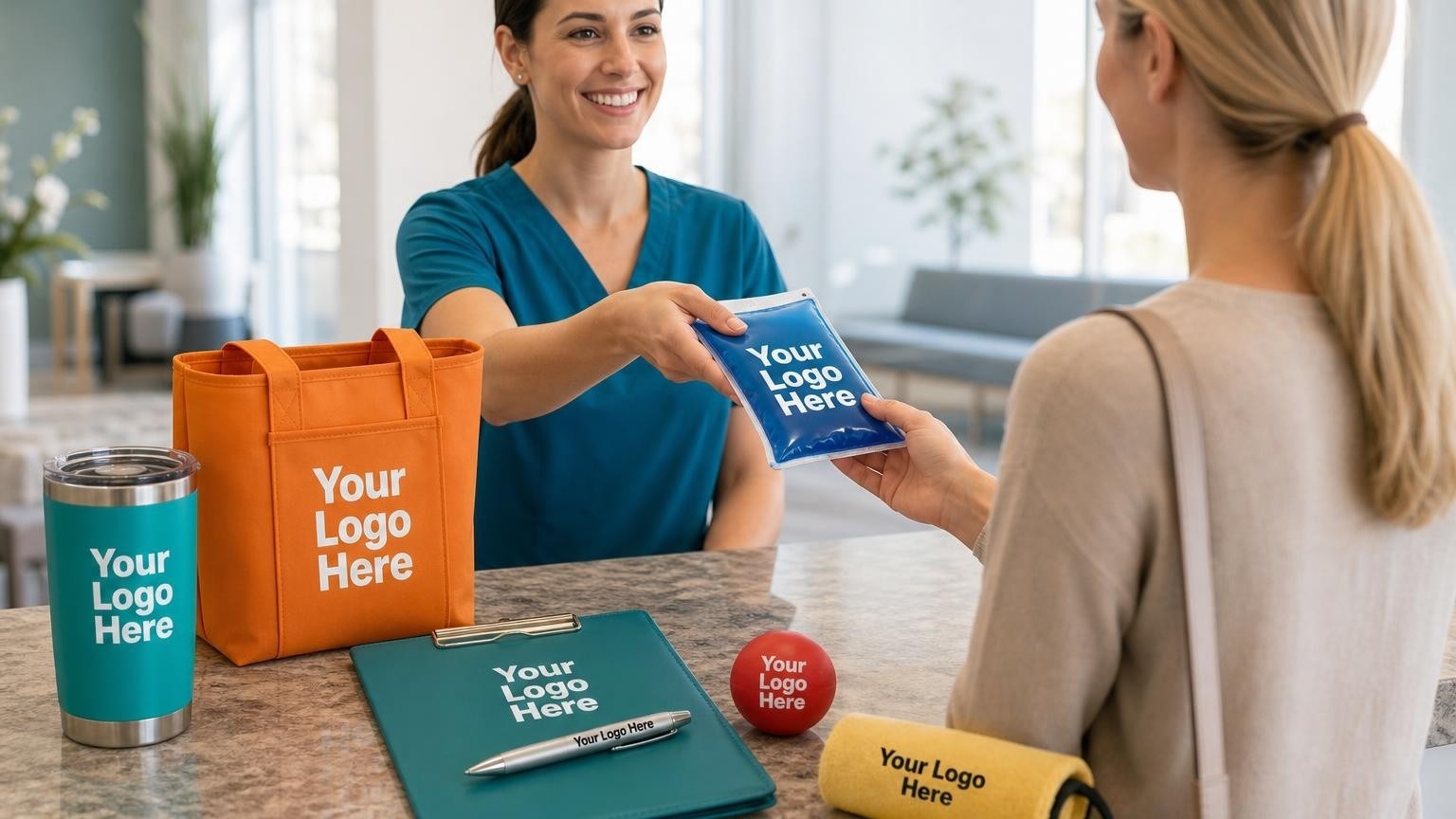
When a new patient walks into any of your ten clinics for their initial adjustment, the front-desk check-in sets the tone for their entire clinical experience. A clinic receptionist hands a polished metal pen to a patient on a custom-branded clipboard to complete their intake forms. Once in the treatment room, the chiropractor conducts the spinal assessment and hands the patient a standardized spinal-care welcome kit. This physical package contains a custom-printed folder with their personalized adjustment plan, a posture tracker card, and a branded cold pack.
This workflow ensures that the patient's home-care routine is fully supported from day one. By providing clinical-grade tools that patients use daily at home, you reinforce the clinic's role as a dedicated healthcare provider. Furthermore, standardizing these kits across all locations reduces administrative friction for front-desk staff, who no longer need to assemble mismatched items from local vendors. Centralizing this process ensures that every branch operates with the same level of clinical professionalism, protecting the group's brand authority.
Consider the physical layout of a typical chiropractic reception desk. It is a high-traffic area where patients sign consent forms, schedule follow-up appointments, and purchase home-care supplies. When this space is cluttered with cheap, non-clinical giveaways, it undermines the professional atmosphere. Replacing those items with a unified set of clinical tools signals to patients that their recovery is your primary focus.
Clinical Patient Welcome Kits
Distributed to new patients during their initial adjustment and consultation to support home-care compliance.
Selecting Clinical-Grade Tools for Home Care Support
A common operational challenge for multi-location groups is ensuring that patients actually follow their prescribed home stretching and recovery exercises. Without physical reminders, compliance drops, slowing recovery times and affecting patient satisfaction. To solve this, clinic owners should look closely at practical, clinical-grade items that integrate directly into the patient's daily routine.
When selecting items for your standardized welcome kits, prioritize clinical health and wellness products that patients will use daily. For instance, custom-branded ice packs and heat pads are highly effective aids for managing post-adjustment soreness. Unlike generic novelties, these therapeutic items remain in the patient's freezer or cupboard for months, serving as a constant, practical reminder of their treatment plan. Additionally, stocking your reception desks with polished branded writing instruments like economy plastic pens ensures that even the simple act of signing a consent form feels polished and professional.
Winning Corporate Wellness: Physical Assets as B2B Pitch Proof
Pitching regional employers for corporate wellness contracts requires more than just a slide deck; it requires physical proof of your operational scale. When a regional operations director meets with an HR director to propose on-site spinal screenings and corporate wellness days, presenting a co-branded wellness kit proves that your group has the infrastructure to support hundreds of employees.
During these pitches, presenting high-quality physical assets—such as an ergonomic lumbar support cushion or a custom insulated bottle—demonstrates that your clinics prioritize long-term preventative care. For example, during a recent pitch to a regional logistics firm with three offices, the operations director brought a sample welcome kit containing a co-branded water bottle and a posture guide. This physical demonstration showed the HR team exactly how their employees would be onboarded and supported. By using these assets as tangible proof of clinical excellence, the chiropractic group secured a multi-year contract covering over five hundred employees.
These physical assets build immediate trust with corporate decision-makers, showing that your clinics operate with the same high standards as their own businesses. When HR directors see that your clinics provide standardized, professional materials, they feel confident that their employees will receive consistent, high-quality care across all regional locations.
Corporate Wellness Pitch Assets
Presented to B2B corporate partners during wellness day pitches and health fairs to prove operational scale.
Comparing Brand Assets by Clinical and B2B Use Case
To help regional directors choose the right physical assets for their specific operational needs, the table below compares key product categories based on clinical utility, B2B pitch value, and distribution workflows.
| Clinical Use Case | Recommended Product Type | Distribution Workflow | Primary Recipient |
|---|---|---|---|
| New Patient Onboarding | Custom-branded ice packs and heat pads | Handed out by chiropractor after the first adjustment | First-time clinic patients |
| Corporate Wellness Pitch | Sports water bottles | Presented to HR directors during B2B contract meetings | Corporate HR decision-makers |
| Patient Progress Milestones | Custom promotional magnets with posture tips | Distributed at reception desk after the tenth adjustment | Long-term active patients |
| Community Health Fairs | Health theme stress relief items | Distributed at outdoor screening booths and local events | Local community members |
Operational Insights for Multi-Location Chiropractic Fulfillment
Based on Myron's experience helping organizations plan custom event merchandiseBased on experience helping organizations plan custom event merchandise and clinical assets, Myron's team has gathered practical operational insights to help multi-location chiropractic groups manage their physical branding:
- Centralize the ordering process: Allowing individual clinic managers to source items locally leads to mismatched colors, inconsistent logo placement, and higher unit costs. Centralizing procurement through a single portal ensures absolute brand consistency.
- Prioritize flat, stackable items: Chiropractic clinics often have limited storage space, with supply closets shared between clinical equipment and administrative files. Flat items like custom magnets, posture cards, and thin gel packs stack easily and do not clutter patient areas.
- Coordinate with patient intake cycles: Plan your bulk orders 4 to 6 weeks ahead of peak intake seasons, such as late summer (pre-fall wellness campaigns) and early winter (New Year health resolutions), to ensure clinics are fully stocked.
- Choose high-utility items over novelties: Patients value practical tools that support their recovery. A durable gel pack or a high-quality pen will be kept and used, while cheap plastic novelties are quickly discarded, wasting your marketing budget.
- Use drop-shipping directly to branches: To minimize regional transit costs and administrative handling, arrange for your fulfillment partner to ship standardized kits directly to each individual clinic location.
- Keep branding subtle on clinical items: When distributing items like ice packs or resistance bands, ensure the clinic's contact details and logo are clear but not overwhelming. A clean, professional design encourages patients to use the items in their daily lives.
Investment Tiers for Chiropractic Brand Assets
Managing a multi-location budget requires flexibility. To help regional directors allocate resources effectively, we have structured our recommended physical assets into three distinct investment tiers based on clinical utility and recipient importance:
- Good (Entry-Level / High-Volume): Ideal for community health fairs, local outreach, and general patient intake. This tier focuses on cost-effective, high-volume items such as economy plastic pens, custom-printed posture tracking cards, and promotional magnets with spinal care tips. These items are perfect for broad distribution without exceeding your budget.
- Better (Mid-Range / Patient Retention): Designed for standard new patient welcome kits and clinical onboarding. This tier includes durable gel ice packs and heat pads, custom fitness resistance bands, and branded clinical folders for personalized treatment plans. These tools directly support the patient's recovery process and encourage long-term compliance.
- Best (Premium / B2B Corporate Pitches): Reserved for high-value corporate wellness pitches, HR directors, and key community partners. This tier features high-quality insulated sports water bottles, ergonomic lumbar support cushions, and custom branded portfolios for professional presentations. These high-end assets demonstrate your group's commitment to exceptional care and operational excellence.
How to Choose the Right Item
- Clinical UtilityAsk: Does this item directly support the patient's spinal health or clinical experience? Prioritize hot/cold packs, resistance bands, and posture guides.
- Brand ConsistencyAsk: Can this item be customized with exact brand colors and logos across all locations? Prioritize laser-engraved pens and custom-printed folders.
- B2B Pitch ValueAsk: Would an HR director find this item professional enough to distribute to their employees? Prioritize high-quality water bottles and ergonomic lumbar cushions.
Common Mistakes to Avoid
- Allowing individual clinic managers to source their own promotional items locally.A lack of centralized corporate purchasing guidelines leads to localized, ad-hoc buying that dilutes the group's cohesive clinical image.Better approach: Centralize all ordering through a single portal to ensure brand and quality consistency across all locations.
- Prioritizing cheap novelty items over clinical utility.Buyers focus on minimizing upfront unit costs rather than the long-term value of patient utility, leading to wasted marketing spend.Better approach: Invest in high-quality, clinical-grade items like gel hot/cold packs that patients will use during their recovery.
- Neglecting the storage limitations of individual clinic locations.Ordering bulk quantities to save money without considering the physical footprint of small clinic offices clutters patient areas.Better approach: Utilize drop-shipping or staggered delivery schedules to manage inventory without cluttering patient areas.
Frequently Asked Questions About Chiropractic Brand Assets
How do we manage promotional product inventory across multiple chiropractic locations?
Establish a centralized ordering system with Myron to ship standardized kits directly to each clinic, reducing local storage needs. This eliminates the logistical friction of regional transit and ensures that local clinic managers do not have to coordinate individual orders.
What items should be included in a standard chiropractic new patient welcome kit?
A professional welcome kit should include a branded hot/cold pack, a posture guide, a high-quality pen, and a custom folder for treatment plans. These clinical-grade items support patient compliance and reinforce your clinic's role as a dedicated healthcare provider.
How can we use branded items to increase patient referrals across our clinic network?
Provide patients with high-quality, dual-branded items like resistance bands or water bottles that they can easily share with family or colleagues. When a patient uses a high-utility item at work or the gym, it serves as an organic word-of-mouth trigger for your clinic network.
Standardize Your Clinical Brand Assets for Long-Term Growth
Standardizing your physical assets across all clinics is more than a marketing strategy; it is an operational necessity that builds brand trust, improves patient compliance, and wins B2B corporate contracts. By replacing mismatched, low-quality giveaways with clinical-grade tools, you project a unified image of clinical excellence that resonates with both individual patients and corporate HR directors.
As you prepare for the upcoming fall corporate wellness campaign season, look closely at how your clinics are represented in the community. Centralizing your procurement now will simplify your workflows, eliminate storage clutter, and ensure your team is fully equipped to scale. Explore Myron's selected health and wellness collections to begin standardizing your multi-location clinical assets today.