


Multi-Location Optometry Offices: Standardizing Brand Touchpoints Across Clinics
Standardizing physical brand assets across multiple clinics is a powerful operational strategy that drives patient retention, simplifies logistics, and builds a reputable enterprise brand.
8 min read
Multi-location optometry groups build a strong enterprise reputation by standardizing high-quality physical brand assets—such as custom writing instruments and magnetic calendars—sourced through a centralized partner like Myron. Strong choices include custom plastic pens, stick-up and magnetic calendars, and embroidered staff apparel. Ordered quarterly or bi-annually to align with seasonal patient volume spikes, such as back-to-school and end-of-year insurance benefit expirations. Avoid letting individual clinic managers purchase cheap, off-brand promotional items locally, which dilutes the enterprise brand and wastes budget.
The High Stakes of Multi-Location Brand Consistency
Sarah, the marketing director for a ten-location regional vision group, spreads five patient welcome packets across the conference table. The visual fragmentation is immediately obvious. The suburban clinic uses a cheap neon green plastic pen that clashes with the corporate navy blue color palette. The downtown flagship clinic hands out a flimsy paper folder with a crooked logo stamp. Two other locations have no welcome materials at all, leaving patients to walk out with their expensive progressive lenses tucked into plain, unbranded paper envelopes. With a major regional manufacturer's corporate vision plan contract up for bid in three weeks, Sarah knows this lack of brand cohesion is a critical vulnerability. The corporate client expects a standardized, professional experience for their three thousand employees across every physical clinic. Standardizing these physical brand assets is not just a cosmetic detail; it is the physical proof of operational consistency that wins enterprise-level healthcare contracts.
Standardizing the Patient Experience
Multi-location optometry groups build a strong enterprise reputation by standardizing high-quality physical brand assets—such as custom writing instruments and magnetic calendars—sourced through a centralized partner like Myron. By replacing fragmented, local clinic purchasing with a unified, pre-approved inventory, regional vision groups ensure that every patient receives a consistent brand experience. This operational consistency is critical when bidding on major corporate vision plan contracts and driving annual patient recall campaigns.
- Custom plastic pens
- Stick-up and magnetic calendars
- Embroidered staff apparel
Avoid: Avoid letting individual clinic managers purchase cheap, off-brand promotional items locally, which dilutes the enterprise brand and wastes budget.
The Enterprise Optometry Challenge: Brand Consistency Across Multiple Clinics
Managing a regional multi-location vision group requires balancing local clinic operational needs with strict corporate brand standards. In a high-volume retail optical gallery, a pediatric optometry clinic, or a medical-focused dry eye clinic, the patient experience must feel unified. When a regional vision group bids on a major corporate contract, the client's benefits director often visits multiple locations to verify the quality of care. If they encounter mismatched staff uniforms, cheap front-desk supplies, or inconsistent patient intake materials, it signals operational fragmentation.
Every patient interaction begins at the front intake desk. When a patient signs a digital tablet consent form, handing them a polished, reliable writing instrument like our custom plastic pens signals attention to detail from the very first minute. This is a critical workflow step where a high-quality pen becomes a tangible reminder of clinical professionalism. When the patient is allowed to keep the pen, it enters their home or office, keeping the clinic's contact information visible. Centralizing the purchasing of these front-desk items prevents local office managers from sourcing off-brand, low-quality alternatives that dilute the enterprise reputation.
The Front Desk Check-In Experience
Equip your reception desks with high-quality writing instruments that patients use to complete intake forms and digital tablet check-ins, then keep as a professional brand reminder.
The Standardized Patient Welcome Kit: First Impressions That Scale
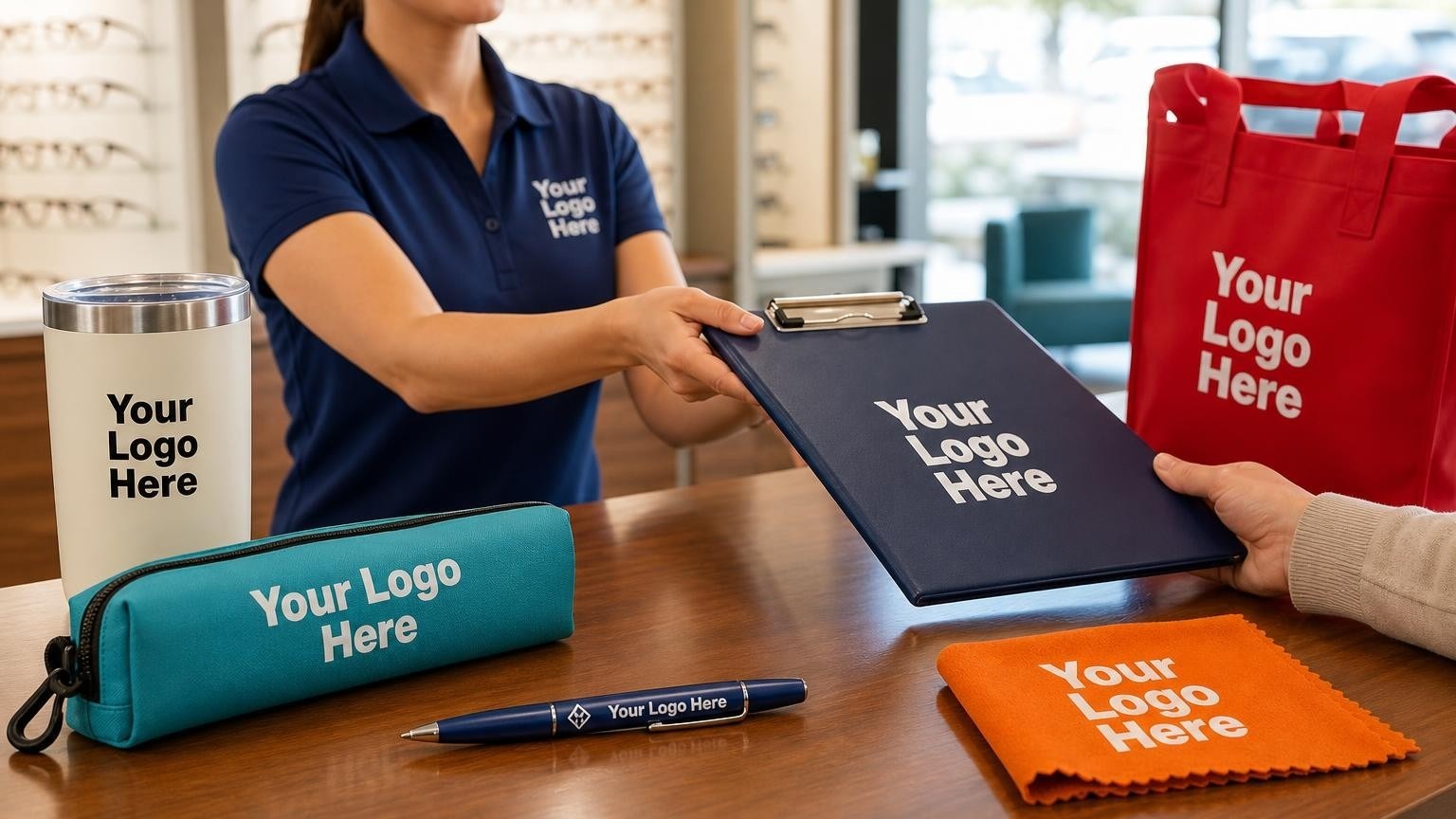
The transition of a patient from the clinical exam lane to the retail optical gallery is the most critical moment for reinforcing the value of high-end eyewear purchases. When an optician hands over a new pair of progressive lenses, presenting them alongside a standardized welcome kit builds immediate brand trust. This kit should be compact, as retail optical galleries have limited backroom storage space and cannot accommodate bulky packaging.
To maintain a professional clinical environment, outfitting the optical gallery staff in matching custom branded shirts ensures a unified team appearance across all ten locations. When patients see a consistent, polished staff identity, it reinforces the authority of the clinical recommendations. By combining these professional uniforms with standardized patient handoffs, the optometry group delivers a cohesive experience that scales. This systematic approach ensures that a patient checking in at a newly opened suburban clinic receives the exact same high-quality care and presentation they would find at the downtown flagship location, securing long-term patient loyalty.
Strategic Selections: Aligning Promotional Items with Clinical Workflows
Rather than distributing random giveaways, successful optometry groups align their physical items with specific clinical workflows. This problem-first approach ensures that every item serves an operational purpose. For example, the front reception desk often faces bottlenecks during morning check-in. Providing patients with reliable custom plastic pens to complete their intake paperwork keeps the process moving smoothly while offering a practical take-home item.
Another common challenge is the low response rate for digital annual exam recall notifications. Email and text reminders are easily ignored or lost in spam filters. A physical reminder, however, occupies a permanent space in the patient's daily routine. Distributing magnetic calendars during the back-to-school exam rush or the end-of-year insurance push keeps the clinic's phone number and booking website visible on the family refrigerator. This simple, high-utility item ensures that when the twelve-month exam window approaches, the patient knows exactly who to call.
The Annual Recall Reminder
Keep your clinic's contact information visible on home refrigerators exactly when the twelve-month exam window approaches with high-utility magnetic calendars.
Operational Comparison: Selecting the Right Touchpoint for Every Clinic Scenario
To help marketing directors coordinate their inventory, this table compares the operational benefits of different physical assets across common clinic scenarios:
| Clinic Scenario | Recommended Touchpoint | Operational Benefit |
|---|---|---|
| New Patient Intake Desk | Custom plastic pens | Speeds up paperwork completion and provides a professional take-home brand reminder. |
| Optical Gallery Frame Purchase | Branded microfiber cloth | Fits easily in compact retail display drawers and protects high-end lenses. |
| Annual Exam Recall Campaign | magnetic calendars | Keeps clinic contact information visible on home refrigerators ahead of the 12-month exam window. |
| Staff Uniform Standardization | Custom branded shirts | Establishes a professional, unified clinical identity across all regional locations. |
Investment Tiers: Scaling Your Brand Footprint Responsibly
Optometry groups must manage marketing budgets carefully across multiple physical locations. Organizing promotional inventory by investment level allows clinics to distribute items strategically based on patient value and operational needs:
- Good (Entry-Level Clinic Essentials): Standard custom plastic pens for high-volume intake desks, flat promotional magnets for local community events, and basic paper appointment cards.
- Better (Mid-Range Patient Touchpoints): High-utility magnetic calendars for annual recall campaigns, custom hand sanitizers for clinical reception areas, and branded lens cleaning sprays.
- Best (Premium Clinical Identity): Embroidered custom branded shirts for clinical technicians and opticians, custom hard-shell eyewear cases, and high-quality metal stylus pens for digital tablet check-ins.
Operational Insights from Myron's Supply Chain Team
Based on Myron's experience helping organizations plan custom event merchandiseBased on experience helping healthcare organizations plan custom merchandise, Myron's team has gathered practical operational insights for multi-location optometry groups:
- Flat, stackable items like magnetic calendars reduce storage stress in tiny retail optical backrooms.
- Centralizing the ordering process under a single corporate account prevents local clinic managers from purchasing off-brand colors.
- Ordering clinical staff apparel in bulk bi-annually accommodates seasonal staff turnover without disrupting uniform consistency.
- Front desk pens should feature a soft stylus tip to protect digital signature tablets from scratches and clinical wear.
- Scheduling drop-shipments directly to individual clinic locations bypasses regional warehouse bottlenecks and keeps reception desks stocked.
Common Mistakes to Avoid
- Decentralized SourcingIndividual clinic managers are given autonomy to buy their own promotional items, leading to mismatched colors and low-quality products.Better approach: Centralize all promotional purchasing through a single corporate account to maintain strict brand standards and leverage bulk pricing.
- Ignoring Storage ConstraintsMarketing directors order bulky promotional items without realizing how little storage space is available in retail clinic backrooms.Better approach: Focus on high-utility, compact items that can be easily stacked or stored under the front reception desk.
- Failing to Tie Promos to Clinical WorkflowsItems are handed out randomly without being integrated into a specific patient touchpoint, reducing their marketing impact.Better approach: Designate specific promotional items for key clinical moments, such as the optical gallery handoff or the checkout recall process.
Frequently Asked Questions
How do we maintain brand color consistency across different promotional materials for our clinics?
Partner with an experienced supplier like Myron that utilizes precise color-matching technology and offers a curated selection of high-quality materials. Sticking to a unified product line ensures visual consistency across plastics, metals, and fabrics, preventing off-brand variations when local clinics source items independently.
What are the best promotional items for space-constrained optometry offices?
Focus on high-utility, flat, or stackable items like microfiber cloths, custom lens cleaning sprays, and premium stylus pens. These compact items fit easily into under-counter storage or small backroom cabinets, emphasizing high daily utility for patients without cluttering the retail optical gallery.
How can we simplify the ordering process for 10 or more clinic locations?
Centralize the purchasing process through a single corporate account with Myron to maintain brand control while utilizing multi-address shipping. This eliminates the administrative burden of managing individual clinic orders and ensures consistent brand standards across all locations.
Securing Long-Term Patient Loyalty Through Operational Consistency
Standardizing physical brand assets across multiple clinics is a powerful operational strategy that drives patient retention, simplifies logistics, and builds a reputable enterprise brand. By partnering with a centralized supplier like Myron, growing optometry groups can eliminate administrative friction and maintain strict brand control. As you prepare for the upcoming back-to-school exam rush or the end-of-year insurance benefit expirations, consider how a unified patient touchpoint strategy can protect your patient base and strengthen your bid for lucrative corporate vision contracts. Explore Myron's curated selection of premium optometry promotional products and simplify your multi-location ordering today.