


How Multi-Location Painting Companies Standardize Brand Consistency
An operational blueprint for home service executives and regional managers to maintain brand equity across disparate territories.
10 min read
Multi-location painting companies can maintain strict brand consistency and improve the customer experience by partnering with Myron to centralize their apparel and standardized customer kits. Strong choices include stain-resistant performance polo shirts, durable canvas structured caps, heavy-duty plastic project clipboards, and custom promotional magnets. Ordered centrally in bulk ahead of the busy spring/summer painting season, with top-off orders for fall crew onboarding. Avoid letting local branch managers source cheap, off-brand promotional items that dilute the high-end corporate brand.
The Multi-Location Consistency Challenge in Professional Painting
A regional operations manager reviews customer feedback across four territories and notices a stark contrast. In the northern division, crews arrive in matching, clean gear, presenting a unified front that immediately reassures the homeowner. In the southern division, painters are wearing stained, mismatched personal t-shirts, some with competing local business logos. This visual disconnect directly impacts customer trust before a single drop of paint hits the drywall.
For multi-location painting companies, maintaining corporate standards across disparate regions is a constant operational struggle. Local branch managers require autonomy to handle daily scheduling, yet allowing them to source their own field gear often leads to brand dilution. Standardizing physical touchpoints across all territories ensures that every client receives the same high-caliber experience, protecting the brand equity built through national marketing efforts.
Quick Guide: Standardizing Brand Consistency Across Painting Locations
Multi-location painting companies can maintain strict brand consistency and improve the customer experience by partnering with Myron to centralize their apparel and standardized customer kits. By establishing a centralized procurement workflow, regional operations managers can ensure every crew leader distributes identical homeowner welcome packets and wears durable, brand-approved gear. This structured approach eliminates off-brand local purchasing, simplifies regional logistics, and builds immediate trust on the job site.
- Stain-resistant performance polo shirts
- Durable canvas structured caps
- Heavy-duty plastic project clipboards
- Custom promotional magnets
Avoid: Avoid letting local branch managers source cheap, off-brand promotional items that dilute the high-end corporate brand.
The Day-One Hand-Off: Standardizing the Customer Welcome Kit
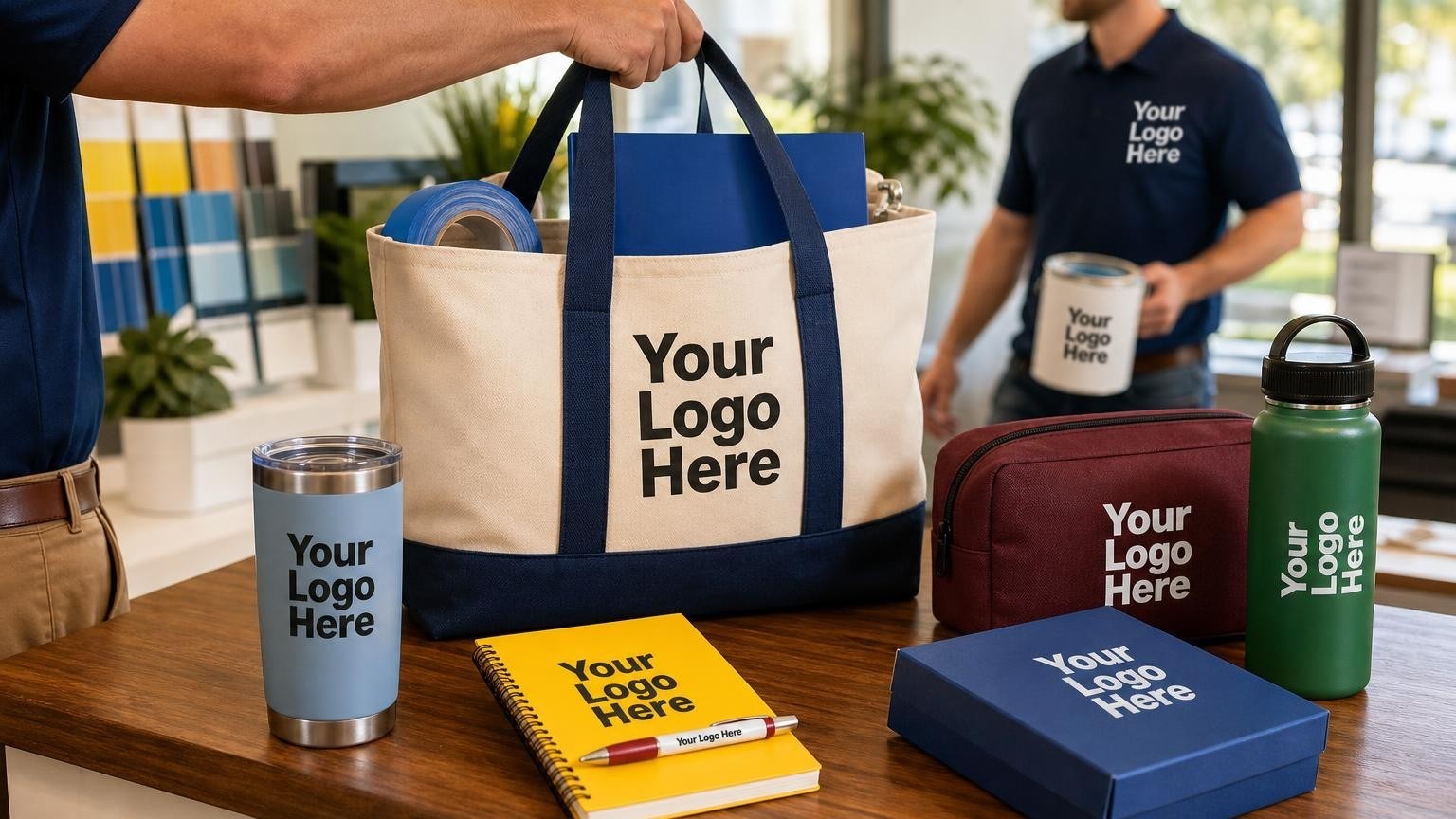
Homeowners experience high anxiety on the first morning of a project, worrying about property damage, dust, and the crew's professionalism. A structured welcome kit handed over during the initial morning walk-through immediately builds professional trust. This kit should not contain useless trinkets; instead, it must focus on practical items that directly relate to the home preparation and painting process.
For instance, a high-volume residential painting franchise, a historical restoration painting specialist, and a multi-family housing repaint contractor all benefit from standardizing this physical hand-off. Crews can store these kits flat in the cargo areas of transit vans, alongside paint cans and drop cloths, ensuring they remain clean and undamaged. The kit should include a project folder with care instructions, a branded wet-paint door hanger to notify neighbors of the ongoing work, and a roll of surface-safe painter's tape.
When a crew leader hands this neatly organized packet to a homeowner on day one, it sets a professional tone for the entire multi-day project. Centralizing the procurement of these items ensures that every location, from Ohio to Florida, distributes identical, high-quality materials. This operational consistency reassures the client that their home is in capable hands, reducing the volume of anxious mid-project phone calls to the regional office. This structured approach ensures that every homeowner receives the same introduction, regardless of which local crew is assigned to their project. It also simplifies training, as new crew leaders follow a clear, repeatable workflow on day one.
The 'Day-One' Customer Welcome Kit
Handed to residential homeowners on the first morning of the project to ease anxiety and organize paperwork.
Selecting Practical Tools that Support the Painting Workflow
Rather than distributing generic items that have no relevance to the painting industry, operations managers should focus on functional tools that crews and clients use daily. For example, providing crews with durable branded clipboards helps them manage daily checklists and wet-paint warning signs without losing paperwork in dusty work vans.
Another practical option is the use of custom magnets. A branded magnet attached to the homeowner's project packet or left on the refrigerator keeps contact details accessible for future touch-ups or referrals. When selecting these items, prioritize options that resist dust and moisture, ensuring they remain presentable on active job sites.
To explore practical options for your regional teams, you can browse Myron's range of custom economy pens to include in customer welcome folders, or view our selection of promotional magnets that keep your contact information visible long after the paint dries. By selecting items that serve a clear purpose on-site, you avoid wasting budget on low-quality novelties that end up in the trash.
Equipping the Crew: High-Durability Apparel That Builds Trust
Painting crews are the primary face of the brand, making their on-site presentation critical to customer trust. Cheap t-shirts shrink, fade, and tear quickly under the physical demands of professional painting, leading to a sloppy appearance on high-end residential jobs.
Operations managers face a key decision trigger when preparing for the busy spring hiring surge or onboarding new painters for the fall commercial push. Investing in high-durability, stain-resistant garments ensures crews maintain a clean, professional look over dozens of wash cycles. Standardized apparel also prevents local branch managers from sourcing off-brand, low-quality garments that clash with corporate guidelines.
For hot summer exterior jobs, moisture-wicking polo shirts keep painters comfortable while maintaining a structured collar. During late-season commercial projects, equipping crews with matching, heavy-duty outerwear ensures the brand remains visible even in cold weather. Additionally, durable canvas caps protect painters from overspray while keeping hair neatly contained.
When a homeowner watches a painting van pull up and sees a crew step out in matching, clean uniforms, it immediately validates their decision to hire a professional service. You can equip your regional teams with durable crew apparel and protect them from the elements with embroidered baseball caps that withstand the daily rigors of the job. Furthermore, providing high-quality gear boosts crew morale. Painters feel valued when equipped with comfortable, functional apparel that protects them from the elements, which can help reduce turnover in a highly competitive labor market.
Crew Uniforms & Field Gear
Standardized, professional apparel worn by painting crews to project a clean, unified brand image on-site.
Operational Comparison: Gear Selection by Painting Scenario
Choosing the right promotional and operational gear requires balancing durability, storage constraints, and the specific recipient's needs. The table below outlines how to match different items to specific painting workflows.
| Painting Scenario | Primary Operational Need | Recommended Gear Types | Storage & Logistics Constraint |
|---|---|---|---|
| Residential Interior Repaint | Homeowner reassurance and paperwork organization | Flat-packing project folders, surface-safe tape, custom magnets | Must lay flat in van side pockets to avoid bending |
| Commercial Exterior Coating | Crew protection and high-visibility branding | Moisture-wicking polo shirts, structured canvas caps, safety vests | Must withstand paint overspray and frequent heavy washing |
| Historical Wood Restoration | Precision tracking and detailed client updates | Heavy-duty plastic clipboards, custom writing instruments | Must resist dust, moisture, and scraping against ladders |
| Multi-Family Property Bid | Long-term relationship building with property managers | Insulated travel mugs, high-end portfolio folders | Must be individually boxed to prevent scratching during transit |
Strategic Investment Tiers for Multi-Location Painting Brands
- Standard cotton crew t-shirts for seasonal painters.
- Custom economy plastic pens for project folders.
- Flat paper wet-paint door hangers for neighborhood marketing.
- Moisture-wicking performance polo shirts for crew leaders.
- Structured canvas caps to protect against overspray.
- Durable plastic clipboards for daily job-start checklists.
- Heavy-duty insulated travel mugs for commercial property managers.
- Embroidered weather-resistant outerwear for year-round crews.
- Custom canvas utility bags for top-tier residential welcome kits.
Operational Insights from the Field: Sourcing for Painting Brands
Based on Myron's experience helping organizations plan custom event merchandiseBased on experience helping organizations plan custom merchandise and apparel, Myron's team has gathered practical operational insights specifically matching the physical realities of the painting industry:
- Prioritize dark apparel colors: White painter's pants are traditional, but white shirts show paint stains and dirt instantly. Opt for navy, charcoal, or dark forest green to extend the lifespan of crew uniforms.
- Avoid fragile materials: Ceramic mugs and glass items will inevitably shatter in a busy painting van. Stick to metal, heavy-duty plastic, or canvas for any items stored in field vehicles.
- Choose embroidery over thin prints: Screen-printed logos on crew shirts can crack and peel under the heat of pressure washers and heavy commercial dryers. High-density embroidery holds up far better to rugged daily wear.
- Keep welcome kits flat: Bulky boxes take up valuable cargo space in transit vans. Flat-packing canvas totes or heavy paper folders can slide easily behind seats or into side compartments.
- Use functional neighborhood marketing: Leaving a branded wet-paint sign or door hanger on adjacent properties is far more effective than generic flyers, as neighbors can see the quality of your work in real-time.
- Standardize logo placement: Keep embroidery placements consistent across all garments. A left-chest logo on polo shirts and a centered logo on caps ensures a clean, uniform appearance that looks highly professional from a distance.
How to Choose the Right Item
- Durability vs. Unit CostAsk if the garment or item will withstand physical demands, paint overspray, and frequent washings. Prioritize polyester-blend performance polos over thin cotton.
- Storage and Van MobilityEnsure items can be easily stored in work vans without damage. Choose flat-packing canvas totes and durable plastic clipboards over fragile ceramic mugs.
- Brand Consistency ControlVerify if the product category allows exact color matching and high-quality logo reproduction. Use embroidered apparel and laser-engraved items for consistency.
Common Mistakes to Avoid
- Allowing local branch managers to source their own promotional items locally.A lack of centralized corporate procurement guidelines leads to quick, off-brand local purchasing.Better approach: Establish a centralized portal with Myron where local managers can only order approved, branded items.
- Prioritizing low unit cost over apparel durability for painting crews.High crew turnover leads procurement to buy the cheapest possible t-shirts, which fade and shrink quickly.Better approach: Invest in high-durability, stain-resistant garments that maintain a professional look over dozens of wash cycles.
- Distributing generic, non-functional promotional items to residential clients.Purchasing generic items like plastic whistles without considering the specific context of a painting project.Better approach: Provide highly practical items that directly relate to the home prep and painting process, such as wet-paint signs and painter's tape.
Frequently Asked Questions About Painting Brand Logistics
How do we ensure painting crews actually hand out welcome kits to homeowners?
Integrate the kit hand-off directly into your crew's digital job-start checklist, making it a mandatory operational step before painting begins.
What apparel materials are best suited for professional painters?
Look for high-durability polyester blends or heavy-weight cotton that offer moisture-wicking properties and resist shrinking and fading after frequent washings.
How should multi-location painting companies manage inventory distribution across different states?
Use Myron's centralized ordering and multi-address shipping capabilities to send standardized gear directly to regional offices or local storage lockers.
Centralizing Your Painting Brand Logistics
Standardizing customer welcome kits and crew apparel across all locations is an operational necessity that protects brand equity and justifies high-end pricing. By centralizing your procurement, you eliminate off-brand local purchasing and ensure every territory projects a unified, professional image.
As you prepare for the upcoming seasonal hiring surge or plan your next commercial contract push, consider how standardized gear can simplify your operations. When you are ready to standardize your regional gear, Myron is here to help. Our team can assist you in selecting the right apparel options and practical tools for your active crews, helping you maintain consistent quality across every single job site.