


Branding for Multi-Location Restoration Companies: Standardizing Trust
How multi-location restoration operators eliminate brand drift, equip field teams for high-stress dispatches, and secure recurring referrals from insurance adjusters.
10 min read
Multi-location restoration companies maintain brand consistency and build immediate trust by deploying standardized field intake kits and uniform gear from Myron across all regional branches. Strong choices include shirts & T-shirts, caps & hats, safety gear, and stick-Up & magnetic calendars. Order at least 6-8 weeks before peak storm, hurricane, or freezing weather seasons. Avoid ordering low-quality, fragile items that fail in harsh field environments and damage the brand's professional image.
A Tale of Three Branches: The Cost of Brand Drift
The clipboard sliding across the wet kitchen counter in a flooded basement is water-warped, its clip rusted, holding a hand-scrawled intake form on generic yellow legal paper. Upstairs, two technicians from the same restoration company's northern branch are wearing faded, non-branded cotton t-shirts, while the estimator from the southern branch arrives in a neon green safety vest that clashes with the company's official navy-and-gold color scheme. For a regional operations director overseeing multiple offices during a high-stress storm mobilization, this lack of coordination is more than an aesthetic issue. It signals a deeper operational breakdown to an already anxious homeowner who is trying to decide whether to trust a crew with a sixty-thousand-dollar mitigation claim. When regional offices buy their own local supplies independently, brand drift happens quickly, eroding the immediate authority required on a disaster scene.
Standardizing Multi-Location Restoration Branding
Multi-location restoration companies maintain brand consistency and build immediate trust by deploying standardized field intake kits and uniform gear across all regional branches. By centralizing procurement through Myron, operations directors can ensure that every service vehicle—whether responding to water mitigation, fire soot cleanup, or mold remediation—carries identical, high-durability items. This unified presentation reassures anxious property owners during critical first-contact moments and keeps the company's 24/7 emergency hotline top-of-mind for regional insurance adjusters and commercial property managers who drive recurring referral volume.
- Shirts & T-shirts
- Caps & Hats
- Safety Gear
- Stick-Up & Magnetic Calendars
Avoid: Ordering low-quality, fragile items that fail in harsh field environments and damage the brand's professional image.
The Van-Ready Intake Kit: Standardizing the First 15 Minutes
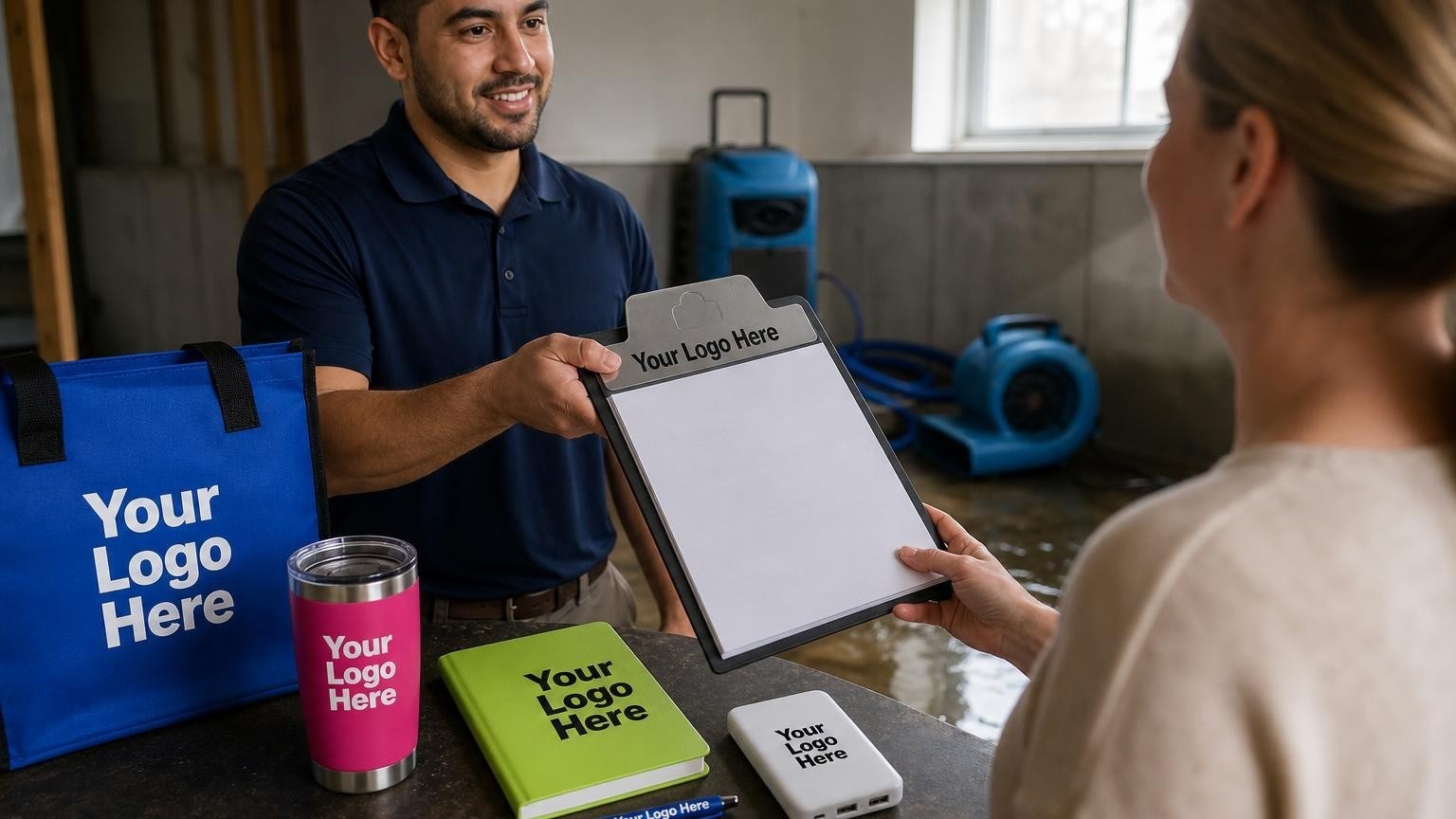
During an active water-damage mitigation, fire soot cleanup, or mold remediation dispatch, the first fifteen minutes on-scene dictate the trajectory of the entire project. A homeowner standing next to a failing sump pump or surveying smoke damage is in a state of high vulnerability. When a technician hands them a professional, organized packet of paperwork, it provides immediate psychological relief. In a crowded disaster zone with multiple contractors present, a clean, branded clipboard acts as a visual anchor, identifying your team as the primary mitigation contractor.
To achieve this consistently across multiple offices, leading operators mandate a standardized intake kit as a core inventory item in every service vehicle cab. Instead of loose papers or mismatched folders, technicians use a weather-resistant clipboard that keeps authorization forms dry and organized. This includes the work authorization, the direct payment authorization, and the initial moisture mapping logs. Handing the client a polished metal pen to sign the paperwork—and letting them keep it—is a small but deliberate step in the intake workflow. This simple handoff ensures the homeowner has the company's contact info close at hand throughout the weeks of drying and reconstruction. By standardizing these physical assets, regional managers eliminate the risk of technicians using cheap, unreliable writing tools that fail in cold weather or running out of official documentation folders during a regional storm surge. Every truck roll across every territory executes the exact same professional protocol, protecting the brand's reputation at its most critical touchpoint.
The Field Intake Essentials
Equipping technicians to deliver a professional, reassuring intake experience on-site.
Equipping the Field Team: Standardized Apparel and Safety Gear
Maintaining a professional image in the field requires gear that can withstand the physical demands of restoration work. Technicians frequently work in humid, post-flooded properties, crawl spaces, and dark, soot-damaged structures. Standardizing what your team wears across all branches ensures that local authorities and property owners instantly recognize your crew as authorized professionals.
Equip your field teams with standardized team apparel using durable Shirts & T-shirts that resist moisture and staining. Equipping technicians with matching Caps & Hats keeps hair contained and adds another clear branding element at eye level. Additionally, providing high-visibility Safety gear, such as branded reflective vests, is essential for crews working on active commercial mitigation sites or near busy roadways during storm responses. By sourcing these items from a single, pre-approved corporate catalog, multi-location companies prevent individual branches from purchasing off-brand colors or low-quality alternatives that wear out after a few washes.
Rugged Field Gear
Ensuring technicians look professional and stay safe in active disaster zones.
Securing Referrals from Insurance Adjusters and Property Managers
While residential calls are vital, the lifeblood of multi-location restoration volume is the B2B referral pipeline. Regional insurance adjusters, independent claims representatives, and commercial property managers control the distribution of high-value mitigation contracts. These professionals are inundated with generic marketing materials, most of which are discarded immediately. To stay visible when a pipe bursts or a roof leaks, restoration brands must provide items that offer genuine, daily utility.
For example, distributing high-quality Insurance Company Promos & Swag directly to regional claims offices keeps your emergency contact details visible on an adjuster's desk. A highly effective tool for this audience is a durable, branded calendar. Placing Stick-Up & Magnetic Calendars on filing cabinets or office whiteboards ensures your 24/7 hotline is the first number seen when an emergency call comes in. When a regional manager visits an insurance agency, bringing a small token of appreciation like a custom calendar or a first aid kit for their office lobby builds goodwill that pays dividends when claims are filed. The decision trigger for these orders should align with pre-season preparation, such as late autumn before freezing temperatures cause pipe bursts, or early spring ahead of hurricane season. Delivering these items during routine office visits or as a professional gesture of appreciation ensures your brand remains the preferred partner when disaster strikes.
Branding Assets by Operational Scenario
To help operations directors choose the right physical assets for different field and office environments, this comparison table outlines the best fits based on recipient and operational demands:
| Operational Scenario | Primary Recipient | Recommended Branded Asset |
|---|---|---|
| Emergency Water Extraction | Stressed Homeowner | Weather-resistant document folder with intake paperwork and a metal grip pen |
| Commercial Fire Inspection | Property Manager | Heavy-duty LED flashlight and a branded safety vest |
| Insurance Office Visit | Claims Adjuster | Magnetic calendar with 24/7 hotline and a premium insulated tumbler |
| New Technician Onboarding | Field Staff | Moisture-wicking polo shirt, branded cap, and a personal first aid kit |
Investment Tiers for Multi-Location Standardization
Standardizing your brand assets does not require an all-or-nothing investment. Multi-location operators can organize their procurement into clear tiers based on operational needs and recipient groups:
- Good (Essential Field Operations): Focuses on high-volume, everyday utility for field crews. This tier includes durable plastic clipboards, basic moisture-wicking t-shirts, and custom safety caps.
- Better (Client Reassurance & Intake): Designed to improve the direct customer experience during a crisis. This tier features weather-resistant document folders, polished metal grip pens, and compact First Aid Kits & Dispensers left with the homeowner.
- Best (B2B Referral Cultivation): Reserved for high-value referral sources like commercial property managers and insurance brokers. This tier includes heavy-duty insulated tumblers, multi-tools, and magnetic calendars for year-round visibility.
Operational Insights from the Procurement Field
Based on Myron's experience helping organizations plan custom event merchandiseBased on experience helping multi-location service brands standardize their physical assets, Myron's team has gathered practical operational insights to help you optimize your procurement:
- Choose dark apparel colors for field technicians: Restoration environments are filled with soot, mud, and rusty water. Navy, charcoal, or black shirts hide stains far better than lighter colors, keeping your team looking professional even at the end of a twelve-hour shift.
- Opt for metal over plastic for field pens: Cold weather can make cheap plastic pens brittle, causing them to crack when a homeowner signs paperwork on a cold clipboard. Metal-barrel pens withstand temperature extremes and feel more substantial.
- Centralize the design approval process: To prevent regional managers from ordering off-brand colors or outdated logos, establish a centralized, pre-approved digital catalog where local offices can only order approved designs.
- Pre-package intake kits before storm season: Do not leave it to technicians to assemble folders and pens during a major storm mobilization. Keep pre-assembled kits in sealed plastic bins in the warehouse, ready to be tossed into truck cabs.
- Keep branding subtle on B2B gifts: Insurance adjusters and property managers are more likely to keep a high-quality tumbler on their desk if the logo is clean and understated, rather than oversized and loud.
High-Utility Leave-Behinds
Staying top-of-mind with commercial property managers and insurance adjusters.
How to Choose the Right Item
- Environmental DurabilityAsk if the item will survive exposure to water, mud, soot, and extreme temperatures in the field. Choose waterproof clipboards, heavy-duty LED flashlights, and moisture-wicking uniforms over basic paper notebooks and cheap plastic pens.
- B2B Utility ValueEvaluate whether the item provides daily utility to an insurance adjuster or commercial property manager. Select premium insulated tumblers, desk calendars with emergency guides, and multi-tools over cheap plastic keychains.
- Brand Uniformity ControlEnsure the item can be consistently sourced and customized across all regional locations. Avoid one-off clearance items or locally sourced generic supplies that weaken your competitive edge against national franchises.
Common Mistakes to Avoid
- Allowing individual branches to source their own local promotional items.A lack of centralized procurement options leads regional managers to buy whatever is fastest locally, resulting in mismatched colors and off-brand logos.Better approach: Establish a centralized, pre-approved catalog with Myron to maintain strict brand standards across all locations.
- Choosing cheap, flimsy items for field use.Focusing solely on the lowest unit cost rather than the harsh operational environment of a disaster site leads to broken tools and a poor brand image.Better approach: Invest in durable, weather-resistant items like metal-barrel pens and heavy-duty clipboards that reflect the rugged, reliable nature of restoration work.
- Failing to stock service vehicles with pre-assembled intake kits.Treating promotional items as office closet storage rather than active field tools means technicians arrive at high-stress scenes disorganized.Better approach: Make pre-packaged customer kits a mandatory inventory item for every truck roll, stored in sealed plastic bins.
Frequently Asked Questions
How do multi-location restoration companies manage promotional inventory across different branches?
By utilizing centralized online portals that allow regional managers to order pre-approved, branded items directly while maintaining corporate budget controls.
What are the most durable promotional items for restoration technicians working in wet environments?
Waterproof clipboards, heavy-duty insulated drinkware, and high-visibility safety apparel are ideal because they withstand harsh field conditions daily.
How can we use branded items to improve customer satisfaction scores during a home insurance claim?
Provide a 'Restoration Welcome Kit' containing a clear document holder for insurance paperwork, a branded pen, and a high-quality flashlight to ease their stress.
Protecting Your Brand Equity Across Every Territory
As you prepare your branches for the upcoming winter freeze or spring storm season, standardizing your physical brand assets is one of the most effective ways to protect your operational efficiency and customer trust. When every technician arrives in uniform and every homeowner receives a professional intake kit, you project the authority of a national franchise while maintaining your local expertise. To simplify this process across all your regional offices, consider setting up a centralized multi-location procurement program with Myron today, ensuring your brand remains consistent, professional, and ready for any emergency.