


Standardized Branding Strategies for Multi-Location Solar Companies
Scale your solar operations without losing brand control. Learn how to centralize your physical brand assets, outfit field crews professionally, and build localized referral loops across multiple regional offices.
11 min read
Multi-location solar companies maintain brand consistency and drive local referrals by partnering with Myron to centralize their promotional product procurement, ensuring every regional office utilizes standardized, high-quality customer welcome kits and durable crew apparel. Strong choices include performance apparel and safety wear, eco-Friendly welcome kits, and custom power banks and chargers. Prior to peak spring and summer installation seasons, or during regional office expansions. Avoid cheap plastic novelty items, low-quality cotton shirts that fade in the sun, and decentralized local ordering.
The Final Mile Brand Disconnect
The regional operations manager stands on the driveway of a newly completed residential solar installation in Phoenix, watching a local subcontracted crew lead hand a generic, flimsy paper folder to the homeowner. Inside the folder are the critical system warranties, net metering agreements, and utility sign-off papers—the culmination of a thirty-thousand-dollar clean energy investment. Yet, as the subcontractor climbs back into an unmarked white van, the company's high-end brand identity completely vanishes. There is no visual connection to the multi-state solar firm that spent months securing the contract, working through the local permitting hurdles, and coordinating the engineering review. The final physical handoff—the moment of highest customer satisfaction—feels like an afterthought. For multi-location solar companies, this disconnect represents a major operational vulnerability. When regional offices and local installation crews operate without standardized physical brand assets, the corporate identity becomes diluted, and valuable neighborhood referral loops are lost before they can even begin.
Centralizing Solar Brand Assets
Multi-location solar companies maintain brand consistency and drive local referrals by partnering with Myron to centralize their promotional product procurement. This ensures every regional office uses standardized, high-quality customer welcome kits and durable crew apparel. By replacing decentralized, off-brand local purchasing with a centralized corporate program, solar operators can enforce uniform brand standards across all territories. Key operational assets include weather-resistant field apparel for installation crews, professional document folders for contract signings, and high-perceived-value referral incentives for homeowners. This systematic approach protects brand equity, simplifies regional warehouse logistics, and turns active residential job sites into highly visible local marketing engines.
- Performance Apparel and Safety Wear
- Eco-Friendly Welcome Kits
- Custom Power Banks and Chargers
Avoid: Cheap plastic novelty items, low-quality cotton shirts that fade in the sun, and decentralized local ordering.
Standardizing the First Impression: The Multi-Location Welcome Kit
Managing the long gap between a signed solar contract and the actual physical installation day requires deliberate touchpoints to prevent buyer remorse. Across multiple regional offices, local sales representatives often use whatever materials are closest at hand, leading to inconsistent customer experiences. Whether managing a high-volume residential installer, a commercial solar contractor, or a specialized community solar provider, operations directors are implementing standardized welcome kits that serve as physical brand guardrails.
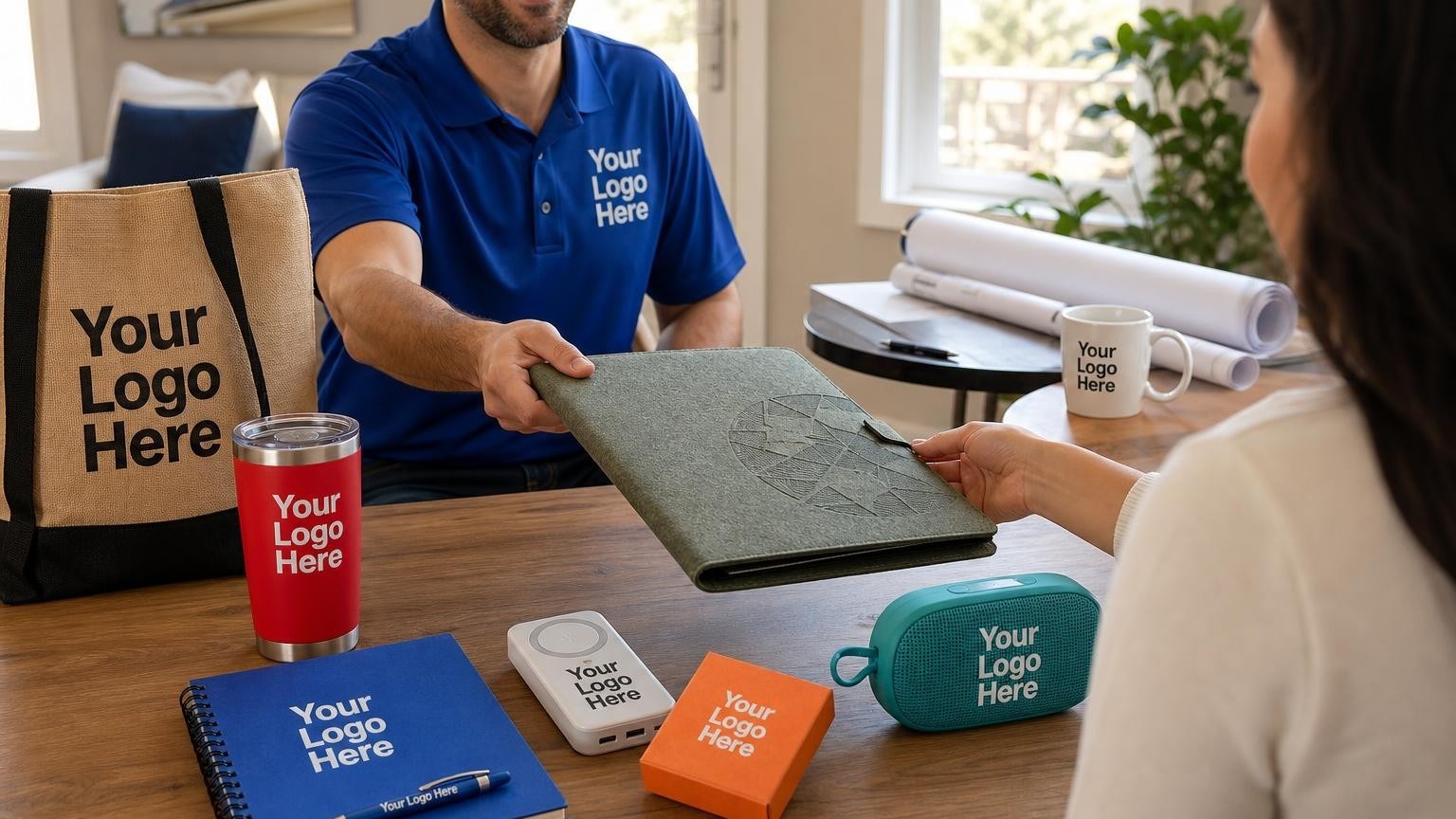
The workflow begins at the kitchen table during the initial in-home sales consultation. Instead of leaving behind loose sheets of paper, the sales representative presents a structured document organizer containing the solar system blueprints, local utility interconnection agreements, and HOA approval guidelines. Equipping your sales force with premium metal pens with logos ensures that even the simple act of signing a contract feels professional and polished.
This kit remains with the homeowner throughout the permitting phase, culminating on the critical 'permission to operate' (PTO) day. When the utility grid connection is finalized, the crew lead hands over the completed warranty package in the same branded organizer. This physical handover reinforces the high-ticket nature of the investment, transforming a dry administrative step into a moment of celebration. Because service vehicles have limited storage space, these flat-packing organizers are an ideal operational choice, fitting easily into van door compartments without getting damaged.
The 'Day of Grid Connection' Handover Kit
Equip your crew leads to hand over final system warranties and net metering agreements in a professional, branded folder complete with a premium metal pen.
Outfitting the Field: Crew Apparel and Safety Gear as Brand Assets
Solar installation crews are the most visible representatives of a solar brand. When a crew arrives at a residential job site in mismatched, worn-out t-shirts, it immediately undermines the homeowner's trust and damages the company's reputation in the neighborhood. For multi-location companies, managing crew apparel across different climates requires a centralized replenishment schedule.
During peak summer installation seasons, field crews face intense heat and physical labor on active residential roofs. Outfitting teams in cheap, non-breathable cotton shirts leads to rapid wear, fading, and an unprofessional appearance within weeks. To maintain a professional image across all regional offices, solar companies should implement standardized corporate apparel programs for both sales and installation teams.
The operational standard for roof crews includes high-visibility, moisture-wicking safety shirts and structured embroidered baseball caps that provide UV protection. These garments are designed to withstand daily exposure to intense sunlight and physical strain, ensuring that crews look uniform and professional from the first panel placement to the final electrical hookup. By establishing a centralized ordering portal, corporate buyers can automate replenishment based on regional hiring surges, ensuring new installers receive their standardized gear before their first day in the field.
High-Visibility Field Crew Essentials
Keep your installation teams safe, comfortable, and highly professional on hot residential roofs with moisture-wicking safety shirts and structured caps.
Selecting the Right Physical Assets for Solar Operations
Transitioning from decentralized local purchasing to a centralized catalog requires selecting items that align with the technical, high-ticket nature of solar energy. Cheap plastic giveaways fail to match the value of a residential solar system and quickly end up in landfills, which directly contradicts the environmental mission of clean energy.
Instead, operations managers should focus on functional, durable items that solve specific field challenges. For example, site surveyors conducting initial roof assessments require reliable tools that perform under direct sunlight. Providing surveyors with high-quality, weather-resistant writing tools and eco-friendly promotional items reinforces the company's commitment to sustainability.
Additionally, field representatives can use custom power banks and chargers to keep tablets and mobile devices charged during long days of door-to-door consultations or site surveys. These functional assets serve a practical purpose for both employees and customers, ensuring that every branded item distributed by the company has a clear operational utility and a long lifespan in the field.
Operational Deployment Matrix for Solar Brand Assets
To maximize the utility of physical brand assets, multi-location solar companies must align specific products with key operational milestones. The table below outlines the recommended deployment strategy across different regional workflows.
| Operational Milestone | Primary Recipient | Recommended Product Type | Logistical Storage Location |
|---|---|---|---|
| Initial Site Assessment | Homeowner & Surveyor | Eco-friendly notebooks, metal stylus pens | Sales representative vehicle trunk |
| Contract Signing | Homeowner | Standardized document organizer, premium metal pen | Sales representative briefcase |
| Active Installation Day | Field Crew & Neighbors | Moisture-wicking safety shirts, branded caps, door hangers | Service van cabin compartments |
| Permission to Operate (PTO) | Homeowner | Custom power banks, warranty folders, magnets | Crew lead vehicle glovebox |
Tiered Branding Strategies for Solar Operations
Managing promotional expenditures across multiple regional offices requires a structured approach to product selection. Rather than allowing local managers to purchase items ad-hoc, corporate operations can establish three distinct tiers of brand assets based on the specific recipient and operational objective.
- Good (High-Volume Field Utility): Designed for maximum distribution and daily operational use. This tier includes high-visibility crew t-shirts, structured baseball caps for field teams, and promotional magnets left on customer refrigerators containing local utility emergency contact numbers and office phone lines.
- Better (Customer Onboarding & Site Surveys): Focused on the active customer experience during the sales and installation pipeline. This tier features premium metal stylus pens for digital contract signings, custom power banks for site surveyors, and eco-friendly welcome folders that organize permitting and engineering documents.
- Best (Referral Incentives & Key Accounts): Reserved for high-value customer advocates and commercial partners. This tier includes high-performance insulated coolers for homeowners who refer adjacent neighbors, premium weather-resistant jackets for regional managers, and complete solar-pathfinder tool kits for lead installation technicians.
Operational Insights from Myron's Solar Fulfillment Experience
Based on Myron's experience helping organizations plan custom event merchandiseBased on experience helping organizations plan custom merchandise, Myron's team has gathered practical operational insights specific to the unique demands of the solar industry:
- Prioritize Flat-Packing Items for Fleet Vehicles: Space inside solar installation vans is highly constrained. Choose flat-packing document organizers and compact tech pouches that slide easily under seats or into side door pockets, preventing damage during transit.
- Avoid Paper Labels in Field Environments: Solar site surveys and installations occur outdoors in all weather conditions. Any promotional item or tool pouch used in the field must feature debossed, engraved, or screen-printed branding rather than paper stickers, which peel and degrade instantly when exposed to moisture or heat.
- Standardize Color Codes Across Regions: To maintain a cohesive corporate identity, lock in exact fabric and imprint color specifications in your centralized Myron account. This prevents regional offices in different states from ordering mismatched shades of safety yellow or corporate blue.
- Use Functional Utility to Drive Retention: Homeowners are far more likely to keep and use a branded item that serves a clear purpose, such as a magnetic calendar for tracking utility billing cycles or a high-capacity power bank, rather than a generic plastic novelty item.
- Align Apparel Orders with Seasonal Hiring Windows: Solar installation volume peaks during the spring and summer. Place bulk apparel orders in January or February to ensure regional warehouses are fully stocked with standardized crew uniforms before seasonal hiring surges begin.
Eco-Friendly Welcome Pack
Reinforce your clean energy mission from day one by providing homeowners with sustainable notebooks and solar-themed welcome materials.
Common Mistakes to Avoid
- Allowing regional offices to source their own promotional items locally.Local managers try to save time or budget, resulting in off-brand, low-quality items that damage the corporate image.Better approach: Establish a centralized, pre-approved catalog with Myron that regional offices must use for all procurement.
- Prioritizing low cost over durability for field crew apparel.Cheap cotton t-shirts shrink, fade, and tear after two weeks of hot roof installations, making crews look unprofessional.Better approach: Invest in high-performance, moisture-wicking, and UV-protected fabrics designed for physical labor.
- Failing to align promotional item distribution with operational workflows.Leaving a box of branded pens in the office closet instead of requiring sales reps to hand them to customers during contract signings wastes budget and misses key touchpoints.Better approach: Designate specific physical items for contract signing, installation day, and the post-install referral request.
Frequently Asked Questions
How do we maintain brand consistency when ordering promotional products for multiple solar offices?
Establish a centralized corporate account with Myron to lock in approved designs, colors, and product models, allowing regional managers to order only from a pre-approved catalog. This centralized portal concept prevents local offices from purchasing off-brand, low-quality items that dilute the corporate identity, while still giving regional managers the flexibility to order stock based on local installation volumes.
What are the most durable promotional items for solar installation crews working outdoors?
Focus on high-performance, weather-resistant gear such as UV-protected moisture-wicking shirts, heavy-duty insulated stainless steel tumblers, and rugged, water-resistant tool bags. Solar crews face intense heat and physical strain, meaning cheap cotton garments or flimsy plastic items will fail quickly, leading to wasted budget and an unprofessional appearance on active residential roofs.
How can we use promotional products to increase our post-installation referral rates?
Implement a structured referral kit workflow, gifting premium items like high-end coolers or insulated drinkware sets to customers immediately after their system goes live. By aligning the gift with the critical 'permission to operate' (PTO) milestone, you capitalize on high customer satisfaction and provide a physical incentive that encourages homeowners to advocate for your brand within their neighborhoods.
Centralizing Your Solar Brand Logistics
Scaling a multi-location solar company requires a careful balance between rapid geographic expansion and strict quality control. Physical brand assets should not be treated as cheap marketing giveaways, but as critical operational tools that standardize the customer journey and project professionalism in every neighborhood your crews enter. By centralizing your promotional product and apparel procurement, you protect your brand equity, simplify regional warehouse logistics, and equip your field teams for success. When you are ready to centralize your regional logistics and prepare for the upcoming peak installation season, Myron is here to help. Contact Myron's corporate accounts team to design a standardized, multi-location promotional product program for your solar brand.