


Pediatric Urgent Care Promotional Products: Building Trust with Families
How pediatric urgent care centers use child-friendly kits, clinical distraction tools, and parent-facing home care items to manage waiting room stress and build long-term trust.
9 min read
Pediatric urgent care clinics can significantly improve patient cooperation and parent satisfaction by integrating child-safe distraction tools and practical home-care items from Myron into their daily clinical workflows. Strong choices include individually wrapped coloring books and non-toxic crayons, custom digital thermometers and fever-tracking magnets, and fun, functional writing instruments for clinical staff. Order at least 6-8 weeks prior to peak seasonal flu and back-to-school surges to ensure adequate stock. Avoid cheap plastic toys with small parts, non-sanitizable plush items, and low-utility administrative giveaways.
The Saturday Morning Rush: Managing Waiting Room Friction
The waiting room of a pediatric after-hours clinic on a rainy Saturday morning is a high-friction environment. A toddler with a sudden high fever clings to a worried parent, crying softly, while two other children cough restlessly in the corner. For the front-desk coordinator, managing this immediate wave of family anxiety is the first and most critical step in the entire patient intake workflow. Instead of letting the tension build, the coordinator reaches into a clean storage bin and hands the child a sealed, custom-branded activity packet. Instantly, the child's tears give way to curiosity as they look at the colorful pages. The parent visibly relaxes, feeling an immediate sense of clinical empathy and support. This simple handoff changes the atmosphere, turning a stressful waiting period into an organized, cooperative intake process.
Quick Guide: Integrating Branded Items into Pediatric Clinical Workflows
Pediatric urgent care clinics can improve patient cooperation and parent satisfaction by integrating child-safe distraction tools and practical home-care items from Myron into their daily clinical workflows. Key strategies include distributing sealed waiting room welcome packs to calm children during intake, equipping clinicians with functional distraction tools like light-up pens to ease physical exams, and providing high-utility discharge kits containing digital thermometers and care guides for parents. These strategic choices help manage waiting room stress, simplify physical exams, and secure long-term family loyalty.
- Individually wrapped coloring books and non-toxic crayons
- Custom digital thermometers and fever-tracking magnets
- Fun, functional writing instruments for clinical staff
Avoid: Avoid cheap plastic toys with small parts, non-sanitizable plush items, and low-utility administrative giveaways.
De-escalating Waiting Room Anxiety: The Operational Role of Child-Friendly Welcome Kits
First impressions set the tone for the entire clinical visit and directly impact a child's cooperation during triage. When a family walks into a high-volume pediatric after-hours clinic, an independent neighborhood pediatric urgent care clinic, or a hospital-affiliated pediatric emergency care center, their stress levels are already high. Pre-packaged, sealed welcome kits prevent cross-contamination while giving children an immediate, safe distraction. Equipping front-desk staff with these kits helps them manage waiting room dynamics proactively.
By distributing sealed 'bravery packs' containing simple coloring sheets and child-safe temporary tattoos upon arrival, staff can redirect a child's focus. This operational intervention allows parents to complete necessary intake paperwork quickly and without interruption, which directly improves patient throughput. To maintain strict hygiene standards, clinics must avoid loose, unsealed toys that cannot be easily sanitized. Instead, individually wrapped items ensure that every child receives a clean, untouched distraction tool.
The Waiting Room Distraction Pack
Calming anxious children and keeping them occupied during the clinical intake process.
Simplifying the Exam: Branded Distraction Tools for Pediatric Clinicians
Physical exams can be terrifying for toddlers, making immediate distraction tools a clinical necessity. When a pediatrician needs to check a crying child's tonsils or examine a painful ear, cooperation is key to an accurate and rapid assessment. Clinicians can use custom light-up pens to direct visual attention and ease physical tension. For example, a doctor might use a colorful pen to check pupil dilation while keeping the child focused on the glowing tip rather than the medical equipment.
Transitioning these clinical tools into take-home gifts rewards bravery and leaves a positive lasting impression on the parent. Gifting a small, branded item immediately following a throat swab or vaccine injection shifts the child's emotional state from fear to pride. Equip your clinical team with Myron's specialized custom economy pens to find functional tools that serve as excellent administrative assets while keeping your clinic's brand visible to families.
The Clinician's Distraction Toolkit
Assisting doctors and nurses in directing visual attention and easing tension during physical exams.
Selecting Safe, High-Utility Promotional Items for Pediatric Workflows
Choosing the right promotional items for a pediatric clinical environment requires a careful balance of safety, utility, and hygiene. Unlike general adult urgent care clinics, pediatric facilities must adhere to strict age-appropriateness standards. For waiting areas and exam rooms, non-porous materials that can withstand medical-grade disinfectants are highly practical. When selecting items for clinical workflows, consider how each product serves a specific operational purpose.
For instance, custom-branded items from Myron's health care products collection can be integrated into discharge kits to provide ongoing value to parents. Items like digital thermometers, cold packs, and fever-tracking charts keep your clinic's contact information visible on the refrigerator, ensuring you are the first call when the next midnight fever strikes.
Comparing Pediatric Clinical Use Cases and Product Recommendations
To help clinic managers select the most effective tools for each stage of the patient visit, the following table outlines key clinical use cases, recommended product types, and operational benefits.
| Clinical Stage | Recommended Product Type | Operational Benefit |
|---|---|---|
| Front-Desk Intake | Individually wrapped coloring books & non-toxic crayons | Calms children, allowing parents to complete paperwork quickly |
| Physical Exam | Light-up novelty pens & animal-shaped badge reels | Directs visual attention and eases physical tension during assessments |
| Post-Procedure | Child-safe stickers & temporary tattoos | Rewards bravery and shifts the child's emotional state |
| Patient Discharge | Custom digital thermometers & fever-tracking magnets | Provides parents with practical home-care tools and contact info |
Strategic Investment Tiers for Pediatric Clinic Promotional Programs
Managing a clinic's budget requires selecting items that maximize patient comfort and brand visibility without compromising safety. Here is how pediatric urgent care centers can structure their promotional inventory across three investment levels:
- Good (Entry-Level Distractions): Individually wrapped sticker sheets, custom temporary tattoos, and basic branded crayons. These items are highly cost-effective for high-volume distribution at check-in.
- Better (Clinical & Administrative Tools): Custom-branded custom economy pens for staff and parents, animal-shaped badge reels for nursing staff, and basic cold packs.
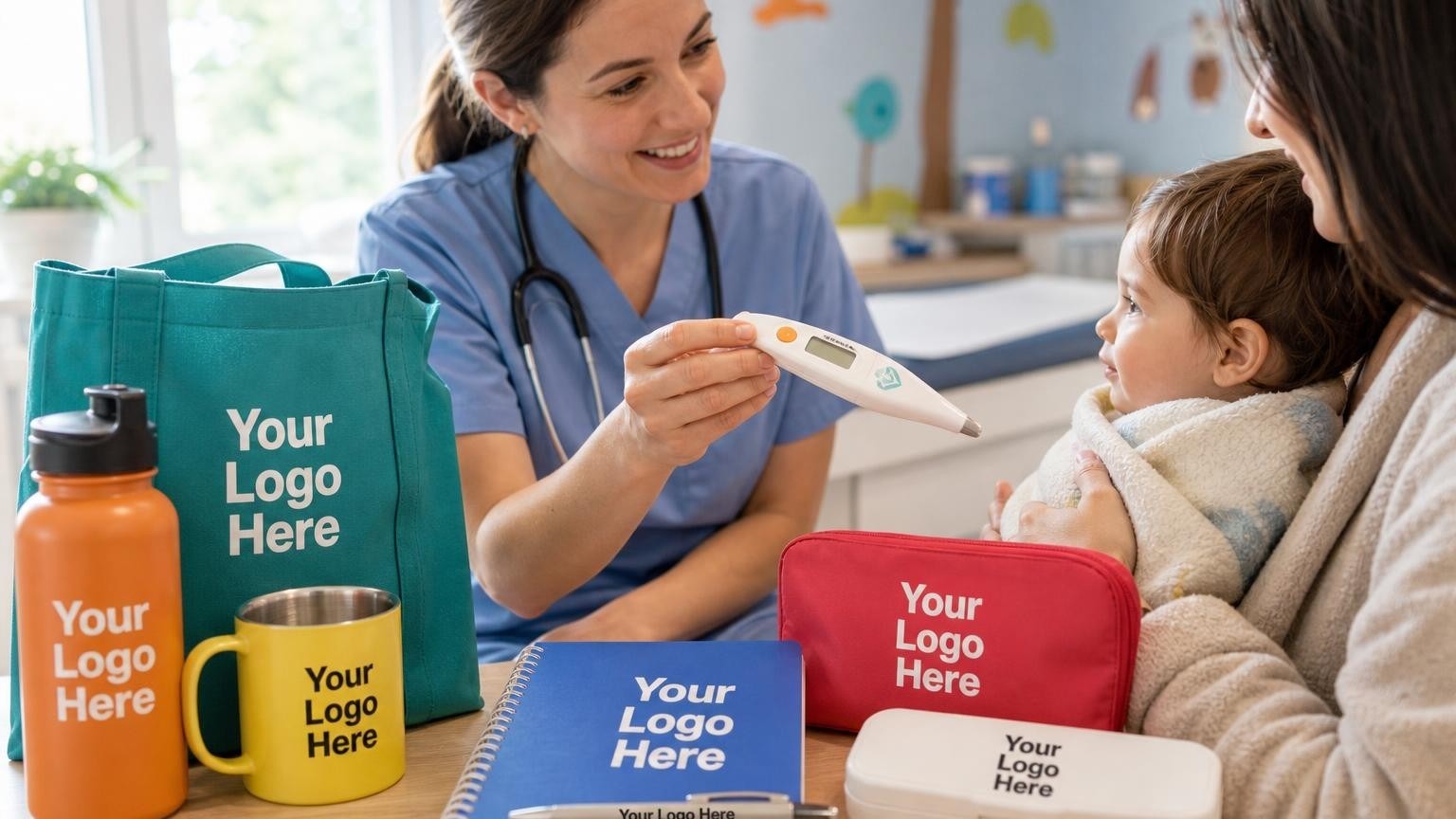
- Best (High-Utility Parent Discharge Kits): Premium digital thermometers, custom promotional magnets with pediatric dosage charts, and complete imprinted first aid kits for home care.
Operational Insights from Myron's Healthcare Product Specialists
Based on Myron's experience helping organizations plan custom event merchandiseBased on experience helping healthcare organizations plan custom event and clinical merchandise, Myron's team has gathered practical operational insights for pediatric urgent care buyers:
- Prioritize Individual Packaging: Individually sealed items prevent cross-contamination in waiting rooms and reassure anxious parents of the clinic's strict hygiene standards.
- Avoid Small Detachable Parts: Ensure all distributed items are certified child-safe and free from small caps or breakable plastic parts to eliminate choking hazards.
- Focus on Parent Utility: Parents are the primary healthcare decision-makers; high-utility items like fever-tracking charts and magnets ensure your clinic's contact info is kept in the home.
- Plan for Seasonal Surges: Order clinical distraction tools and discharge items at least 6 to 8 weeks ahead of peak seasonal flu and back-to-school surges to maintain adequate stock.
- Keep Branding Subtle on Clinical Tools: When equipping pediatricians with distraction pens, keep the branding clean and professional so the tool remains a credible clinical asset during exams.
Extending Care Beyond the Clinic: Parent-Facing Take-Home Kits and Referral Tools
The patient experience does not end at discharge; parents need clear, accessible care instructions and practical tools at home. Providing parents with high-utility home care items keeps your clinic's contact information visible when the next medical emergency strikes. For example, distributing custom digital thermometers or promotional magnets featuring pediatric dosage charts ensures that your brand remains a trusted reference on the family refrigerator.
Additionally, pediatric urgent care clinics rely heavily on strong referral networks with local primary care pediatricians. Sending professional administrative gifts, such as premium pens and notepad sets, to local pediatric practices reinforces your clinic as their trusted after-hours partner. This strategic outreach keeps your facility top-of-mind when primary care doctors need to refer patients for evening or weekend care.
Parent Peace-of-Mind Discharge Kits
Providing practical home-care tools that keep the clinic's contact info highly visible at home.
How to Choose the Right Item
- Sanitization & CleanabilityAsk: Can this item be easily sanitized, or is it individually sealed to prevent cross-contamination? Best fit: individually wrapped coloring books or non-porous plastic toys.
- Age Appropriateness & SafetyAsk: Is this item certified child-safe and free from potential choking hazards? Best fit: thick non-toxic crayons, large single-piece plastic toys.
- Parent UtilityAsk: Does this item provide ongoing value to the parent once they leave the clinic? Best fit: digital thermometers, fever-tracking refrigerator magnets.
Common Mistakes to Avoid
- Purchasing non-sanitizable plush toys for open waiting areas.Porous materials harbor bacteria and viruses, creating cross-contamination risks during seasonal flu surges.Better approach: Opt for individually wrapped items or non-porous materials that can be easily wiped down with medical-grade disinfectants.
- Distributing items with small, detachable parts to toddlers.Failing to verify age-appropriateness ratings introduces severe choking hazards and significant clinic liability.Better approach: Strictly select items certified as safe for all ages, particularly avoiding small caps or breakable plastic parts.
- Neglecting parent-facing items in favor of child-only toys.Parents are the primary healthcare decision-makers; giving only temporary toys misses the opportunity to stay top-of-mind.Better approach: Include high-utility items like digital thermometers or care magnets that parents will keep on their refrigerators.
Frequently Asked Questions About Pediatric Clinic Promotional Products
How do pediatric urgent care clinics ensure promotional items meet strict sanitization standards?
Clinics should select individually wrapped items or non-porous materials like silicone and plastic that can be easily wiped down with medical-grade disinfectants. This ensures strict compliance with infection control protocols.
What are the safest promotional items to distribute to toddlers and infants?
Always choose items certified as child-safe, avoiding small parts, sharp edges, or cheap plastics. Prioritize items like large, single-piece plastic toys, thick board books, or individually wrapped coloring sheets with non-toxic crayons.
How can branded items help reduce patient intake times during peak seasonal flu surges?
Distributing distraction kits at the front desk immediately engages children, allowing parents to complete intake paperwork quickly and without interruption. This simple step keeps the patient flow moving efficiently during high-volume periods.
Building Lasting Trust with Strategic Pediatric Promotional Choices
Integrating safe, sanitizable, and high-utility promotional items into your pediatric urgent care clinic's daily workflow is a practical way to manage waiting room stress, speed up clinical exams, and build long-term family loyalty. By choosing certified child-safe distraction tools and valuable parent discharge kits, you demonstrate a deep commitment to both clinical excellence and patient comfort. As you prepare for the upcoming back-to-school or winter flu season, consider updating your clinical inventory with high-quality, professional assets. Discover safe, high-quality options in our health care products collection to find the perfect fit for your clinic's workflow.