


Promotional Products for Preventive Health Screening Companies
A practical guide for program managers and operations directors on selecting functional, clinical-adjacent tools that speed up registration, protect patient privacy, and encourage long-term health compliance.
9 min read
Preventive health screening companies can significantly improve patient compliance and simplify event logistics by partnering with Myron to source high-utility, clinical-adjacent promotional products. Strong choices include health & wellness tools, durable bags & totes, and professional pens & writing instruments. Order at least 6-8 weeks prior to major seasonal wellness campaigns, open enrollment periods, or scheduled community health fairs. Avoid cheap, non-functional novelty items that fail to reflect clinical professionalism or protect patient privacy.
The High-Stakes Reality of the Screening Day Hand-Off
A corporate employee steps away from a mobile health screening booth set up in a busy office lobby. Clutching a fresh thermal printout showing high blood pressure readings, they feel a sudden wave of uncertainty. The numbers on the page are clear, but the next steps are completely blank. In high-volume screening environments, this exact moment represents a critical operational challenge. If the participant simply folds the paper, slips it into a pocket, and walks back to their desk, the screening has failed its primary objective. To turn a brief clinical encounter into long-term health action, preventive health screening companies must bridge the gap between clinical data and patient behavior. Physical, branded tools distributed during the screening act as continuous, real-world reminders that keep health recommendations top-of-mind long after the event ends.
Quick Guide: Choosing the Right Tools for Patient Engagement
Preventive health screening companies can significantly improve patient follow-up rates and simplify event logistics by partnering with Myron to source high-utility, clinical-adjacent promotional products. By replacing generic giveaways with functional tools—such as secure document folders, custom pill boxes, and professional writing instruments—operators can protect patient privacy, reduce registration wait times, and encourage long-term compliance. Ordering these items six to eight weeks before major seasonal wellness campaigns ensures clinical teams are fully equipped to support participants through every phase of their health evaluations.
- Health & Wellness tools
- Durable Bags & Totes
- Professional Pens & Writing Instruments
Avoid: Avoid cheap, non-functional novelty items that fail to reflect clinical professionalism or protect patient privacy.
The Screening Day Bottleneck: Streamlining Intake Flow
Managing the physical flow of participants is the first major hurdle during high-volume screening events. Whether operating a mobile health van in a rural community center parking lot, running a corporate wellness day in a high-rise office building's conference room, or managing a biometric screening station measuring cholesterol, glucose, and blood pressure, registration bottlenecks can lead to participant drop-off. When a participant arrives, they are often anxious about the physical tests ahead. Handing them a flimsy clipboard or a cheap, skipping pen immediately detracts from the clinical professionalism of your operation.
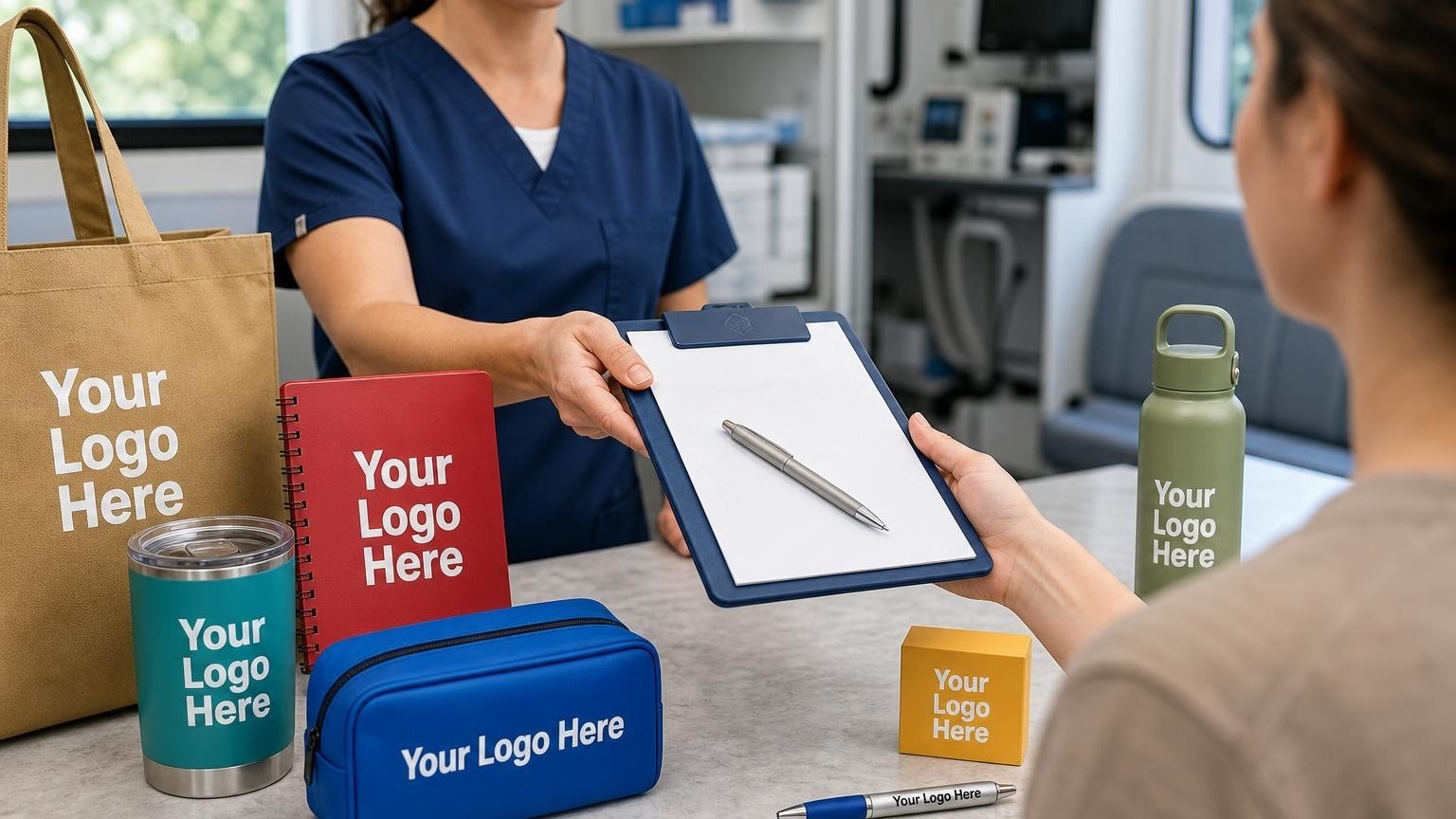
To optimize this registration step, program managers use heavy-duty, brand-printed clipboards paired with smooth-writing metal pens. This setup allows participants to fill out sensitive medical histories comfortably, even when standing in line. Having a reliable, professional pen at every intake station prevents physical delays and establishes immediate trust. Furthermore, maintaining clinical hygiene is paramount at any medical event. Placing branded custom hand sanitizers at registration desks allows participants to clean their hands before and after completing paperwork, reinforcing your commitment to patient safety and clinical standards.
Screening Day Intake Essentials
Streamline patient registration and consent form completion at high-volume event entry points with durable clipboards and professional writing instruments.
The Post-Screening Hand-Off: Physical Tools for Patient Action
The exit interview is the most critical psychological moment of the entire screening process. This is when a nurse or health worker reviews biometric results and advises the participant to follow up with a primary care physician. If the participant receives their results on a loose sheet of paper, the clinical advice is easily forgotten.
A practical option here is to provide patients with secure, multi-pocket branded folders to house their biometric printouts, physician referral letters, and dietary guides. This keeps sensitive health data confidential and organized. To reinforce daily wellness habits, clinical teams can distribute custom pill boxes alongside these folders. When a patient takes home a seven-day pill organizer printed with your organization's contact details, they receive a daily physical cue to manage their health. This simple, functional tool turns a single screening event into a continuous, year-round health routine, keeping your brand top-of-mind as a trusted wellness partner.
Patient Compliance & Follow-Up Kits
Empower patients to track their health metrics and manage daily medication routines post-screening with custom pill boxes and first aid kits.
Choosing the Right Promotional Tools by Screening Environment
Choosing the right promotional tools depends heavily on the specific environment and patient demographic. The table below outlines how to match functional products to distinct screening scenarios to maximize operational efficiency and patient engagement.
| Screening Environment | Primary Operational Challenge | Recommended Custom Tool Type |
|---|---|---|
| Corporate Wellness Day | High-volume intake bottlenecks and tight participant schedules | Matte-finish metal stylus pens and heavy-duty clipboards |
| Mobile Health Van | Severe storage constraints and limited physical space | Flat document folders and slim, stackable pillboxes |
| Community Health Fair | High participant drop-off and lost educational materials | Opaque non-woven tote bags and health tracking cards |
| Senior Center Screening | Patient forgetfulness and complex daily medication routines | Seven-day custom pill boxes and large-print health journals |
Budget Tiers for Screening Campaigns
Preventive screening budgets vary based on the scale of the campaign and the target audience. Organizing your product selection into clear tiers ensures you can maintain clinical professionalism without overspending.
- Good (High-Volume Public Events): Focus on flat, lightweight items that are easy to distribute in large crowds. Practical choices include flat paper document sleeves, basic plastic registration pens, and individual adhesive bandages.
- Better (Corporate Wellness & Targeted Screenings): Invest in durable items that support daily health habits. Excellent options include heavy-duty plastic clipboards, custom pill boxes, and pocket imprinted first aid kits.
- Best (Executive Health Programs & Key Sponsors): Select premium, high-utility items that convey maximum trust. Consider structured utility tote bags, matte-finish metal stylus pens, and comprehensive health care products like digital thermometers or deluxe wellness kits.
Operational Planning: Ordering and Deployment Timeline
To ensure your clinical teams are fully equipped for upcoming health campaigns, follow this structured ordering and deployment timeline:
- 8 Weeks Before Event: Define your screening environments, estimate participant volume, and select your custom product categories. Request physical samples to test durability.
- 6 Weeks Before Event: Finalize your custom branding artwork. Place your bulk order for clipboards, pens, folders, and wellness tools to allow ample production time.
- 4 Weeks Before Event: Approve pre-production proofs. Coordinate shipping logistics to ensure items are delivered directly to your central warehouse or mobile unit hubs.
- 2 Weeks Before Event: Receive and inspect the shipment. Pre-pack patient folders with educational brochures and organize staff gear into transport bins.
- Event Day: Set up registration desks with branded pens and hand sanitizers, and equip exit stations with folders and pill boxes for direct hand-to-hand distribution.
First-Party Insights from the Field
Based on Myron's experience helping organizations plan custom event merchandiseBased on experience helping organizations plan custom event merchandise, Myron's team has gathered practical operational insights to help preventive health screening companies maximize their budget and efficiency:
- Prioritize flat, stackable items: Flat document folders and slim pillboxes reduce volunteer setup stress at registration tables and maximize storage space inside mobile vans.
- Choose dark-colored clipboards: High-traffic screening events can lead to scuffs and dirt; dark blue or black clipboards maintain a clean, professional appearance throughout the day.
- Keep branding clean and clinical: Oversized, bright logos can make health tools feel like cheap advertisements. A subtle, single-color print builds stronger clinical trust with patients.
- Opt for retractable pens: Caps get lost instantly at busy registration desks. Retractable metal pens keep the intake area tidy and prevent ink stains on clipboards.
- Pre-assemble patient packets: Do not try to stuff folders or bags during the event. Pre-packing educational materials beforehand keeps the exit interview flowing smoothly.
How to Choose the Right Item
- Distribution EnvironmentEvaluate whether items will be distributed in a spacious corporate ballroom or a compact mobile health van to determine physical size and packaging limits.
- Patient Demographic NeedsMatch the product's utility to the patient's specific health journey (e.g., pillboxes for seniors, fitness trackers for corporate employees) to increase compliance.
- Data Privacy RequirementsEnsure you have secure zippered pouches or multi-pocket document folders to maintain patient confidentiality when handing over biometric results.
Common Mistakes to Avoid
- Distributing low-utility novelty items that patients immediately discard.Saves budget in the short term but fails to drive patient engagement or compliance, resulting in a poor return on investment.Better approach: Invest in functional health tools like pillboxes or first aid kits that patients keep and use daily.
- Using flimsy, open folders that fail to protect sensitive patient health data.Compromises patient privacy and clinical professionalism, especially in drafty or high-traffic public spaces.Better approach: Select secure, multi-pocket branded folders that keep results confidential and organized.
- Ordering bulky promotional items that overwhelm mobile screening van storage.Mobile screening units have severe physical space constraints; bulky items disrupt clinical workflows and crowd the van.Better approach: Choose flat, stackable, or collapsible items that maximize storage efficiency.
Frequently Asked Questions
What are the most effective promotional items for high-volume community health screenings?
The most effective items are high-utility wellness tools like custom pill boxes, pocket first aid kits, and secure document folders. These practical items support daily health management and ensure patients keep your clinical contact information close at hand.
How can we use branded products to improve patient follow-up rates after a biometric screening?
Provide patients with structured health tracking cards and secure folders that keep their screening results and physician referral forms organized in one place. Delivering these materials in a professional package reinforces the importance of the clinical recommendations and encourages patients to schedule follow-up appointments.
What promotional materials are best suited for mobile screening vans with limited storage space?
Opt for flat, stackable, or highly compact items such as custom-printed health brochures, slim pillboxes, and collapsible tote bags. These products maximize storage efficiency inside mobile units while remaining easy for field staff to transport and set up.
Equipping Your Team for Clinical Success
Successful preventive health screenings rely on building trust, maintaining strict organization, and encouraging continuous patient engagement. By selecting functional, clinical-adjacent tools, your organization can turn a brief health check into a lasting wellness habit. Whether you are preparing for a busy autumn open enrollment season or planning a spring mobile health tour, having the right physical resources is key to patient compliance. Explore Myron's specialized health care products collection to find the perfect tools to support your clinical teams and strengthen your next screening event.