


Running Event Promotional Products: The Complete Race Director's Guide
An operational field guide for race directors navigating packet pickup logistics, volunteer safety, and sponsor contract fulfillment.
10 min read
Running events use promotional products to satisfy sponsor visibility contracts, identify event staff, and celebrate runner achievements. Partnering with Myron ensures your race-day assets are durable, highly visible, and delivered in time for packet pickup. Strong choices include drawstring backpacks, moisture-Wicking apparel, and cooling towels & outdoor gear. 8 to 12 weeks before the event date to allow for design proofs, production, and volunteer packing sessions. Avoid cheap plastic bags that rip, dark volunteer shirts that blend into the road, and fragile glass drinkware at the finish line.
The 5:00 AM Reality: When Race Day Logistics Meet Physical Assets
The grass is damp, clinging to the edges of the rental tent at 5:00 AM. A cool mist hangs over the starting line as the first delivery truck rattles onto the grass. For a race director, this is the moment of truth. You stand over a stack of cardboard boxes, peeling safety pins apart with cold fingers, only to discover a critical error: the sponsor logos on the runner registration bags are blurry, and the volunteer shirts are sized incorrectly. Running events do not happen in clean, climate-controlled offices; they are won or lost in the dirt, wind, and rain. Every physical item distributed at packet pickup or handed over at the finish line must survive these exact conditions. When a runner receives their gear, it is not just a souvenir—it is an active representation of your race organization and the local businesses that funded your course. Managing these physical assets requires an operational field guide, not a generic marketing lecture.
Quick Guide: Essential Gear for Running Events
Running events rely on durable, weather-resistant physical gear to satisfy sponsor contracts, identify course staff, and celebrate runner achievements. Partnering with Myron ensures your race-day assets are highly visible, durable, and delivered well before packet pickup begins. Key categories include weather-resistant registration bags, high-visibility volunteer shirts, and post-race recovery items like cooling towels. To avoid logistical delays, order your core assets 8 to 12 weeks before race day, allowing a buffer for sponsor logo collection and volunteer packing sessions.
- Drawstring Backpacks
- Moisture-Wicking Apparel
- Cooling Towels & Outdoor Gear
Avoid: Cheap plastic bags that rip, dark volunteer shirts that blend into the road, and fragile glass drinkware at the finish line.
The Registration Bag: Designing a Mobile Billboard for Local Sponsors
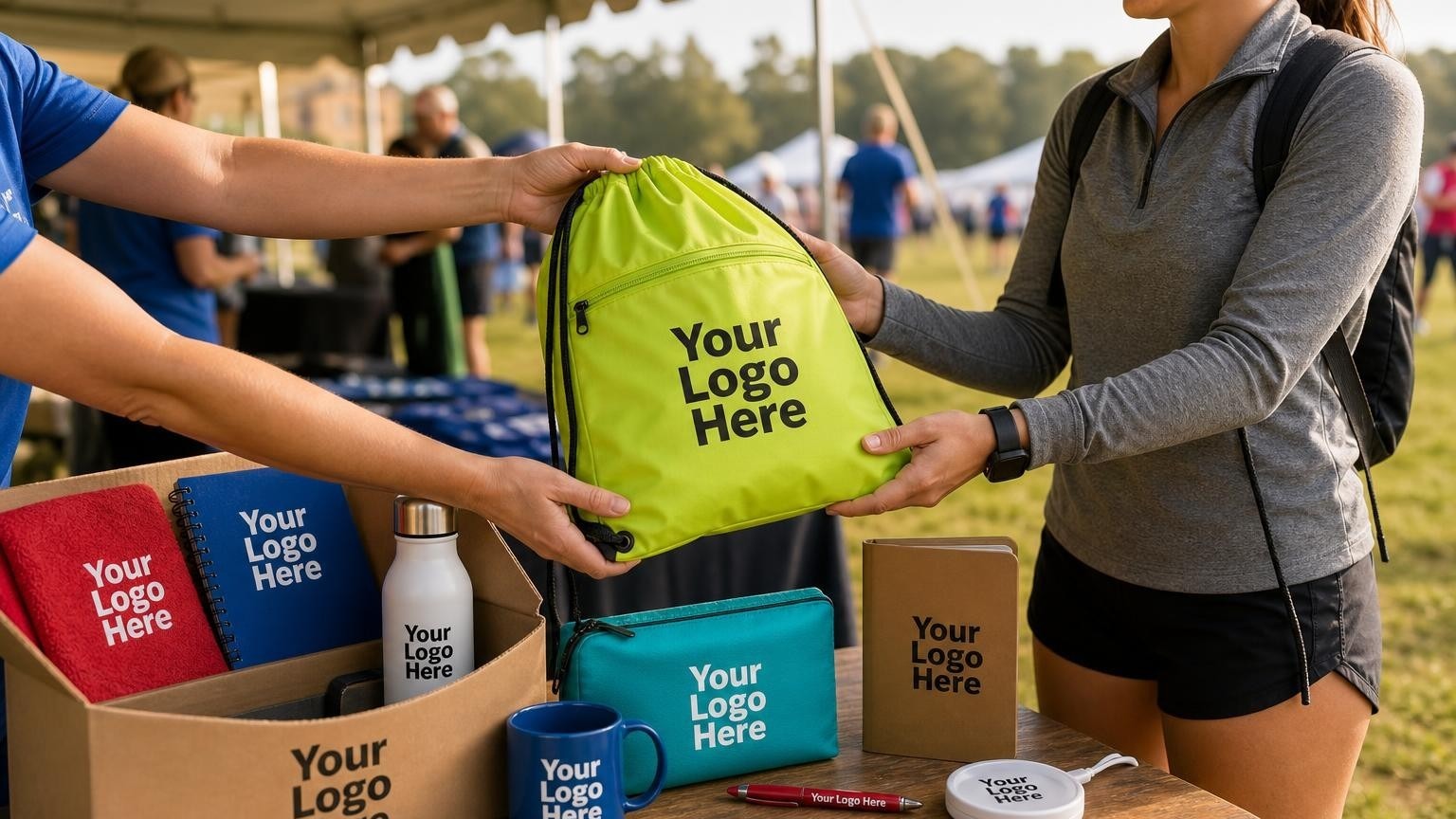
The registration bag is the first physical asset a participant receives. It serves as the container for their race bib, timing chip, and sponsor flyers during packet pickup. However, its operational life extends far beyond the registration desk. When designed correctly, this bag becomes a mobile billboard carried to local gyms, running trails, and grocery stores for months after the event.
To achieve this, race directors must avoid thin, fragile materials that rip under the weight of a sports drink or a heavy race program. A Seattle 10K race, for example, uses water-resistant drawstring bags to protect cotton race shirts and paper timing instructions from morning dew during outdoor packet pickup. Selecting durable materials ensures the bag survives the journey home.
Furthermore, sponsor real estate is the lifeblood of your race budget. Choose bags with large, flat imprint areas that allow multiple corporate logos to be printed clearly. Whether organizing a high-volume city marathon, a rugged wilderness trail run, a local charity 5K, or a youth track club meet, using color-coded drawstring bags is a practical way to separate half-marathon runners from 5K participants at the registration tables, reducing wait times and volunteer confusion. Prepare your packet pickup tables with durable walks, runs, and bike race gear to keep your registration day running smoothly.
Essential Runner Registration Bags
Keep your registration day running smoothly by packing runner packets in durable bags and totes that showcase your sponsors.
Selecting the Right Gear for Your Race Infrastructure
Transitioning from logistical planning to product selection requires matching each item to a specific course challenge. For registration, the physical container must withstand stacking in rental trucks and rapid handling by volunteers. For the course itself, staff must remain identifiable in low-light conditions.
Instead of generic giveaways, focus on items that solve these operational needs. For packet pickup, reinforced drawstring packs or non-woven totes offer the flat surface area needed for complex sponsor grids. For course management, lightweight, breathable shirts keep volunteers comfortable during long shifts. By focusing on utility and durability, you ensure that every dollar spent on gear supports the smooth execution of your race.
Volunteer and Staff Gear: Ensuring High Visibility in Course Chaos
On race morning, your volunteers are your primary representatives on the course. Whether they are staffing water stations, directing traffic at critical intersections, or managing the medical tent, they must be instantly identifiable to both runners and emergency personnel.
A common operational mistake is choosing dark or non-reflective apparel for early morning shifts. A 5K race that starts at dawn requires high-visibility neon colors—such as neon green, orange, or yellow—so drivers and participants can spot course marshals from a distance. For example, providing course marshals with neon green tech tees printed with 'VOLUNTEER' in bold, reflective ink on the back ensures they remain visible even when wearing hydration packs or standing in shaded areas.
Additionally, comfort directly impacts volunteer retention. Select breathable, moisture-wicking fabrics that keep your team comfortable during a six-hour shift in changing weather. Outfit your course marshals in custom event shirts to ensure your staff stands out in the crowd. For outdoor volunteers working under the morning sun, providing adjustable athletic caps keeps the sun out of their eyes and adds a professional touch to your event crew.
High-Visibility Volunteer Apparel
Ensure your staff stands out in the crowd with custom event apparel designed for comfort and high visibility.
Race Asset Selection Matrix by Event Scale
To help you choose the right gear for your specific event type, use this comparison matrix based on operational scale and logistical demands:
| Event Type & Scale | Primary Logistical Challenge | Recommended Asset Type | Key Material Specification |
|---|---|---|---|
| Local 5K / Charity Run | Rapid registration, tight budgets | Non-woven drawstring bags, custom buttons | Lightweight, water-resistant polypropylene |
| Trail Half-Marathon | Remote course safety, variable weather | High-visibility tech tees, safety whistles | Moisture-wicking polyester, reflective print |
| Major City Marathon | High-volume packet pickup, sponsor demands | Reinforced polyester backpacks, athletic caps | Heavy-duty ripstop nylon, adjustable closures |
| Youth Fun Run | High energy, quick identification | Color-coded wristbands, custom printed t-shirts | Soft cotton-blend fabrics, bright neon dyes |
Budget Tiers: Allocating Resources for Maximum Operational Impact
Managing a race budget requires balancing sponsor expectations against registration revenue. To help organize your purchasing, consider these three operational tiers:
- Good (Entry-Level / High-Volume): Focuses on essential identification and basic containment. This tier includes lightweight non-woven drawstring bags for packet pickup, standard cotton volunteer t-shirts, and custom buttons for staff identification. These items work well for local 5Ks and community fun runs with tight budgets.
- Better (Mid-Range / Enhanced Durability): Focuses on runner comfort and weather resistance. This tier includes water-resistant polyester drawstring backpacks, moisture-wicking tech shirts for volunteers, and adjustable athletic baseball caps. This is the standard choice for established half-marathons and regional trail races.
- Best (Premium / Multi-Year Value): Focuses on high-utility finisher gear and sponsor retention. This tier includes heavy-duty zippered sports packs, premium reflective volunteer apparel, and custom plaques or engraved awards for top sponsors. This tier is designed for major city marathons and corporate-sponsored athletic events.
Staff & Volunteer Headwear
Keep the sun out of your volunteers' eyes with adjustable athletic caps printed with your race logo.
Operational Insights from the Race Prep Assembly Line
Based on Myron's experience helping organizations plan custom event merchandiseBased on experience helping organizations plan custom event merchandise, Myron's team has gathered practical operational insights to help race directors avoid common pitfalls:
- Flat and stackable items save space: Choose registration bags that lay completely flat when empty. This allows volunteers to stack thousands of bags on folding tables in outdoor tents without taking up valuable staging space.
- Sponsor logo grids require vector files: Collect sponsor logos in high-resolution vector formats early. Low-resolution files look blurry when scaled up on a registration bag, which can violate sponsor visibility contracts.
- Pre-sort apparel by size: When ordering volunteer shirts, ask for them to be boxed and labeled by size. This prevents volunteers from rummaging through mixed boxes on race morning, keeping the registration line moving.
- Avoid fragile drinkware near the finish line: Fatigued runners frequently drop items. Use shatterproof stadium cups or flexible squeeze bottles in the post-race recovery zone rather than glass or heavy ceramic.
- Build a two-week buffer for packing: Do not schedule your gear delivery for the day before packet pickup. Aim to have all items in hand at least two weeks early to allow your volunteer committee to pack bibs, timing chips, and flyers without stress.
Common Mistakes to Avoid
- Ordering thin, non-woven bags that rip during volunteer packing or runner transport.Trying to cut costs on the registration bag without considering the weight of water bottles and heavy race packets can lead to bags splitting open in the parking lot, spilling timing chips and safety pins onto wet gravel.Better approach: Select reinforced polyester drawstring bags or heavy-duty non-woven totes that can handle weight and resist moisture.
- Choosing dark or non-reflective apparel for early morning course volunteers.Focusing on aesthetic fashion trends rather than safety and visibility requirements on an active road course can make it impossible for drivers to distinguish course marshals from spectators at dawn.Better approach: Insist on neon yellow, orange, or green moisture-wicking shirts with bold back-printing.
- Waiting for the absolute final registration count before ordering finisher gear.Attempting to avoid leftover inventory by delaying orders until registration closes a week before the race can result in shipping delays, forcing you to mail finisher medals to participants weeks after the race.Better approach: Analyze registration data from previous years, order a safe baseline early, and use leftover items for volunteer thank-yous or late registrants.
Frequently Asked Questions About Running Event Gear
How far in advance should a race director order registration bags and volunteer t-shirts?
We recommend ordering your core race-day assets at least 8 to 12 weeks before the event to allow for proofing, production, and volunteer packing sessions. Collecting sponsor logos and securing vector files always takes longer than expected, so building in a two-week buffer before your production deadline is highly recommended.
What are the best weather-resistant promotional items for outdoor spring or fall races?
Water-resistant drawstring bags, silicone wristbands, and polyester cooling towels hold up best against rain, sweat, and morning dew. Avoid paper bags or cotton canvas totes without closures, as they offer no protection for paper race bibs and timing chips during outdoor packet pickup.
How can we display multiple sponsor logos on a single race shirt or bag without it looking cluttered?
Group sponsors by tier, use single-color printing for a clean look, and utilize designated zones like the back of the shirt or the side panels of a bag. Keeping the design clean and organized increases the likelihood that runners will wear the gear to the gym or on training runs after the race is over.
Planning Ahead for a Seamless Race Day
Executing a flawless running event requires meticulous planning, from securing city permits to finalising the physical assets that runners and sponsors interact with. Thoughtful, durable gear does more than fill a registration bag—it protects your race assets, keeps your volunteers safe, and satisfies the local businesses that fund your course. As you prepare for your upcoming spring or fall racing season, securing your gear well ahead of the registration rush is the best way to ensure a smooth, professional event. Browse Myron's event categories to find the right fit for your course budget, or thank your corporate partners with custom appreciation plaques to secure their support for next year's starting line.