


Sports Medicine Marketing: Sideline Gear & Recovery Kits
An operational blueprint for sports medicine directors looking to scale patient acquisition and improve home-based rehabilitation compliance using high-utility clinical gear.
11 min read
Sports medicine clinics build high-value patient rosters by equipping local athletic trainers with professional sideline gear and providing discharged patients with functional recovery kits sourced from Myron. Strong choices include clinical-grade fitness and wellness tools, heavy-duty athletic duffels and sideline bags, and premium insulated hydration bottles. Pre-season athletic windows (typically early summer for fall sports) and prior to major community race sponsorships. Avoid cheap, non-functional promotional novelties that damage clinical credibility or fail under athletic use.
The Critical Handoff: From Clinical Care to Active Play
A high school varsity athlete sits on the treatment table, completing their final physical therapy session for a complex knee reconstruction. The physical therapist guides them through a final range-of-motion test, then hands over a structured recovery kit packed inside a durable cinch bag. Co-branded with the sports medicine clinic's logo and the local high school's wildcat mascot, the kit contains clinical-grade resistance bands, a cold therapy pack, and a home exercise guide. This handoff marks a critical transition. The athlete is no longer just a patient in a clinic; they are returning to active field play, carrying the clinic's brand directly onto the sideline. For sports medicine clinic directors, this moment represents the intersection of clinical care and strategic growth. Building a high-value patient roster relies on these precise handoffs and the referral networks established with local athletic trainers who stand on the front lines of youth and amateur sports. Rather than relying on generic marketing campaigns, successful clinics grow by integrating high-utility, professional-grade gear into their daily patient workflows and community outreach efforts.
The Strategy for Sports Medicine Growth
Sports medicine clinics build high-value patient rosters by equipping local athletic trainers with professional sideline gear and providing discharged patients with functional recovery kits sourced from Myron. To secure consistent referrals, clinics must establish themselves as trusted clinical partners rather than generic sponsors. This is achieved by distributing durable, high-utility equipment—such as co-branded sideline medical kits, custom resistance bands, and specialized cold therapy packs—that integrate directly into daily athletic workflows. By focusing on clinical utility and sideline durability, clinics protect their professional reputation, improve patient compliance with home-based rehabilitation, and maintain top-of-mind awareness among local athletic directors, school trainers, and competitive club sports leagues.
- Clinical-grade fitness and wellness tools
- Heavy-duty athletic duffels and sideline bags
- Premium insulated hydration bottles
Avoid: Avoid cheap, non-functional promotional novelties that damage clinical credibility or fail under athletic use.
Equipping the Sideline: Building High-Value Athletic Trainer Partnerships
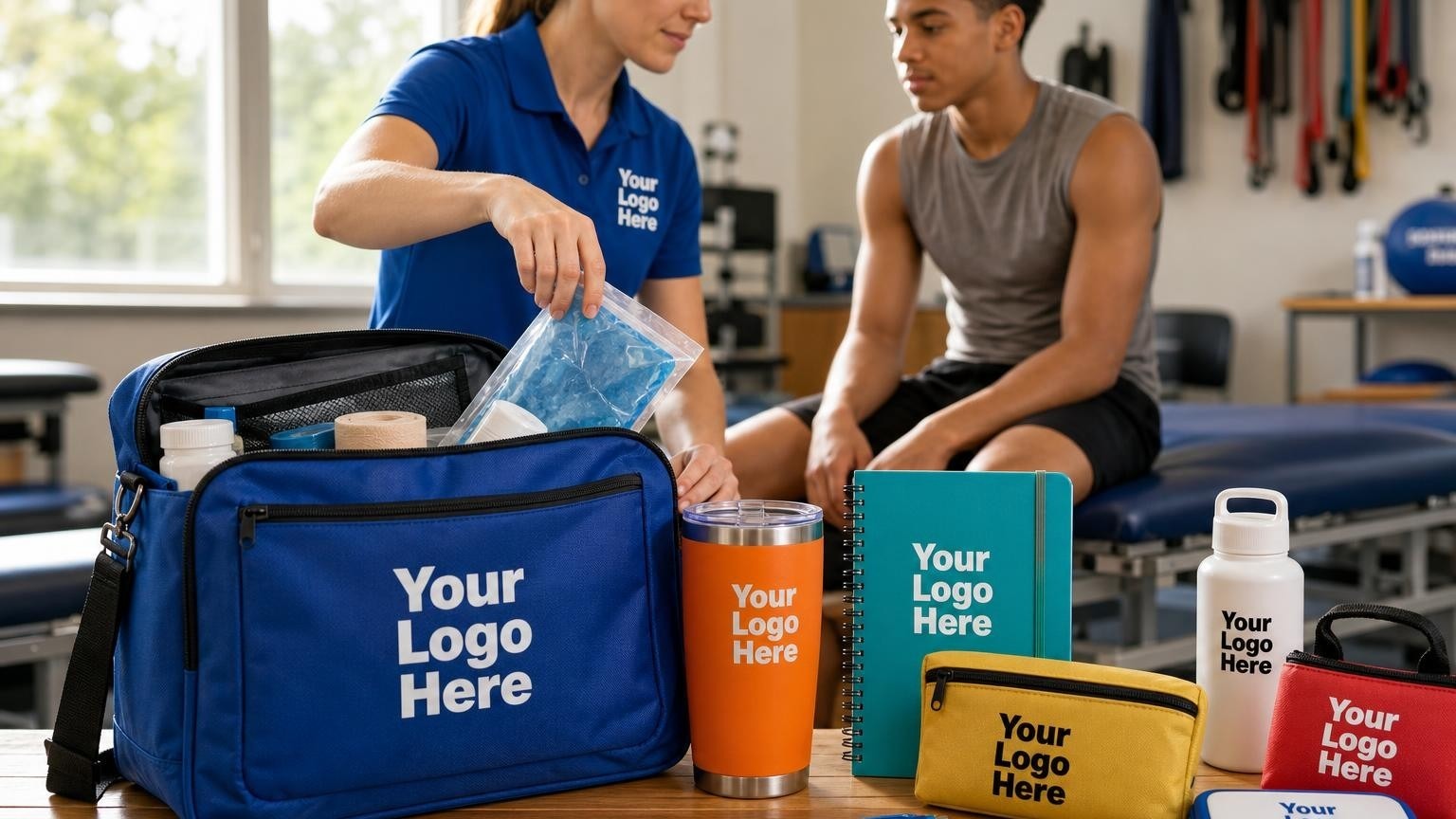
Securing a steady stream of patient referrals requires a deliberate approach to local school and club athletic departments. The primary decision-maker for these referrals is often the head athletic trainer, who is the first responder when an athlete is injured on the field. To build these vital athletic trainer partnerships, clinics must provide tools that solve daily operational challenges. During the pre-season planning window in early summer, clinic directors should coordinate meetings with local athletic directors to distribute co-branded sideline equipment. Providing high-durability First Aid Kits & Dispensers from Myron ensures that your clinic's brand remains visible during every practice and game. These are not cheap giveaways; they are functional medical organizers that trainers rely on when assessing an on-field injury. When a trainer reaches for a cold compress on a muddy sideline during a rainy Friday night football game, the co-branded logo on the kit reinforces your clinic's role as the official medical partner. This operational visibility directly drives referral traffic when an athlete requires advanced clinical rehabilitation. Investing in high-denier, weather-resistant gear is essential because cheap materials that tear or break under pressure will damage your clinic's reputation as a professional medical partner.
Sideline Partnership Essentials
Equip local athletic trainers and school sports departments with professional sideline gear to secure consistent patient referrals.
The Athlete Recovery Kit: Ensuring Patient Compliance and Post-Discharge Loyalty
The transition from clinical care to independent home recovery is a vulnerable phase in the patient experience. Patient non-compliance with home exercise programs is a common challenge that can lead to re-injury and poor clinical outcomes. To address this, sports medicine clinics can design structured discharge recovery kits. When a patient completes their final rehabilitation session for a rotator cuff tear or an ankle sprain, clinical staff should hand them a dedicated recovery package. This package should include clinical-grade recovery tools from Myron, such as heavy-duty resistance bands and custom-printed Ice Packs & Heat Pads from Myron. By providing physical, high-quality tools rather than a simple sheet of paper, you give the patient the exact resources they need to succeed at home. When the patient performs their daily stretching routine in their living room, using a durable resistance band printed with your clinic's contact details, they are reminded of your professional care. This continuous engagement builds deep patient loyalty and encourages word-of-mouth referrals to teammates, coaches, and parents who are looking for trusted sports medicine specialists.
Patient Discharge Recovery Kits
Support home-based rehabilitation compliance and generate community word-of-mouth with clinical-grade tools.
Selecting Clinical-Grade Tools and Sideline Gear
Choosing the right items for your sports medicine clinic requires a strict focus on clinical utility and durability. Cheap, non-functional promotional items like plastic keychains or novelty toys fail to reflect the medical standards of a professional clinic. Instead, focus on items that serve a clear purpose in an athlete's recovery or a trainer's workflow. For sideline operations, high-capacity organizers and weather-resistant gear are practical options. These items must withstand exposure to rain, wind, and rough handling in athletic environments. For patient discharge, focus on tools that support physical therapy. Reusable cold therapy packs printed with your clinic's emergency contact number and logo are highly valued by recovering athletes. Additionally, high-performance Sports Water Bottles from Myron help promote healthy hydration habits during post-workout recovery. When patients carry these bottles to their local gyms or school practices, they act as active brand ambassadors for your clinic.
Comparing Gear by Clinical and Sideline Scenario
To help clinic directors choose the most appropriate items for different athletic environments, the table below outlines specific use cases, recommended product types, and key durability requirements.
| Clinical Scenario | Recommended Product Type | Key Durability Requirement |
|---|---|---|
| High-Volume Sports Rehab Centers | Heavy-duty resistance bands and stretch straps | High tensile strength, snap-resistant latex or TPE |
| Pediatric Sports Medicine Practices | Co-branded cold therapy packs and custom splint covers | Non-toxic gel, puncture-resistant double-sealed seams |
| Elite Athletic Training Facilities | Double-wall insulated stainless steel hydration flasks | Double-wall vacuum insulation, scratch-resistant powder coat |
| Hospital-Affiliated Sports Clinics | Fully equipped sideline first aid kits and organizers | Water-resistant denier polyester, heavy-duty zippers |
Investment Tiers for Sports Medicine Outreach
Sports medicine clinics must manage their marketing budgets carefully while maintaining high professional standards. The following tiers organize functional options by investment level, ensuring that even entry-level items support clinical credibility.
- Good (Entry-Level Patient Discharge): Reusable gel cold packs, basic latex-free resistance bands, and high-capacity squeeze sports bottles. These items are excellent for high-volume distribution to patients completing routine physical therapy protocols.
- Better (Mid-Range Community Outreach): Co-branded first aid kits, double-wall insulated sports bottles, and moisture-wicking athletic shirts for clinic staff. These options work well for sponsoring local 5K races or youth sports tournaments.
- Best (Premium Sideline Partnerships): Heavy-duty multi-compartment medical bags, premium vacuum-insulated stainless steel flasks, and high-density foam rollers. These high-end items are reserved for securing official partnership agreements with local high school and club athletic directors.
Operational Insights from Myron's Experience
Based on Myron's experience helping organizations plan custom event merchandiseBased on experience helping organizations plan custom event merchandise, Myron's team has gathered practical operational insights that can help sports medicine clinics maximize the impact of their branded gear:
- Co-branding builds deeper local ties: Printing both your clinic's logo and the local high school's mascot on sideline gear builds a strong sense of shared community pride and increases trainer usage.
- Prioritize lightweight and stackable items: Clinical staff often transport recovery kits in the trunks of their personal vehicles to local games; lightweight, highly packable items simplify logistics and storage.
- Avoid complex instructions on products: Keep printed guidelines on resistance bands or cold packs simple and clear; detailed medical instructions should remain on a separate paper handout.
- Select high-visibility colors for sideline gear: Bright, high-contrast colors for medical bags make them easy to locate quickly during an on-field emergency.
- Plan orders around school athletic calendars: Place orders for fall sports gear in June or July to allow ample time for production, co-branding, and distribution before pre-season practices begin.
Elite Hydration & Performance
Promote healthy hydration habits among competitive athletes and clinic performance clients.
How to Choose the Right Item
- Clinical UtilityAsk: Does this item directly support the patient's physical recovery or the athletic trainer's daily workflow? Choose resistance bands, foam rollers, and cold therapy packs over plastic keychains or cheap pens.
- Sideline DurabilityAsk: Can this product withstand outdoor weather, dirt, and rough handling during a varsity athletic season? Choose heavy-duty polyester bags and double-wall stainless steel bottles over non-woven totes and single-wall plastic cups.
- Compliance AlignmentAsk: Is this item structured as a clinical recovery tool rather than a financial incentive for patient referrals? Choose home exercise instruction kits and sideline first-aid organizers over high-value retail gift cards.
Common Mistakes to Avoid
- Prioritizing low cost over product durability for sideline gear.Cheap gear that breaks or tears during a game damages the clinic's reputation as a professional medical partner.Better approach: Invest in high-denier, weather-resistant gear that can withstand the rigors of an outdoor athletic season.
- Distributing recovery tools without clear clinical utility.Non-functional items like stress balls are quickly discarded and fail to build clinical credibility.Better approach: Select clinical-grade resistance bands and hot/cold packs that directly support the patient's rehabilitation.
- Failing to co-brand with local partner athletic departments.Clinics print only their own logo, missing the opportunity to build a deep sense of partnership with local schools.Better approach: Co-brand sideline gear with both the clinic logo and the local school's mascot to foster community pride.
Frequently Asked Questions
How can sports medicine clinics distribute branded items without violating healthcare compliance guidelines?
Focus on distributing items that have direct clinical utility for patient recovery or professional operational value for athletic partners, avoiding any cash-equivalent incentives. This ensures compliance with healthcare marketing regulations while supporting patient outcomes.
What are the most durable materials to look for in sideline gear and athletic bags?
Look for high-denier polyester, water-resistant coatings, and reinforced stitching to ensure gear survives outdoor weather and rough handling. Cheap materials that tear easily can damage your clinic's professional reputation.
How do we structure a patient recovery kit that parents and student-athletes will actually value?
Combine essential recovery tools like resistance bands and cold packs with a high-quality, reusable drawstring bag and clear home exercise instructions. This practical combination ensures the kit is used frequently rather than discarded.
Strengthening Community Trust Through Professional Utility
Growing a sports medicine clinic is not about distributing cheap promotional novelties; it is about establishing your clinic as an indispensable partner to local athletes, parents, and trainers. By integrating high-utility, professional-grade gear into your patient discharge workflows and sideline partnerships, you build lasting community trust and secure your status as the premier local team doctors. As you prepare for the upcoming pre-season athletic window, consider how the right tools can support your clinical and operational goals. Explore Myron's selection of clinical-grade fitness and professional athletic gear to strengthen your clinic's brand presence.