


Healing the Wound, Building the Trust: How Wound Care Centers Use Patient Comfort Kits and Partner Gifts to Secure the Clinical Network
A strategic guide for wound care center directors on using professional custom items to secure B2B clinical referrals, improve patient compliance, and prevent staff burnout.
10 min read
Wound care centers use professional custom items from Myron to secure B2B clinical referrals, build patient trust, and support home-care compliance. Strong choices include economy plastic pens, first aid kits & dispensers, and ice packs & heat pads. Order at least 6-8 weeks prior to major referral outreach campaigns or Wound Care Awareness Week. Avoid cheap plastic novelty items, loud non-clinical designs, and making unverified medical or ROI claims.
The Referral Gap: Bridging the Distance Between Primary Care and Specialized Wound Healing
A wound care center director sits at a desk covered in quarterly performance charts, tracking a steady decline in outpatient referrals. Local primary care clinics and podiatry offices are managing complex diabetic ulcers in-house longer than they should, hesitant to hand off their patients because they lack a clear, physical reminder of the specialized outpatient care available just down the road. At the same time, patients arriving for their first hyperbaric oxygen therapy sessions show visible anxiety, overwhelmed by a stack of paper home-care instructions they must follow to prevent infection. This operational reality requires a dual strategy: building dependable clinical trust with local medical partners while equipping patients with the practical tools they need to manage their recovery path at home. By integrating high-grade, functional items into daily clinical workflows, wound care centers can bridge this communication gap, turning simple physical tools into extensions of their medical authority.
Strategic Clinical Branding for Wound Care Centers
Specialized Wound Care Centers can secure B2B clinical referrals and improve patient home-care compliance by distributing high-utility, professional items from Myron. For referring physicians and home health partners, highly visible tools like custom calendars and dependable writing instruments keep the center's contact information immediately accessible during critical referral decisions. For patients, structured home-care kits featuring custom first aid dispensers, comfort ice packs, and hand sanitizers reduce anxiety and make complex daily dressing changes easier to manage. Rather than using cheap novelty items, successful centers select durable, clinical-grade tools that reflect their medical standards, ensuring clinical partners and patients feel supported throughout the entire recovery process.
- Economy Plastic Pens
- First Aid Kits & Dispensers
- Ice Packs & Heat Pads
Avoid: Avoid cheap plastic novelty items, loud non-clinical designs, and making unverified medical or ROI claims.
Securing the Referral Pipeline: Professional Tools for Clinical Partners
Outpatient wound care centers rely entirely on a steady flow of referrals from primary care physicians, podiatrists, and vascular specialists. However, busy medical practices are inundated with administrative tasks, and your center's specialized services can easily slip out of mind. To maintain a strong presence in these offices, outreach coordinators need to provide practical, professional tools that fit naturally into a clinician's daily workflow.
During weekly outreach rounds, a referral coordinator visiting local podiatry clinics can distribute custom Economy Plastic Pens and Stick-Up & Magnetic Calendars featuring the center's direct referral hotline. This addresses a common operational reality: primary care staff often struggle to find specialized contact numbers quickly when a complex diabetic patient is sitting in their exam room. When a physician reaches for a dependable pen to sign a transfer authorization, or looks at a magnetic calendar on the nurse's station filing cabinet, your center's contact details are immediately visible.
Furthermore, home health nurses are the eyes and ears of wound care, frequently managing patients between outpatient visits. These field clinicians work long shifts traveling between homes, requiring reliable tools to manage their schedules. Providing them with functional Magnets that they can leave on patient refrigerators ensures that both the visiting nurse and the patient's family have immediate access to your clinical support line. This B2B relationship-building strategy relies on high-utility items that signal professional competence and clinical readiness.
Physician Outreach & Referral Essentials
Equip your outreach team with professional tools that keep your wound care center's contact details immediately accessible to local primary care physicians and podiatrists.
The First 24 Hours: Patient Welcome Kits That Drive Treatment Compliance
The first day of specialized wound treatment is often the most stressful for a patient. Whether they are managing a diabetic foot ulcer, treating a venous stasis leg ulcer, or recovering from a complex post-surgical wound, patients are often highly anxious about their recovery and the risk of complications. Intake nurses can ease this transition by handing over a structured welcome kit during the initial 90-minute diagnostic assessment.
This welcome kit should be designed around patient comfort and safety. Including custom Ice Packs & Heat Pads provides immediate, practical relief for localized discomfort, while a soft Health Theme Stress Balls gives patients a physical outlet to manage anxiety during difficult debridement procedures in the treatment room.
The operational reality of wound care is that clinical success depends heavily on what the patient does at home. If a patient fails to keep their dressings clean or forgets their daily medication, healing rates drop significantly. By organizing home-care supplies inside a custom dispenser, clinics simplify the daily routine for elderly or mobility-impaired patients. When an anxious patient sits in the hyperbaric chamber waiting room, holding these practical tools, they feel a sense of structured support. This physical preparation directly supports clinical compliance, transforming a standard medical discharge into a reassuring, guided recovery process.
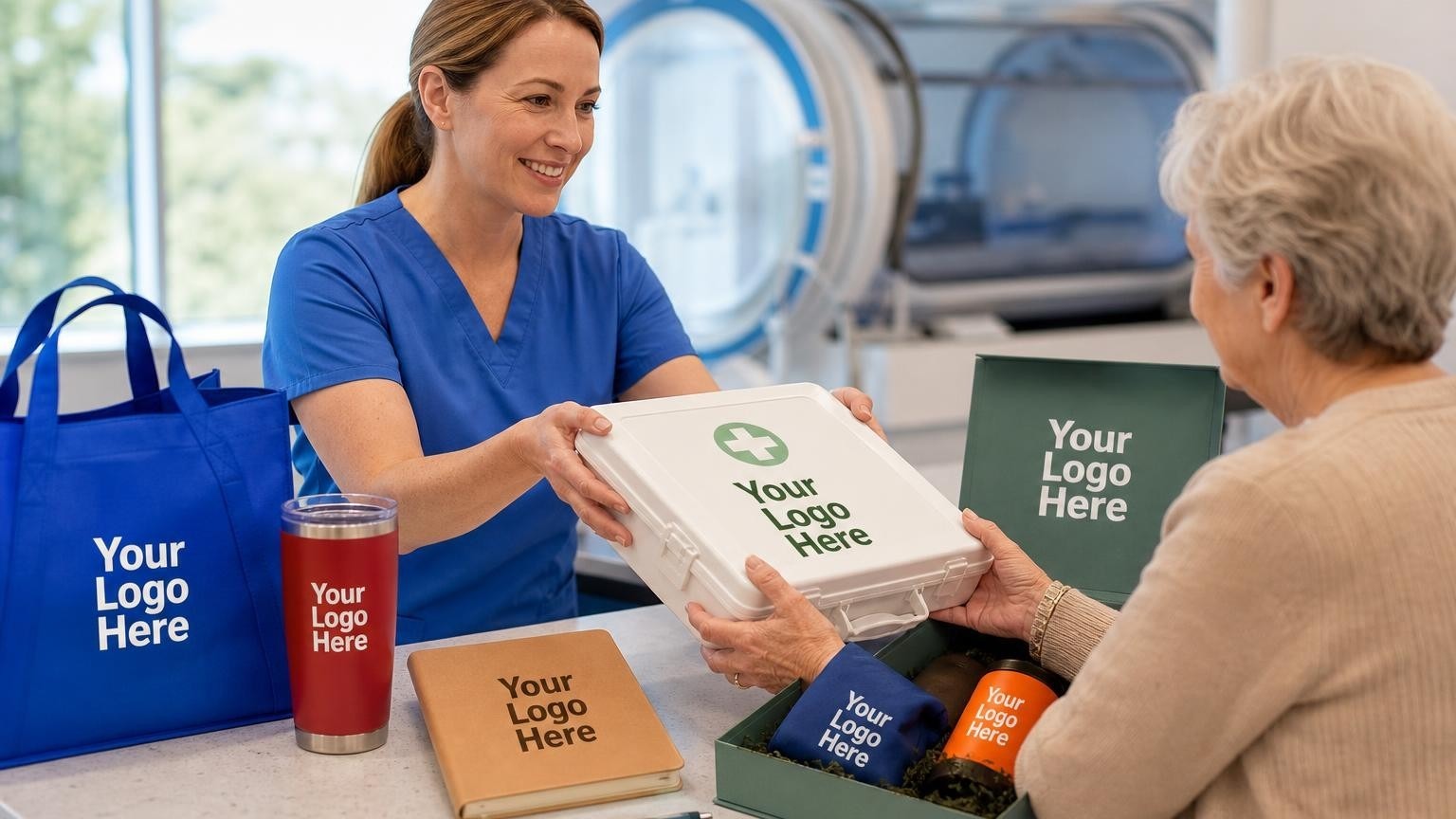
Patient Comfort & Home-Care Kits
Support patient healing and medication compliance by organizing home-care instructions and tools inside structured, clean-looking kits.
Selecting Clinical-Grade Tools: Problem-First Product Selection
Introducing custom items into a medical environment requires a strict focus on utility and hygiene. Cheap novelty items fail because they do not match the sterile, professional atmosphere of an outpatient clinic. Instead, administrators must identify specific operational challenges and select items that directly address them.
For example, maintaining hand hygiene before a patient touches a wound dressing is a constant clinical challenge. Providing custom Hand Sanitizer bottles at discharge solves this problem directly, placing a necessary clinical tool right in the patient's hands. Similarly, patients often struggle to keep their home dressing supplies organized. Distributing branded First Aid Kits & Dispensers provides a structured, sterile-looking container that keeps bandages and tape clean and centralized on a bedside table. By focusing on clinical utility first, these items become valuable medical aids rather than mere promotional items.
Selecting the Right Clinical Tool for Every Outreach and Patient Scenario
To help administrators choose the most effective items for their specific clinical workflows, the following table compares common operational scenarios, target recipients, and recommended product categories.
| Clinical Scenario | Target Recipient | Recommended Product Category | Operational Benefit |
|---|---|---|---|
| Weekly Physician Outreach | Primary Care Doctors & Podiatrists | Economy Plastic Pens | Keeps referral hotline visible on clinician desks during charting |
| Home Health Partner Support | Field Nurses & Case Managers | Stick-Up & Magnetic Calendars | Provides a quick-reference scheduling tool for busy mobile clinicians |
| New Patient Intake | Chronic Wound & Diabetic Patients | First Aid Kits & Dispensers | Centralizes home-care supplies to improve daily compliance |
| Post-Procedure Recovery | Outpatient Debridement Patients | Ice Packs & Heat Pads | Offers immediate physical comfort and pain management at home |
Structured Investment Tiers for Wound Care Center Gifting
Managing a clinical budget requires balancing cost with the professional quality expected in a healthcare environment. Rather than ordering generic items in bulk, wound care centers should organize their custom products into clear investment tiers based on clinical utility and recipient relationship.
- Good (High-Volume Outreach & Patient Intake): Focus on daily utility and broad visibility. Practical options include custom economy plastic pens for intake desks, basic Magnets for patient discharge packets, and individual Hand Sanitizer bottles for home-care kits.
- Better (Targeted Referral Support & Patient Comfort): Focus on clinical support and relationship building. This tier includes stick-up and magnetic calendars for primary care nurse stations, specialized ice packs and heat pads for post-procedure comfort, and Health Theme Stress Balls for anxiety management during clinical therapies.
- Best (Specialized Partner Appreciation & Milestone Celebrations): Focus on high-grade recognition and long-term clinical alignment. This tier features complete first aid kits and dispensers for premium patient welcome packages, custom Employee Appreciation awards for dedicated clinical staff, and high-quality Thank You gifts for major referring physicians.
Operational Insights from Myron's Healthcare Support Team
Based on Myron's experience helping organizations plan custom event merchandiseBased on experience helping healthcare organizations plan custom event and clinical merchandise, Myron's team has gathered practical operational insights to help wound care centers maximize the utility of their custom items:
- Prioritize Easy-to-Clean Surfaces: In a clinical environment, items like plastic pen barrels and vinyl-coated magnets are preferred because they can be easily wiped down with medical-grade sanitizing wipes without degrading the print.
- Keep Branding Clean and Professional: Avoid oversized, loud logos on patient comfort items. A subtle, clean layout with your clinic's name and phone number is far more reassuring to an anxious patient than a flashy promotional design.
- Optimize Magnet Placement for Home Health: When ordering magnets for patient discharge, ensure they feature a strong magnetic backing. Home health nurses frequently place these on metal cabinets or refrigerators right next to the patient's daily medication chart for immediate visibility.
- Select Compact Dispensers for Patient Travel: Patients undergoing hyperbaric therapy often travel back and forth multiple times a week. Compact, rigid first aid dispensers fit easily into small bags, ensuring their daily supplies remain clean and undamaged during transit.
- Align Staff Gifts with Shift Demands: When recognizing clinical nurses, select durable items that support them during long, physically demanding shifts. High-utility items paired with clear appreciation themes build strong team cohesion and help reduce burnout.
Clinical Staff Recognition & Milestones
Celebrate patient discharge milestones and reward specialized clinical staff to prevent burnout in high-stress clinical environments.
Common Mistakes to Avoid
- Choosing cheap, low-quality plastic pens for physician outreach.Centers try to cut costs on high-volume items without realizing it undermines their clinical authority.Better approach: Invest in a smaller quantity of high-grade, durable writing instruments that signal clinical professionalism.
- Distributing generic promotional bags that lack clinical utility.Buyers select basic canvas totes instead of functional, easy-to-clean organizers.Better approach: Opt for structured, easy-to-clean first aid dispensers that can safely hold sterile dressings and medical instruction sheets.
- Overlooking the physical demands of home health nursing partners.Outreach coordinators gift standard office items instead of field-ready tools.Better approach: Provide durable, magnetic calendars or high-performance comfort items that support nurses during long travel shifts.
Frequently Asked Questions About Wound Care Center Branding
What promotional items are most appropriate for referring physicians?
Focus on high-utility, professional clinical tools like premium metal pens and custom clipboards that fit seamlessly into a busy physician's daily workflow.
How can wound care centers use branded items to improve patient compliance?
By organizing home-care instructions and tools inside branded zippered pouches, centers make it easier for patients to manage their daily dressing changes.
What are the best staff appreciation gifts for wound care nurses?
High-quality, durable items like insulated travel mugs and comfortable, professional apparel that withstand long, demanding clinical shifts.
Building Clinical Trust, One Practical Touchpoint at a Time
Sustaining a specialized wound care center requires more than clinical expertise; it demands a continuous effort to build trust with local medical networks and provide comforting, structured support to patients. High-quality, professional items are not mere giveaways—they are practical tools that bridge the gap between clinical handoffs and home-care compliance. Whether you are preparing for Wound Care Awareness Week in June or planning your quarterly physician outreach campaign, investing in durable, professional items from Myron ensures your clinic remains a trusted partner in patient recovery. Take a close look at your current referral and discharge workflows, and explore Myron's curated selection of professional clinical and corporate gifts to strengthen your care network today.